 i
Kunsthistorisches Museum WienInnere Stadt
Prime Time – Travelling with a Roman Portable Sundial
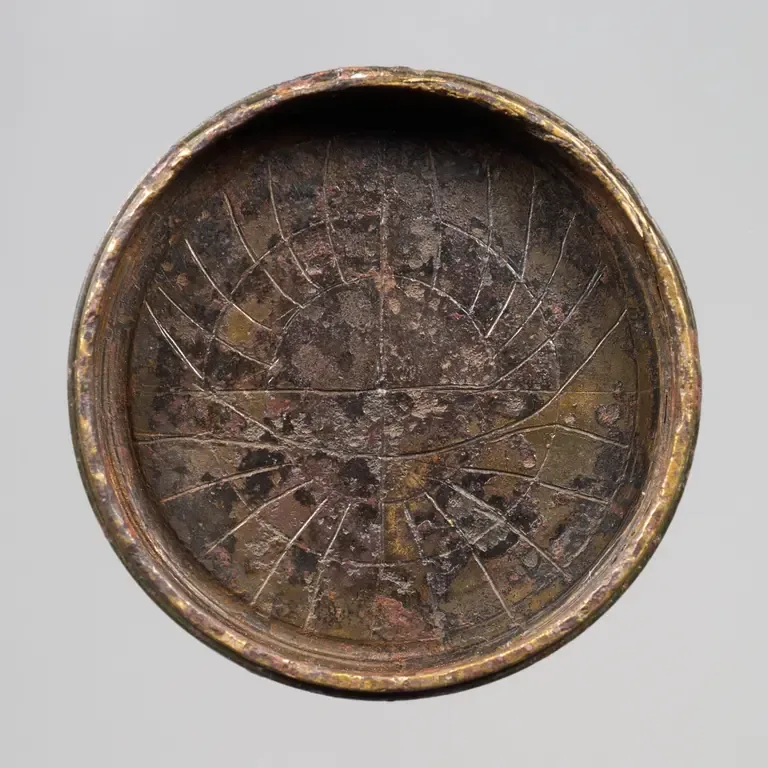
Vitrine EXTRA #9: a four-centimetre Roman pocket sundial from the 2nd century CE, likely the most complete of only about twenty known worldwide.
More in Vienna
The case is about four centimetres long, a bronze box cut from a medallion. Emperor Antoninus Pius is on the lid; underneath, the sun god's four horses scatter as Phaethon falls from the chariot. Inside is a pin for four swappable discs, each face engraved for a stretch of the empire from Britannia to Egypt.
This ninth Vitrine EXTRA is a single case in the Greek and Roman galleries. The museum casts you as the owner: you pick the disc for where you are, set a ruler to the month, and let a ray through a slit in the side land on an hour line. Its catalogue admits the lines are drawn loosely, so this was a status piece more than a precise clock. Sixteen place names on eight faces, and not one is Vindobona.
It's one object: fold it into a visit to the antiquities on the Hochparterre. Entry is a timed museum ticket: €22 online, €24 on site, under-19s free. Thursdays until 9pm, until 14 March 2027.
Look for
Antoninus Pius on the lid
The emperor's portrait, from a medallion whose titles date it to 142 to 144 CE, caps the tiny bronze box.
Phaethon's fall on the base
Look underneath for the four horses of the sun chariot breaking apart; the boy falling head first between them is now faint.
The ALEXAN and AEGYP disc
On one of the four bronze discs, letters naming Alexandria and Egypt are still clearly legible above a grid of month and hour lines.
The sky map inside the lid
A stereographic projection: circles for the summer solstice, equinox and winter solstice, with fanning lines that divide the twelve hours of day and night.
Good for
- An Hour Or Less
- Locals Who've Seen It All
- Nerding Out
Skip if
You want a full exhibition: this is one four-centimetre object in a single case.
With kids
Under-19s get in free. Everything here is on one object about four centimetres long, so it works as a short stop on a family visit rather than an outing in itself.
Also at Kunsthistorisches Museum Wien
On now nearby


Nearby
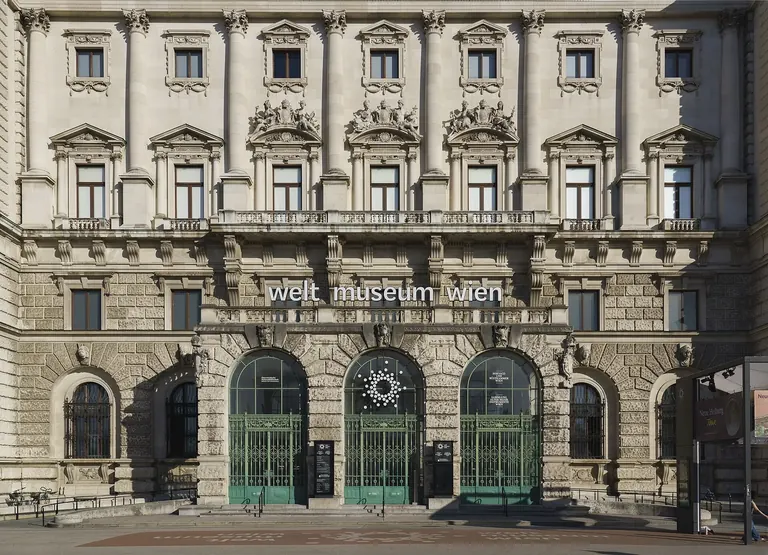
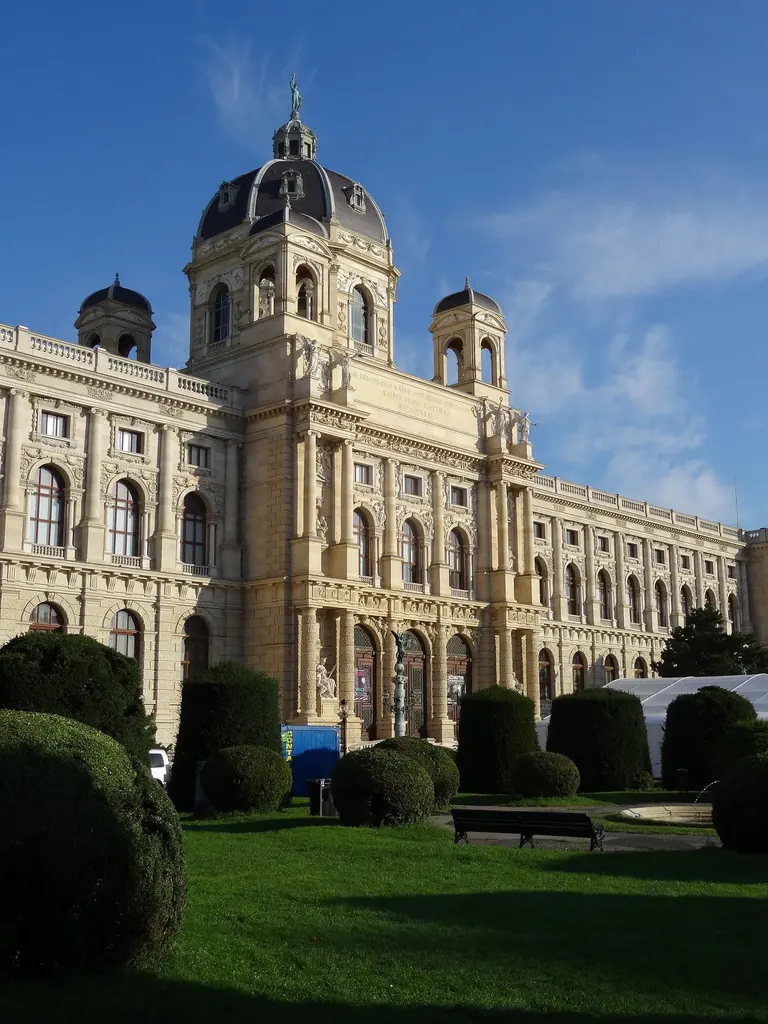
Image credits
9
- Prime Time – Travelling with a Roman Portable Sundial© KHM-Museumsverband
- Ishír: Living Memories from ParaguayKHM-Museumsverband, Weltmuseum Wien
- Crime Scene Ephesus: Cleopatra and RomeCourtesy of Weltmuseum Wien
- OPEN SPACE: A Room for Many VoicesCourtesy of Weltmuseum Wien
- Kunsthistorisches Museum WienManfred Werner (Tsui), Wikimedia Commons, CC BY-SA 3.0
- Weltmuseum WienThomas Ledl / Wikimedia Commons, CC BY 4.0
- Natural History Museum Vienna (Naturhistorisches Museum Wien)Stb1er (Dario Premm), Wikimedia Commons, CC BY-SA 4.0
- Kunsthalle WienStephan Wyckoff / PresseKunsthalleWien, via Wikimedia Commons, CC BY-SA 4.0
- Leopold MuseumPeter Gugerell / Wikimedia Commons, CC0