
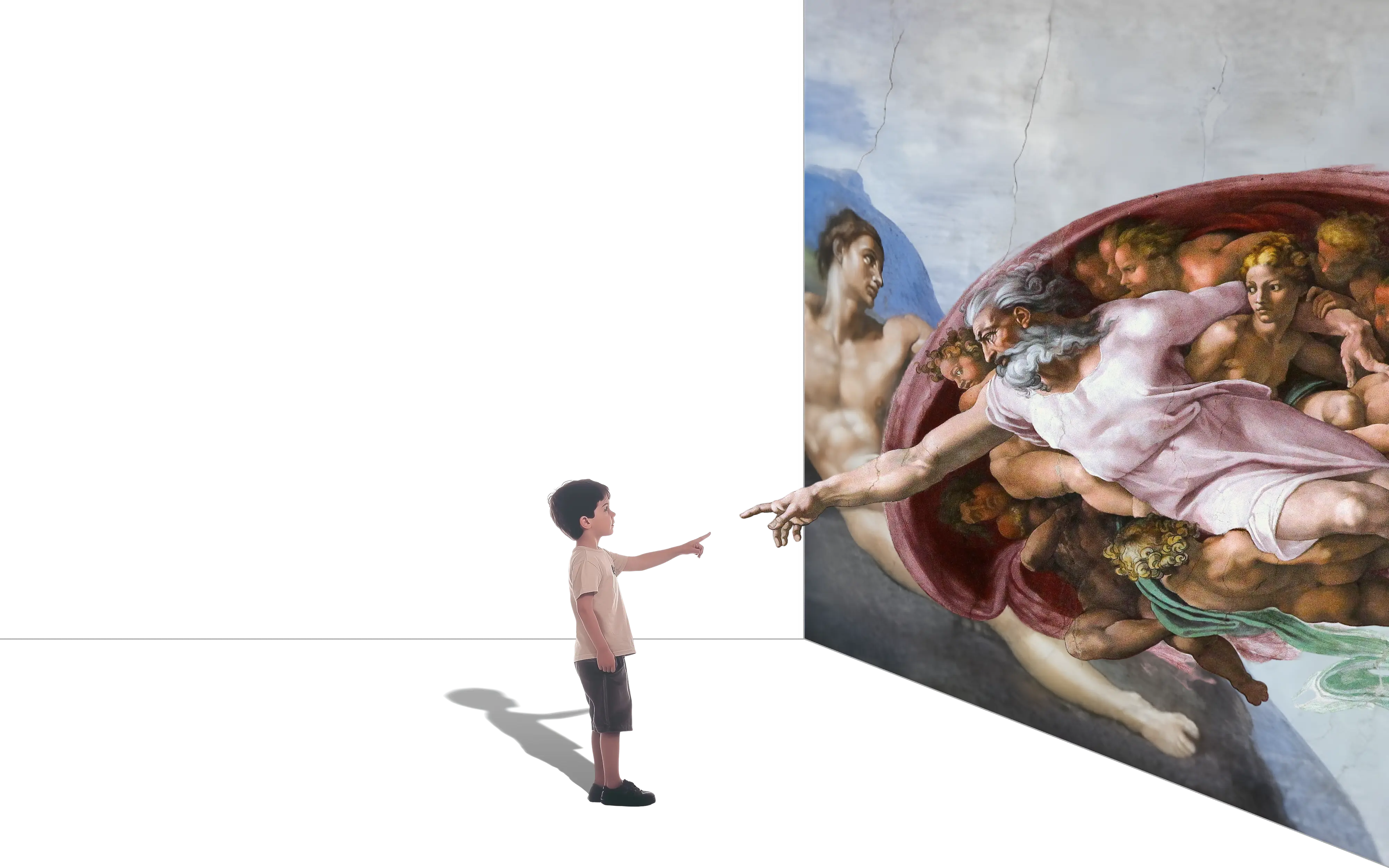
Trusted by cultural institutions worldwide
Musa powers guided experiences in 40+ languages across three continents, from art museums to archaeological sites.








Proven in a museum, not a demo
Museo Miraflores runs its permanent collection on Musa: over 42 minutes of average engagement and 30 percent of interactions beyond the curated tour, at a museum with 100,000+ annual visitors. The work won first place at the blooloop Innovation Awards 2025, Guest Journey of the Year.
Read the Miraflores case studyWhat is an AI museum guide?
An AI museum guide is a digital guide that combines a curated tour with live, spoken answers. Visitors follow your curators' route, ask questions in their own words at any stop, and get answers from a knowledge base your museum controls — not from the open internet. It launches from a QR code, in the browser of the visitor's own phone.
This page covers the museum rollout: content, governance and the first month. The category itself — what makes an audio guide AI native — lives on the AI audio guide page, and the no-download visitor experience on the museum audio guide app page.
Built for museum teams
From visitor experience to governance, Musa handles the full stack.
Visitor experience
- Guided narration plus on-demand questions in one flow
- Location-aware prompts that adapt to each room
- Hands-free audio with multilingual support and transcripts
Operations
- Payments, discounts, and timed access built in
- Analytics that show what visitors ask by gallery
- Instant publishing, no recording sessions or vendor queues
Governance
- Closed knowledge base curated by the museum
- Answer guardrails, citations, and persona control
- Data stays scoped to your exhibition; no internet scraping
How museums deploy Musa
From import to live in a few weeks, no app builds, no hardware orders.

1Shape the knowledge base
Import wall labels, catalogs, PDFs, and AV clips. Musa builds a structured, searchable base that only your guide can use.

2Design the visitor journey
Map indoor logic once. Define default routes, optional detours, and prompts that adapt to time on site or interest level.

3Launch and monetize
Use built-in checkout for paid access or member perks. Track activation rates and top questions to refine pricing and content.
AI museum guide, handsets, native app or chatbot?
Four ways museums deliver interpretation today, compared on the work they create for your team and the experience visitors get.
| Rental handsets | Native museum app | Object chatbot | AI museum guide (Musa) | |
|---|---|---|---|---|
| Interaction | Dial a number, listen | Tap and listen | Ask about one object at a time | Follow a curated tour and ask anything, with context kept across the visit |
| Languages | As many as you record | As many as you build | Depends on the model | 40+ from one source |
| Updates | Re-record and redistribute | App-store releases | Prompt changes | Edit in Studio, publish in minutes |
| Hardware & upkeep | Buy, charge, disinfect, replace | None, but app development and maintenance | None | None — QR codes and the visitor's own phone |
| Editorial control | Total, but frozen at recording time | Total, at development cost | Limited; answers vary with the model | Curated knowledge base, guardrails and review before publish |
Where an AI museum guide fits
Permanent collections
Replace aging devices with a museum-owned, AI native audio guide. Keep narratives fresh and tailored to repeat visitors without re-recording audio.
Temporary exhibitions
Spin up a full guide in weeks, not quarters. Control access windows, sponsorship messaging, and multilingual delivery without extra hardware.
Education and groups
Offer kid-friendly, academic, or accessibility-focused personas on the same infrastructure. Teachers can rely on accurate, source-cited answers.
What to expect in your first month
Import content, set up routes, and review AI outputs with your curators.
Run an on-site pilot with staff and docents. Validate spatial triggers and audio quality on real devices.
Switch on payments or member access, finalize personas, and publish multilingual narration.
Analyze the top visitor questions, adjust scripts, and roll out marketing at admissions.
Procurement questions about AI museum guides
Three models: revenue share with no upfront costs, a subscription from £500 per month, or prepaid credits from £1,000. Onboarding, content ingestion and 40+ languages are included in every plan.
What you already have: wall labels, catalogues, PDFs, AV clips and a floorplan. We ingest it during onboarding, and it becomes the guide's knowledge base.
It answers from the closed knowledge base your curators maintain, within guardrails you define. If a question goes beyond your content, the supplemental context is clearly labelled — and you can switch open Q&A off entirely.
Visitor interactions are anonymous and aggregated. You see what is asked per gallery, not who asked it, and the knowledge base stays scoped to your exhibition.
Tour audio keeps playing offline in dead zones. Live AI answers need a connection; they pause offline and resume when the phone reconnects.
Flexible exit: you keep your knowledge graph, transcripts and analytics via export, and everything stays ready in your account if you pause and want to resume later.
Ready to get started?
See how the AI audio guide platform works or schedule a walkthrough with the team.