 i
Weltmuseum WienInnere Stadt
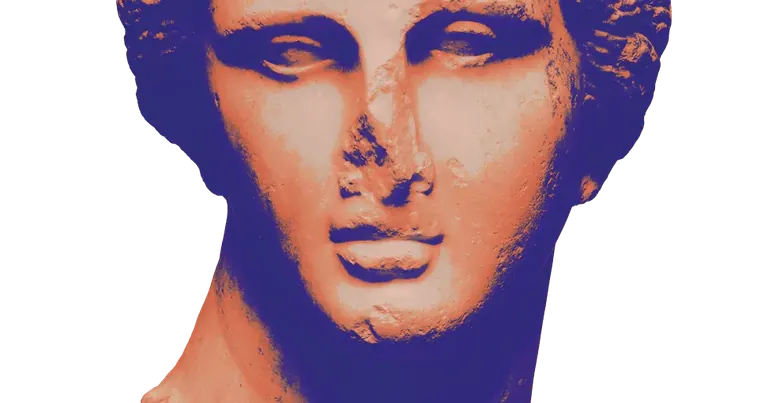
Crime Scene Ephesus: Cleopatra and Rome
A KHM show on the unsolved murder behind an octagonal tomb in Ephesus, set among Cleopatra, Caesar, Mark Antony and Augustus. In the Neue Hofburg.
More in Vienna
In 1929 Austrian archaeologists found a skeleton in an octagonal tomb in Ephesos, later said to be Arsinoë IV, Cleopatra's half-sister, murdered there in 41 BC. In January 2025 a University of Vienna DNA analysis found it was a boy aged 11 to 14. You walk in on that open case: the first room is a multimedia reconstruction of the tomb.
The murder is the hook, and the show soon moves on. About 100 objects, roughly half of them loans from Berlin, the Louvre, the British Museum and the Met, cover Cleopatra's dynasty, Alexandria and how Egypt reshaped Rome. ORF's Paula Pfoser found it less "true crime" than the billing promises, "a bit of a bait-and-switch", and richer as cultural history.
Tickets start at €19 and include one visit to the Ephesos Museum in the same building, where the tomb's real columns are. The audio drama, about an hour long with Dörte Lyssewski as Cleopatra, is included. Enter through the Weltmuseum; Tuesdays run to 9pm.
Editor's pick
The skeleton in the Ephesus octagon was long said to be Cleopatra's sister Arsinoë; DNA later showed a boy of 11 to 14. ORF found the show less true crime than billed and richer as cultural history.
Look for
The Gemma Augustea
Look for Augustus enthroned beside the goddess Roma, posed like Jupiter among his family and the gods, cut into onyx around AD 9 to 12 and in Habsburg hands since the 16th century.
The Green Caesar
A portrait head of Julius Caesar carved from green stone, lent by the Staatliche Museen zu Berlin.
Cleopatra in marble
A Roman portrait head of the queen made in the third quarter of the 1st century BC, during her own lifetime, also lent by Berlin.
The Ptolemy cameo
A Hellenistic onyx cameo cut through ten layers of stone between 278 and 269 BC, still in its 16th-century mount.
Mummy portrait of a woman with a necklace
Painted in hot coloured wax on wood between AD 161 and 192, a Roman-style face made for an Egyptian burial.
Good for
- Evening Visits
- First-Timers
- Nerding Out
Skip if
You want a true-crime story: ORF's critic found the murder is mostly a hook for cultural history.
With kids
A free booklet for ages 6 to 10 follows Biti the bee to Ephesos, Alexandria and Rome, with questions such as why so many ancient statues have lost their noses.
Also at Weltmuseum Wien
On now nearby
 i
Glaciers out of balance
Natural History Museum Vienna (Naturhistorisches Museum Wien)
 i
Caution, high voltage! Electrical accidents – a class of their own
Natural History Museum Vienna (Naturhistorisches Museum Wien)
 i
Good Collecting – Bad Collecting. 150 Years of the Natural History Museum Vienna
Natural History Museum Vienna (Naturhistorisches Museum Wien)
Nearby
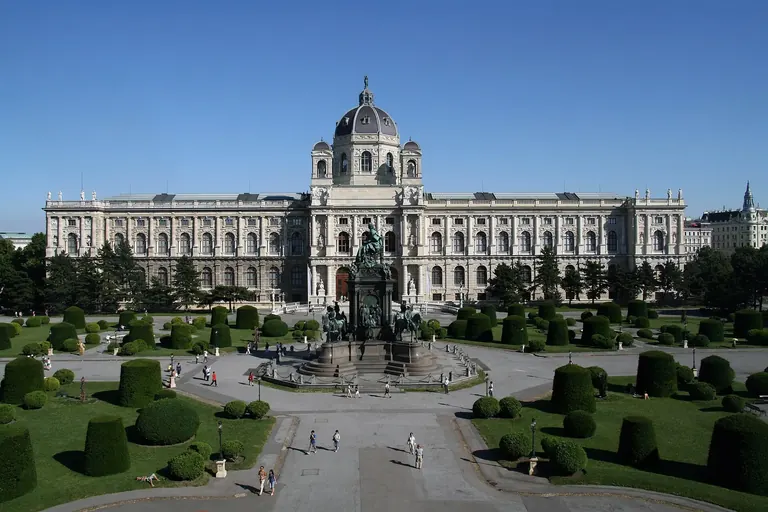
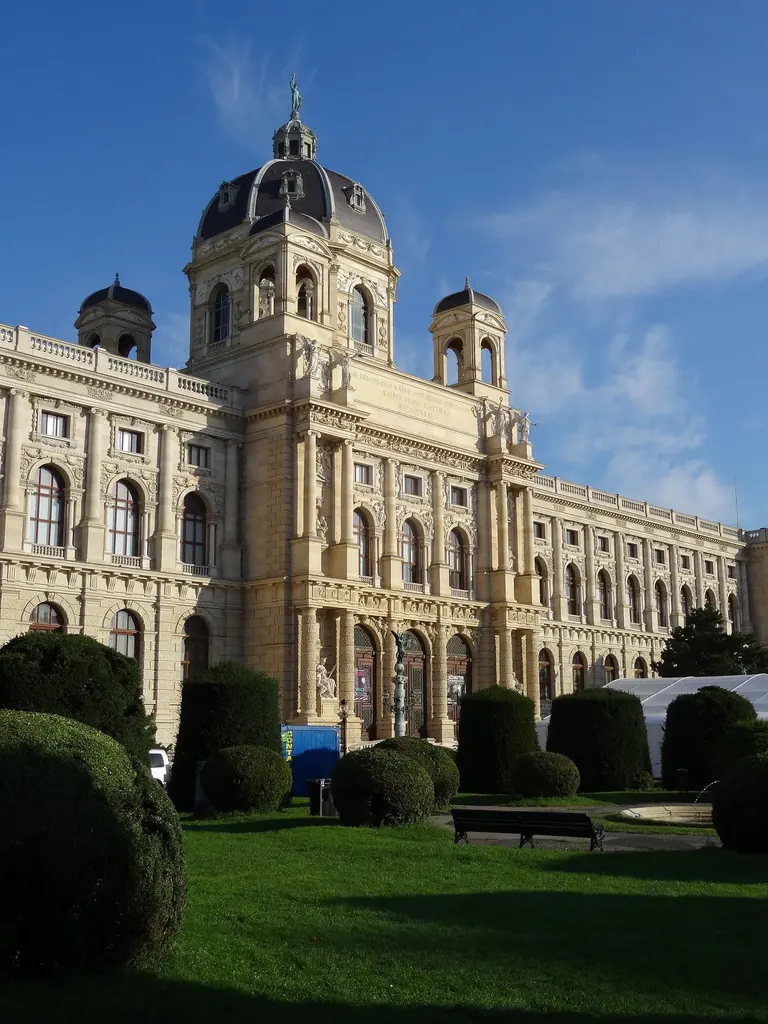
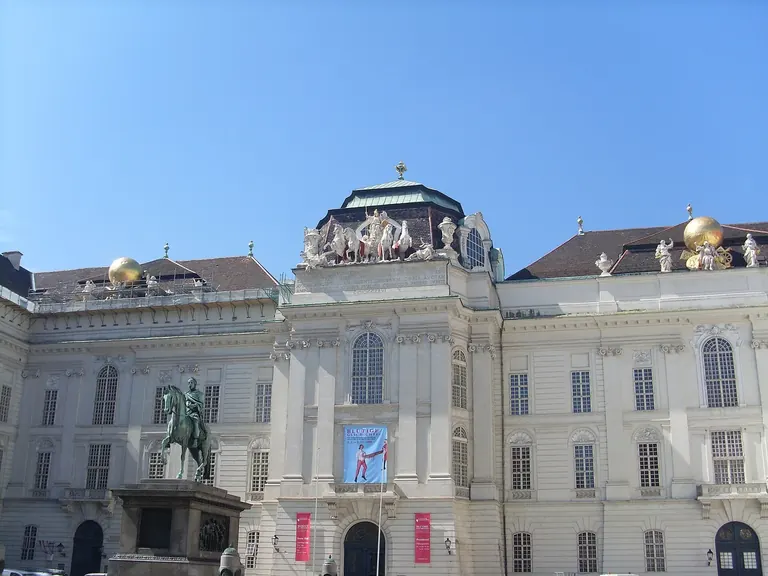
Image credits
8
- Crime Scene Ephesus: Cleopatra and RomeCourtesy of Weltmuseum Wien
- Glaciers out of balanceJürgen Merz / NHM Wien
- Caution, high voltage! Electrical accidents – a class of their ownNHM Wien
- Good Collecting – Bad Collecting. 150 Years of the Natural History Museum ViennaNHM Wien
- Weltmuseum WienThomas Ledl / Wikimedia Commons, CC BY 4.0
- Kunsthistorisches Museum WienManfred Werner (Tsui), Wikimedia Commons, CC BY-SA 3.0
- Natural History Museum Vienna (Naturhistorisches Museum Wien)Stb1er (Dario Premm), Wikimedia Commons, CC BY-SA 4.0
- State Hall of the Austrian National Library (Prunksaal)Mirej / Wikimedia Commons, CC BY-SA 3.0 AT