 i
Neues MuseumMitte
The Crown of Kerch: Treasures from the Dawn of European History
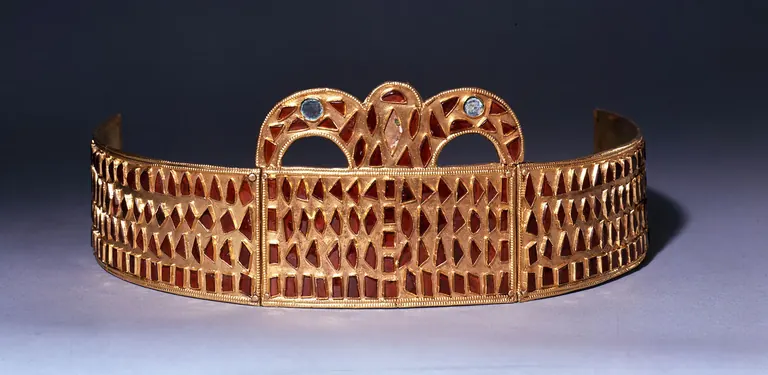
Migration-period gold and garnet jewellery from the Diergardt collection, on loan from Cologne, led by a noblewoman's diadem from Crimea.
More in Berlin
The red stones in the Crown of Kerch are garnets, set into a gold band that was found in a noblewoman's tomb at Kerch, the ancient Panticapaion, on the Crimean coast. It dates to the late 4th or early 5th century, and when the show opened the Tagesspiegel headlined its report "Als die Hunnen Krone trugen", when the Huns wore crowns.
Around it are brooches, belts and gold from the collection of Johannes von Diergardt, heir to a Rhineland silk and velvet family, who gave pieces to this museum from 1906. After his death in 1934 his heirs sold the collection to Cologne, and it was not seen in Berlin again for over 80 years. The museum still calls it a special exhibition, nine years after it opened.
You find it in the Medieval Hall, and the show's page lists only the Neues Museum ticket (€14, concessions €7). It closes on 22 September 2027.
Look for
The Crown of Kerch
Look for the gold diadem inlaid with red garnets, taken from a Migration-period tomb in Crimea.
The griffin buckle
A gold belt buckle from around 600 AD showing a griffin with a predator's body, wings and a peacock's tail.
The two big cats
A gold bracelet from Afghanistan or Tajikistan, made between the 1st century BC and the 2nd century AD, worked as two big cats.
The snake ring
A gold finger ring shaped like a snake, from the 2nd century BC.
The animal-shaped pieces
Two zoomorphic ornaments from the Black Sea region, studded with red stones and tiny pellets of gold.
Good for
- An Hour Or Less
- Locals Who've Seen It All
- Nerding Out
Also at Neues Museum
On now nearby
Nearby
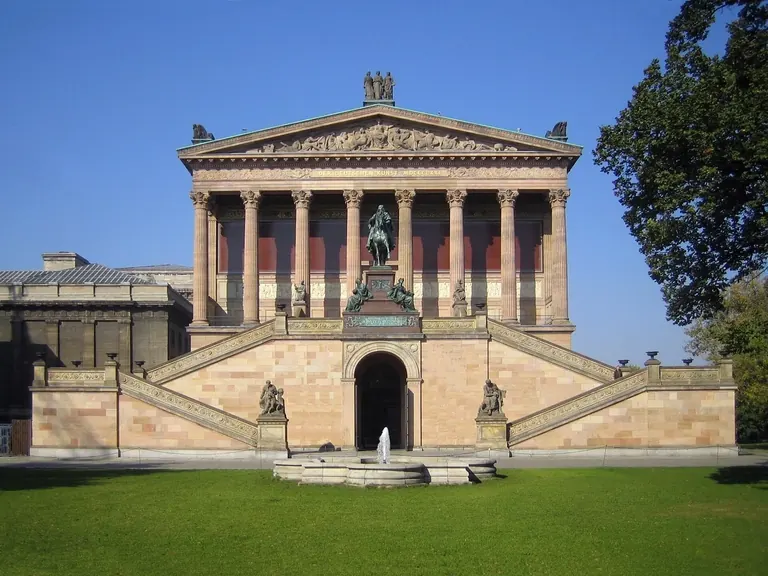
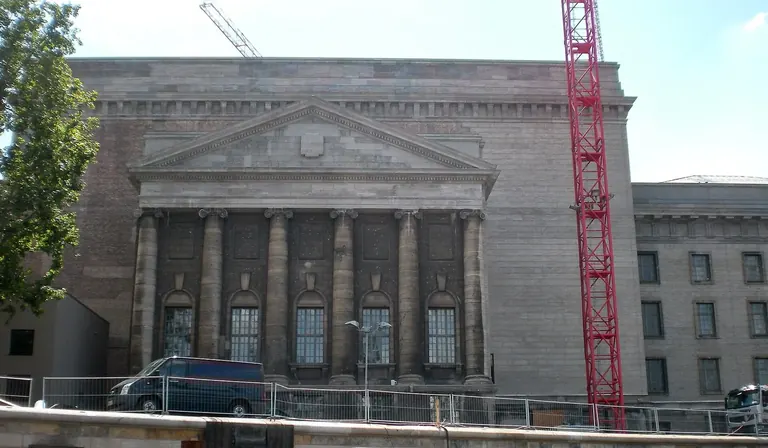
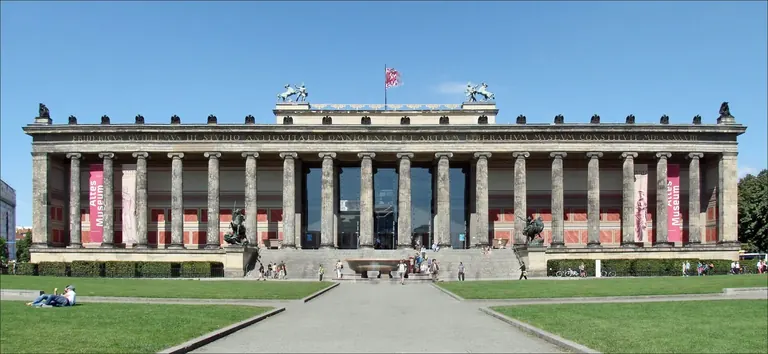
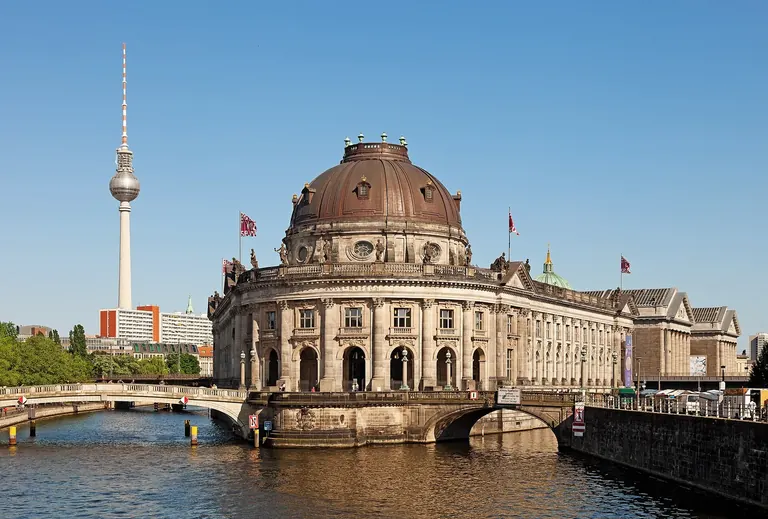
Image credits
9
- The Crown of Kerch: Treasures from the Dawn of European History© Römisch-Germanisches Museum/Rheinisches Bildarchiv Cologne
- Scandal! Hermione von Preuschen and the “Mors Imperator”© Alte Nationalgalerie, Mika Wißkirchen
- InterNationalgalerie 1: National Museum in Warsaw© Piotr Ligier / Muzeum Narodowe w Warszawie
- Across Epochs: Gursky, Lucas, Miró, Warhol and the Art of the Long 19th Century© Nationalgalerie, Staatliche Museen zu Berlin
- Neues MuseumFred Romero / Wikimedia Commons, CC BY 2.0
- Alte NationalgalerieManfred Brückels / Wikimedia Commons, Public domain
- PergamonmuseumHerrAdams / Wikimedia Commons, CC BY-SA 4.0
- Altes MuseumJean-Pierre Dalbéra / Wikimedia Commons, CC BY 2.0
- Bode-MuseumThomas Wolf / Wikimedia Commons, CC BY-SA 3.0