 i
Neues MuseumMitte
Destiny in the Stars: The Beginnings of the Zodiac
The history of the zodiac from Babylonia to Egypt and the Greco-Roman world, from star tablets to celestial ceilings.
More in Berlin
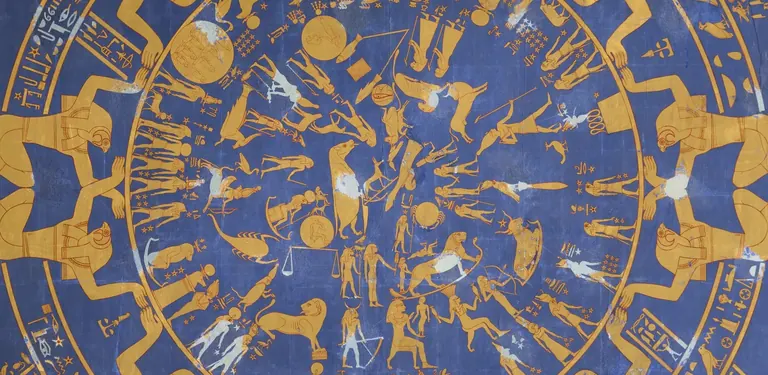
Look up in the Mythological Hall and the round sky from the Egyptian temple at Dendera is painted across the ceiling. Below it, the show traces how the twelve signs began: in Babylon around 400 BC, as a grid for measuring the sky that soon gave private people, not only kings, their own horoscopes.
Everything comes from Berlin's collections, some of it never shown before. The cases hold clay tablets of planetary tables, papyri, coins and gems, following the signs over 800 years from Babylon to Egypt, Greece and Rome, along with a 14-metre panorama of the zodiac ceiling at Esna. The Roman gem on the poster is tiny in real life. Capricorns, take note: it shows your sign as Babylon first drew it, half goat, half fish.
Tagesspiegel's review dwells on ancient horoscopes and astromedicine, and the lead curator's argument is that the zodiac swapped observation for algorithms. It's included in the €14 Neues Museum ticket (€7 concessions), with curator tours in English on several dates.
Look for
The goat-fish gem
Look for the Roman gem from the poster, carved with the Babylonian goat-fish that became Capricorn, and far smaller than the poster suggests.
The Taurus microzodiac tablet
A Babylonian clay tablet for the sign of the Bull, showing the Pleiades, the Moon and the Bull itself.
The Esna panorama
A high-resolution image 14 metres long of the zodiac on the temple ceiling at Esna, which a German-Egyptian team is restoring.
The man in the moon
A face of the man in the moon, scratched into an ancient clay tablet.
The lion horoscope of Nemrut Dağı
A full replica of the lion relief from Nemrut Dağı, known as the lion horoscope.
Good for
- Locals Who've Seen It All
- Nerding Out
Skip if
You want a planetarium show: this is papyri, clay tablets and coins in cases.
Also at Neues Museum
On now nearby
Nearby
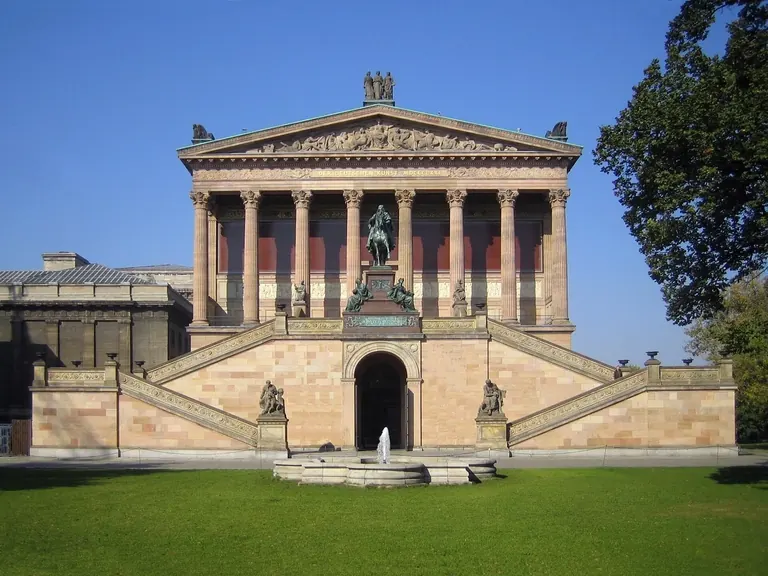
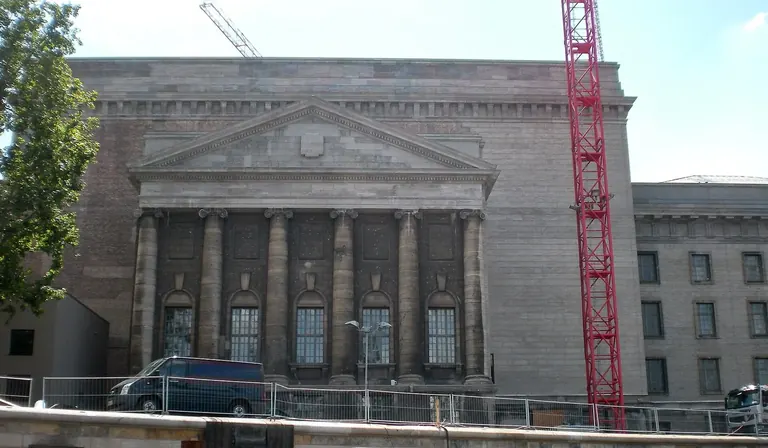
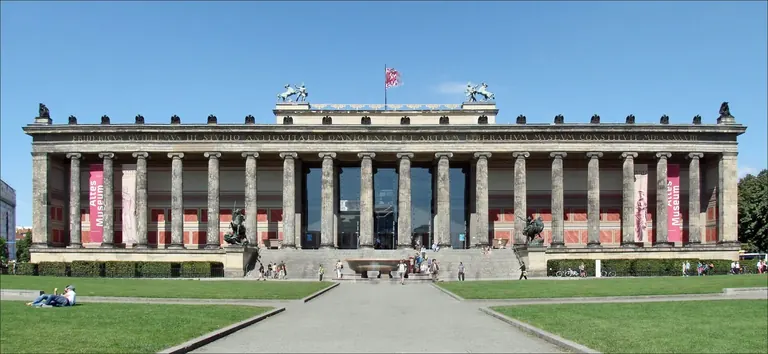

Image credits
9
- Destiny in the Stars: The Beginnings of the Zodiac© Staatliche Museen zu Berlin, Ägyptisches Museum und Papyrussammlung, Foto: Sandra Steiß
- Scandal! Hermione von Preuschen and the “Mors Imperator”© Alte Nationalgalerie, Mika Wißkirchen
- InterNationalgalerie 1: National Museum in Warsaw© Piotr Ligier / Muzeum Narodowe w Warszawie
- Across Epochs: Gursky, Lucas, Miró, Warhol and the Art of the Long 19th Century© Nationalgalerie, Staatliche Museen zu Berlin
- Neues MuseumFred Romero / Wikimedia Commons, CC BY 2.0
- Alte NationalgalerieManfred Brückels / Wikimedia Commons, Public domain
- PergamonmuseumHerrAdams / Wikimedia Commons, CC BY-SA 4.0
- Altes MuseumJean-Pierre Dalbéra / Wikimedia Commons, CC BY 2.0
- Bode-MuseumThomas Wolf / Wikimedia Commons, CC BY-SA 3.0