 i
Kyoto Museum of Crafts and DesignOkazaki
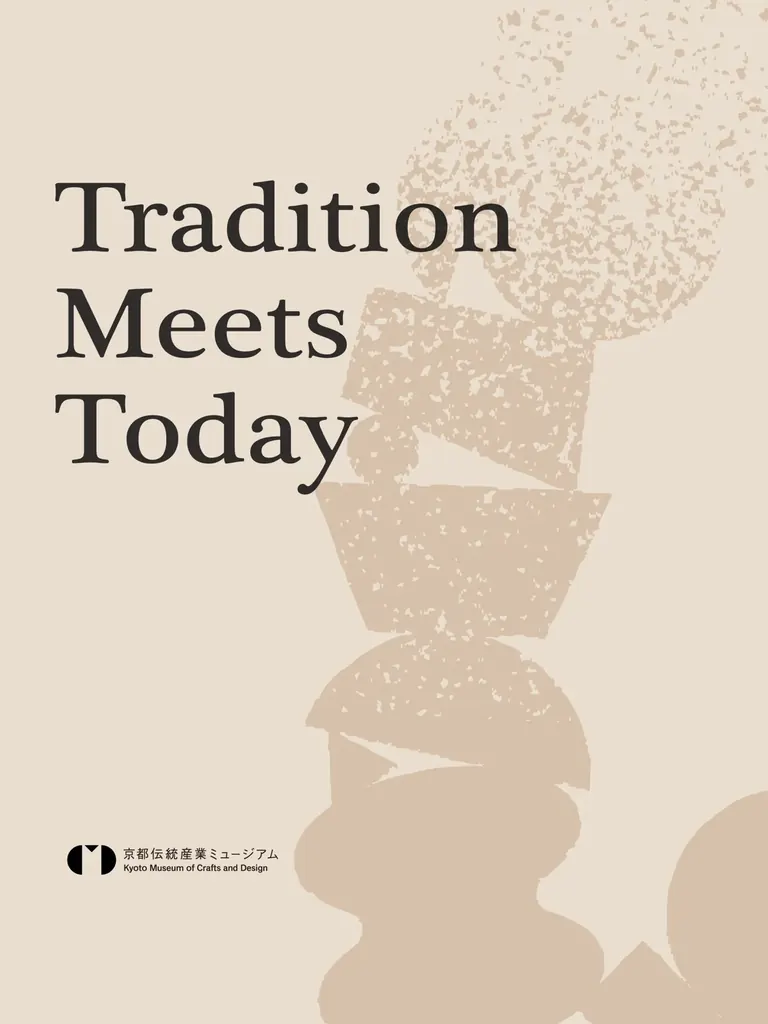
Tradition Meets Today #7
Kyoto craft skills reimagined as contemporary products and design, plus a parallel show on materials and techniques from five Kyoto makers.
More in Kyoto
Somewhere in this room is a pair of sneakers in domestic cowhide, finished with Kanazawa gold leaf using Kyoto's old foil-stamping technique. Nearby hangs clothing woven on Nishijin techniques from biodegradable polyester yarn. That's the idea of the series: Kyoto craft skills turned into things you could use now.
You get two shows in one room, from 12 businesses in all. Tradition Meets Today #7 has seven finished products. The parallel show, run with the city's industrial research institute, stops "just before a material becomes a product": five Kyoto makers each break down one technique, like twisting paper into thread or making porcelain thin enough to let light through.
Come for materials and process rather than antiques. Entry is the regular museum ticket (500 yen, students 400, free in kimono), in the exhibition room at the back of the basement floor, 10:00 to 18:00, until 28 December.
Look for
Gold-leaf sneakers
Look for KYOTO Leather's HAKU shoes, domestic cowhide stamped with Kanazawa gold leaf using Kyoto's traditional foil-stamping technique.
Lacquer you can fold
COCOO's URUCEE is cloth with urushi lacquer soaked into the gaps between its fibres, so it stays flexible and sheds water.
A vase grown from mushroom roots
Sato Kiyomatsu Shoten moulded this vase in 3D from sawdust and cultured mycelium, then coated its surface in lacquer.
Porcelain that lets light through
Touan's Yuhari porcelain is made with cellulose nanofibres from wood, so light passes through the clay.
Wrapping paper from stage costumes
Yamamoto Senkojo digitised more than 100,000 kata-yuzen stencils kept for theatre costumes and rebuilt them as wrapping paper patterns.
Good for
- Cheap Culture
- Locals Who've Seen It All
- Nerding Out
- Rainy Days
Skip if
You want historic craft objects: this room is all new products and material experiments.
With kids
Preschool children are free, and schoolchildren who live or study in Kyoto City get in free with proof; other school-age visitors pay 400 yen.
Also at Kyoto Museum of Crafts and Design
On now nearby
Nearby

Image credits
8
- Tradition Meets Today #7Courtesy of Kyoto Museum of Crafts and Design
- 3rd Collection Gallery Exhibition 2026Courtesy of The National Museum of Modern Art, Kyoto (MoMAK)
- Reflections in Jewellery: Memory and IdentityCourtesy of The National Museum of Modern Art, Kyoto (MoMAK)
- Zen and GhibliCourtesy of Kyoto City KYOCERA Museum of Art
- Kyoto Museum of Crafts and DesignAsturio Cantabrio / Wikimedia Commons, CC BY-SA 4.0
- The National Museum of Modern Art, Kyoto (MoMAK)Wiiii / Wikimedia Commons, CC BY-SA 3.0
- Hosomi MuseumAsturio Cantabrio / Wikimedia Commons, CC BY-SA 4.0
- Kyoto City KYOCERA Museum of ArtKakidai / Wikimedia Commons, CC BY-SA 4.0