 i
Kyoto City KYOCERA Museum of ArtOkazaki
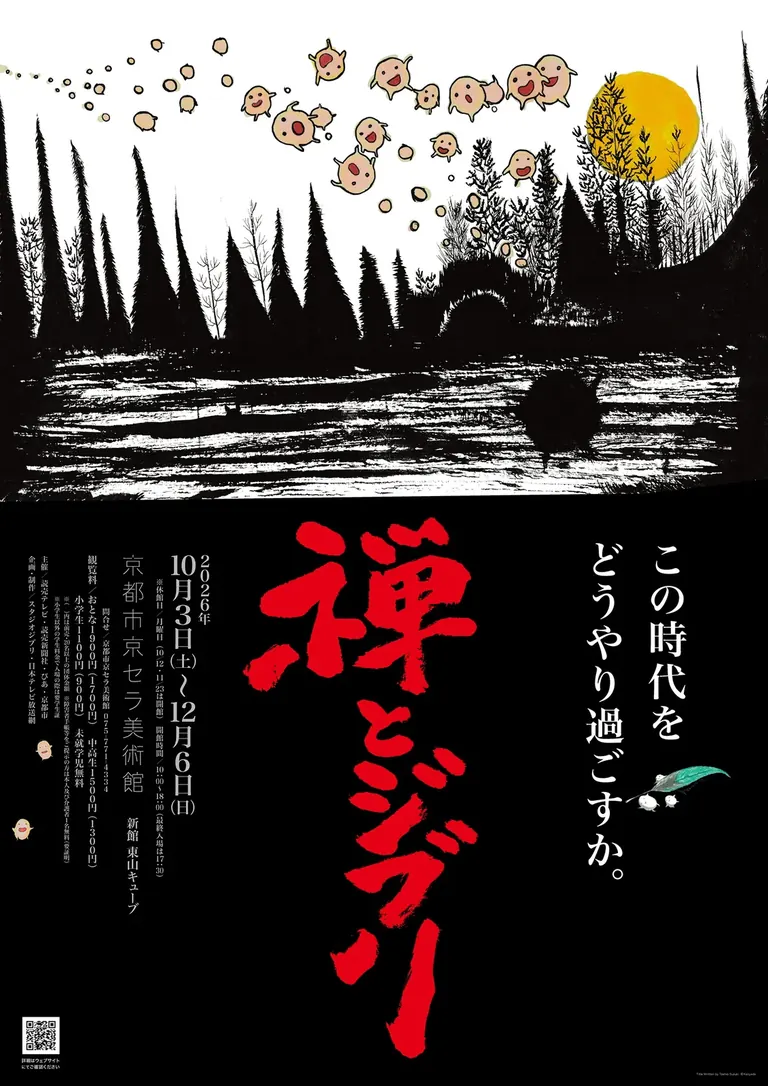
Zen and Ghibli
Immersive exhibition exploring Zen through Studio Ghibli films, built around Hayao Miyazaki's The Boy and the Heron, in the Higashiyama Cube.
More in Kyoto
A grey heron bows at the entrance, the bird that leads Mahito into another world in The Boy and the Heron. You follow it into a corridor of doors, each opening on a Ghibli "other world" built in 3D: Yubaba waiting, Ponyo running across a giant fish, and No-Face mid-binge, down to the stains on the tatami.
Then come the planning documents and storyboards for The Boy and the Heron, which Miyazaki stopped drawing for a year after losing someone close. A room of "Ghibli Zen paintings" pairs producer Toshio Suzuki's character drawings with Zen phrases. The last section covers monastery life and lay practitioners, including Kyocera's founder Kazuo Inamori, so the name on the building is also an exhibit.
You need no knowledge of Zen. In the Higashiyama Cube, adults pay ¥1,900, elementary pupils ¥1,100, preschoolers free. On busy days entry is by numbered ticket, which can run out before last entry at 17:30. Your ticket stub gets a Zen-phrase bookmark at participating temples.
Editor's pick
Zen read through Studio Ghibli films, built around Miyazaki's The Boy and the Heron, in the Higashiyama Cube. Kyoto has hundreds of Zen temples; this is the way in with a talking heron.
Look for
No-Face's banquet
Behind one door of the time corridor, No-Face is mid-binge in 3D, with the scattered food and even the stains on the tatami reproduced.
The bowing grey heron
The heron from The Boy and the Heron bows to you at the start, then leads you into the corridor of doors to other Ghibli worlds.
The hidden Totoros
In the studio section a large Totoro fills a building, with small Totoros tucked away around it for you to spot.
Kiki and San as Zen paintings
Suzuki's drawing of Kiki carries the phrase 'every day is a good day', and San carries 'ryobo', forgetting both sides of an opposition.
A trainee monk's robe
A robe a trainee monk actually wore for ten years, shown with a model of the monks' sleeping quarters.
Good for
- Small Kids
- Teenagers
With kids
Preschoolers get in free and elementary pupils pay ¥1,100. Kids can hunt for the small Totoros hidden in the studio section.
Also at Kyoto City KYOCERA Museum of Art
- [2026 Fall] Collection Room – Special Display: A Museum's Story — The Birth of the Kyoto City Museum of Art9 October 2026 – 13 December 2026
- Matsunobe Soshi: Walls12 September 2026 – 20 December 2026
- Yamaga Seika: Boundless Imagination in Textile Art – Celebrating the 140th Anniversary of His Birth19 September 2026 – 20 December 2026
On now nearby
Nearby

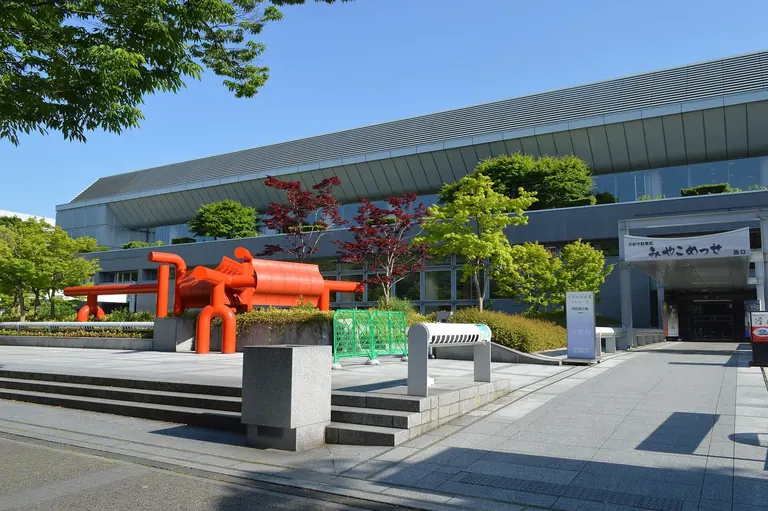
Image credits
8
- Zen and GhibliCourtesy of Kyoto City KYOCERA Museum of Art
- 3rd Collection Gallery Exhibition 2026Courtesy of The National Museum of Modern Art, Kyoto (MoMAK)
- Reflections in Jewellery: Memory and IdentityCourtesy of The National Museum of Modern Art, Kyoto (MoMAK)
- Kyoto City KYOCERA Museum of ArtKakidai / Wikimedia Commons, CC BY-SA 4.0
- The National Museum of Modern Art, Kyoto (MoMAK)Wiiii / Wikimedia Commons, CC BY-SA 3.0
- Kyoto Museum of Crafts and DesignAsturio Cantabrio / Wikimedia Commons, CC BY-SA 4.0
- Hosomi MuseumAsturio Cantabrio / Wikimedia Commons, CC BY-SA 4.0
- Sen-oku Hakuko KanPlusMinus / Wikimedia Commons, CC BY-SA 3.0