 i
Gropius BauKreuzberg
Kreuzberg: Kunst und Migration seit 1960
Around 130 works on labour migration, exile, housing, racism and solidarity in Kreuzberg since the 'guest worker' era, from rarely shown historical pieces to new commissions.
More in Berlin
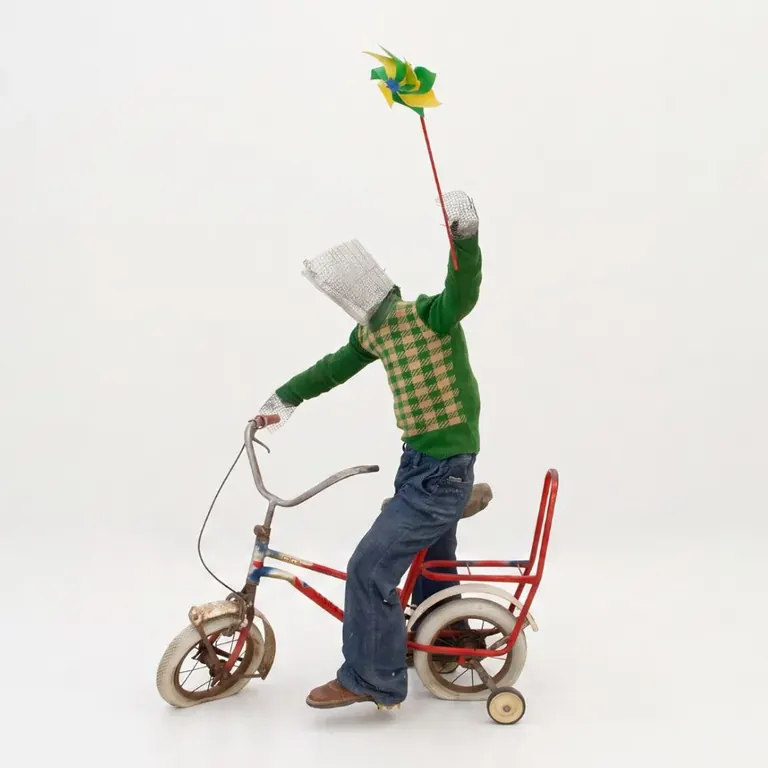
Before you are properly inside, a child meets you. Vlassis Caniaris's Kind (1980) wears a green-and-yellow checked wool jumper and flared jeans. Its Bonanza bike has a flat front tyre, its head is a rolled-up wire frame, and the toy windmill in its outstretched hand has stopped turning.
Around 130 works by more than 40 artists fill eleven themed rooms on the first floor, among them letter-writing, migrant workers' politics and the street as a playground. Most of the artists came to West Berlin in the 1970s and 80s, and rarely shown older pieces hang beside new commissions. Berlin Art Link's critic credited the show with pushing against the idea that migrants' lives can be read only through work and discrimination: here they paint, photograph and write to each other.
Know what you are walking into: the museum's content note covers racism, violence and suicide. Tickets are €15, €10 reduced, and the Gropius Bau is closed on Tuesdays.
Look for
Kind by Vlassis Caniaris (1980)
Look for the child figure at the entrance in a checked wool jumper and flared jeans, with a flat-tyred Bonanza bike and a head of rolled wire.
Hopscotch by Vlassis Caniaris (1974)
Headless human-shaped figures with suitcases stand around a chalk hopscotch grid on the floor, its squares labelled with words like Ausländerpolizei.
Monika Sieveking's Siemens workers (1973)
A group portrait of factory workers in work coats and everyday clothes, painted after Sieveking saw them eating beside the machines because there was no break room.
Sarah Haffner's two park benches
A painting of two benches side by side: one printed Nur für Arier, the other scrawled with Türken raus.
Analphabeten in zwei Sprachen (1975)
Mehrangis Montazami-Dabui's film about guest workers' children fluent in neither Turkish nor German plays on a boxy CRT monitor, facing Esther Friedman's late-1970s Kreuzberg street photos.
Good for
- Nerding Out
- Out-Of-Town Guests
Skip if
You want a light afternoon: the museum's content note covers racism, violence and suicide.
Free in the same building
Plan a visit to Gropius BauAlso at Gropius Bau
On now nearby
Nearby
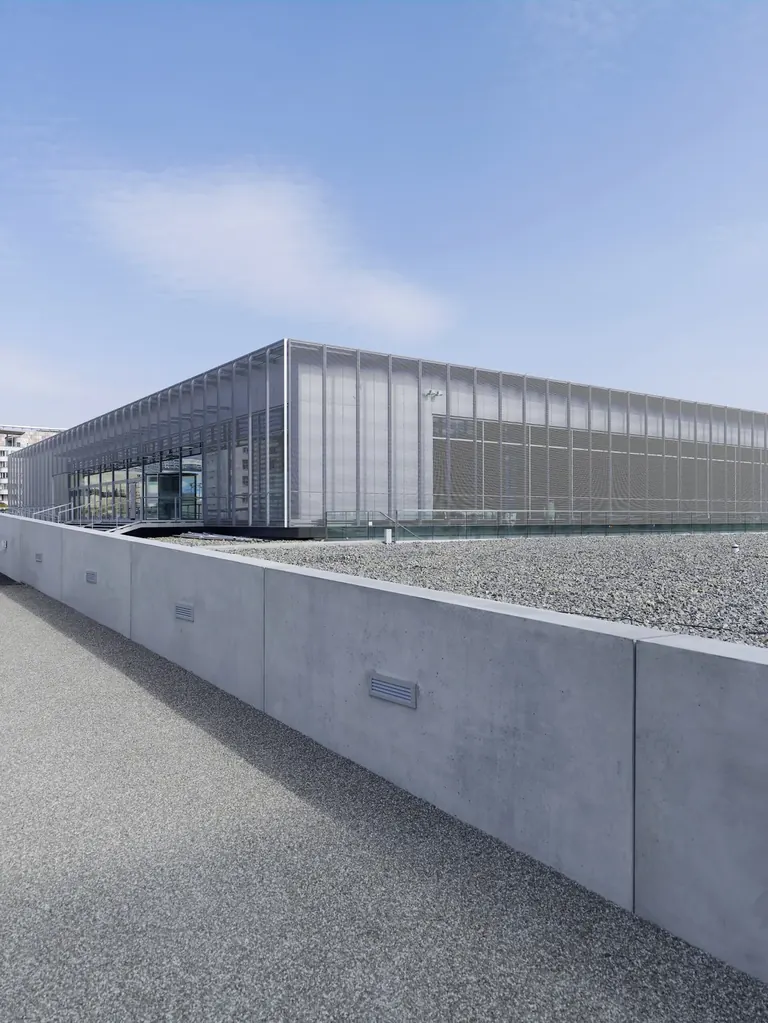
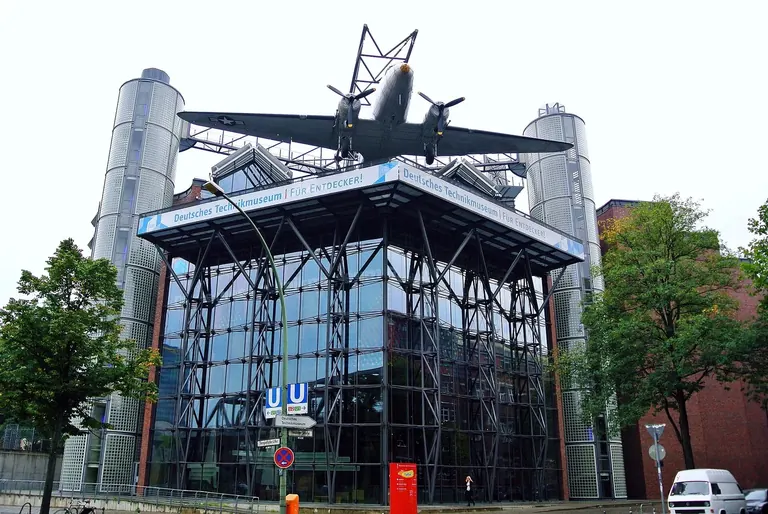
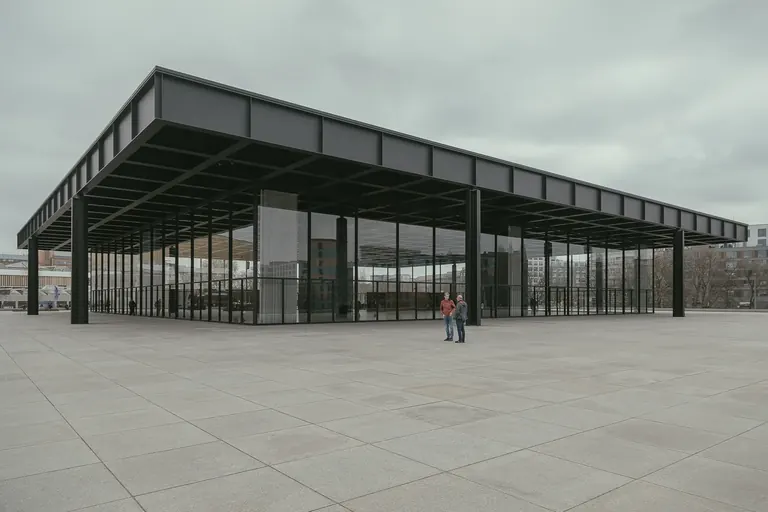
Image credits
8
- Kreuzberg: Kunst und Migration seit 1960Vlassis Caniaris, Kind, 1980, collection of the Museum of Modern Art in Warsaw, courtesy: the Estate of Vlassis Caniaris and Galerie Peter Kilchmann, Zurich/Paris © The Estate of Vlassis Caniaris, photo: Sebastian Schaub
- The Holocaust – What Did the Germans Know?© Medienzentrum Hanau Bildarchiv
- Rubens, Jordaens, van Dyck. Flemish Master DrawingsPhoto: Staatliche Museen zu Berlin, Kupferstichkabinett / Jörg P. Anders
- Time Travel in the Old Tiergarten District© Bildarchiv Foto Marburg
- Gropius BauManfred Brückels / Wikimedia Commons, CC BY-SA 3.0
- Topography of TerrorStiftung Topographie des Terrors / Wikimedia Commons, CC BY-SA 3.0 DE
- Deutsches TechnikmuseumSpyrosdrakopoulos / Wikimedia Commons, CC BY-SA 4.0
- Neue NationalgalerieEvgenii Salganik / Wikimedia Commons, CC BY-SA 4.0