 i
Topography of TerrorKreuzberg
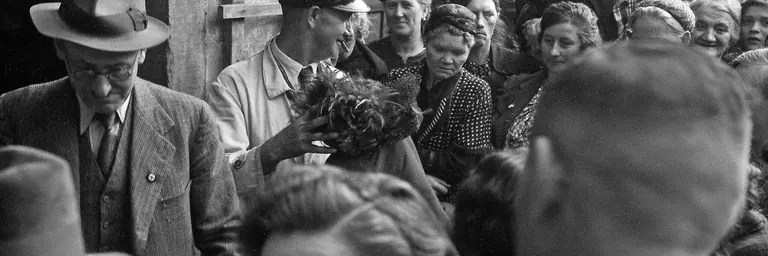
The Holocaust – What Did the Germans Know?
Around 300 objects in three parts – propaganda, everyday clues and pieced-together knowledge – ask what ordinary Germans knew about the Holocaust.
More in Berlin
You start at a newspaper: the Münchner Illustrierte of 16 July 1933, with a two-page spread headlined "The Truth about Dachau". Under a photo of prisoners holding shovels, the caption says they are being re-educated into useful members of the Nazi state.
Around 300 objects from 95 archives and private owners follow in three chapters: what the regime said openly, the hints people picked up on the street, at church, at work or on the train, and three people who pieced those fragments into a picture. The display runs on two levels, with slanted walls that partly hide some exhibits, so you do the connecting yourself. In taz, Klaus Hillenbrand praised it for letting the facts speak; his catch is that photographs of public deportations get surprisingly little space.
Entry is free, daily from 10:00 to 20:00, in the special exhibitions room. Everything is in German and English, and audio guides are available.
Look for
The Ganz family's dinner service
Look for a soup tureen and plate with a discreet pattern, from a service for twelve auctioned off in 1941 and kept by the buyer's family until 2023.
Anna Haag's war diary
One of 20 notebooks in which a Stuttgart woman analysed propaganda and logged crimes, then hid them in her coal cellar for fear of denunciation.
The British leaflet found on a train
A copy of "Die andere Seite", dropped over Germany by the million, picked up by commuters near Düsseldorf; it prints Thomas Mann's BBC warning about crimes committed in Germans' name.
Walter Höchstädter's chaplain's cross and leaflet
An army chaplain who learned of the murders had 1,000 copies of a leaflet condemning them printed in Annecy in 1944, and posted them to friends.
The Volksempfänger radio
The cheap people's receiver built to carry Nazi propaganda, which could also pick up foreign stations; Jews were barred from owning radios once the war began.
Good for
- Cheap Culture
- Nerding Out
- Rainy Days
Also at Topography of Terror
On now nearby
Nearby
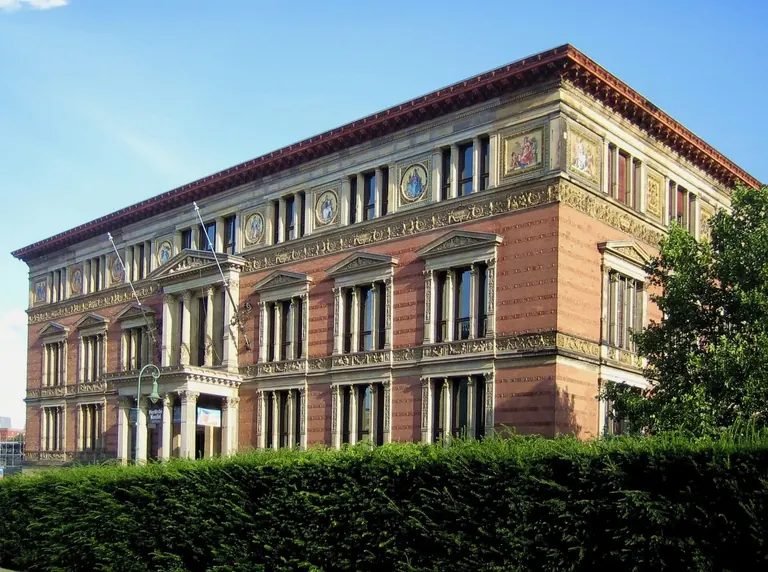
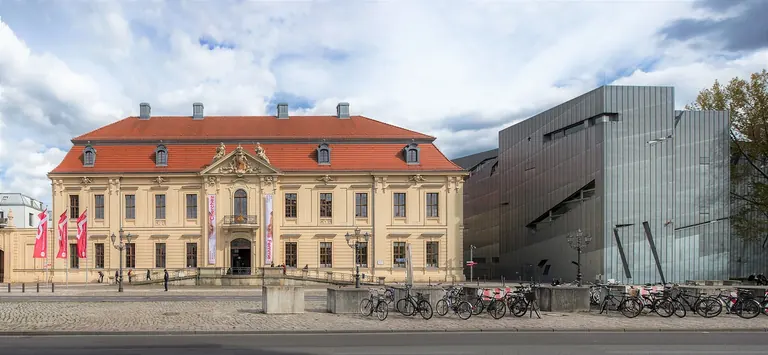
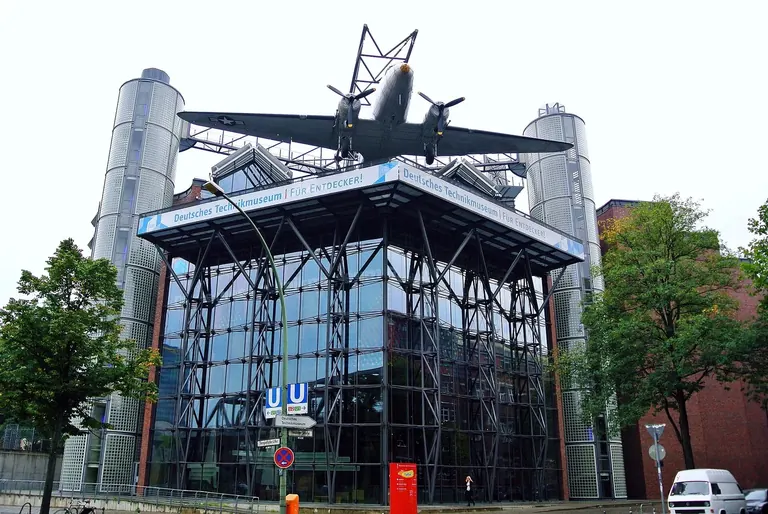
Image credits
8
- The Holocaust – What Did the Germans Know?© Medienzentrum Hanau Bildarchiv
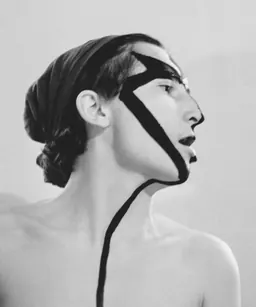
- Gabriele Stötzer: Dabei sein und nicht schweigenGabriele Stötzer, Die Auslöschung eines Blicks – Ich trage meine Wunden heute offen, 1983, courtesy: LOOCK Galerie, Berlin, photo: Heike Stephan © VG Bild-Kunst, Bonn 2026
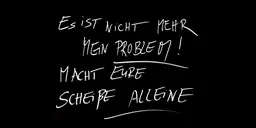
- Christoph Schlingensief: Es ist nicht mehr mein Problem, macht eure Scheiße alleine© The Estate of Christoph Schlingensief
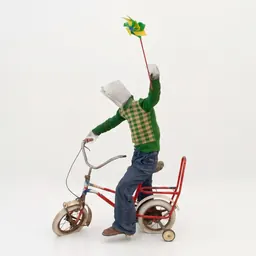
- Kreuzberg: Kunst und Migration seit 1960Vlassis Caniaris, Kind, 1980, collection of the Museum of Modern Art in Warsaw, courtesy: the Estate of Vlassis Caniaris and Galerie Peter Kilchmann, Zurich/Paris © The Estate of Vlassis Caniaris, photo: Sebastian Schaub
- Topography of TerrorStiftung Topographie des Terrors / Wikimedia Commons, CC BY-SA 3.0 DE
- Gropius BauManfred Brückels / Wikimedia Commons, CC BY-SA 3.0
- Jewish Museum BerlinMarek Śliwecki / Wikimedia Commons, CC BY-SA 4.0
- Deutsches TechnikmuseumSpyrosdrakopoulos / Wikimedia Commons, CC BY-SA 4.0