 i
KulturforumTiergarten
Time Travel in the Old Tiergarten District
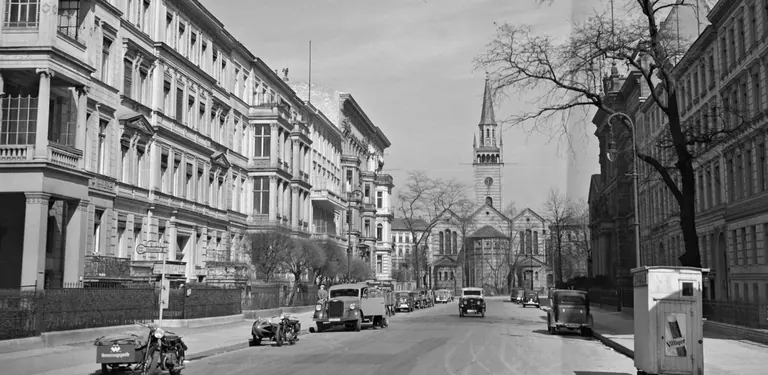
Free Kunstbibliothek presentation on the artistic community around Matthäikirchplatz a century ago, whose cultural life ended in 1933.
More in Berlin
The piazzetta you cross to get into the Kulturforum was once Matthäikirchstraße 4, a corner house where Julie and Julius Elias hosted cultured Berlin from around 1900, with Max Liebermann as their favourite guest. Their walls held Manet, Monet, Cézanne, van Gogh and Munch. Ken Adam, the James Bond set designer, was born in the same house in 1921.
This foyer display in the Kunstbibliothek shows images and wall texts from the library's research project, running since 2022. Each section pins residents to an address now under the museums: Paul Cassirer's flat stood where berlin modern is being built, and Eduard Arnhold's top-lit picture gallery stood where the Gemäldegalerie is. Of the district's more than 529 houses, 17 survive.
The last section covers what came after 1933, when most of the street's residents were persecuted as Jews and driven into exile, and Julie Elias was forced to sell her house. Entry is free, the foyer is wheelchair accessible and it is open until 20:00 on weekdays.
Look for
Marlene Dietrich on the Europa
A 1933 photograph of Dietrich on board the fast steamer Europa in a suit from the Max Becker fashion house, whose palace stood where the back of the Kunstgewerbemuseum is today.
Tilla Durieux in silver
Paul Cassirer's wife, one of the most portrayed women of her time, photographed in 1921 in a silver evening gown by Johanna Marbach of Lennéstraße.
A look out of the window
A wall panel sends you to the piazzetta outside, where Julie Elias's art-filled flat was the meeting place of Berlin's writers, actors and artists.
Renée Sintenis at work
Hedda Walther's 1928 photograph of the sculptor who lived on Magdeburger Straße for twenty years and in 1932 made the Golden Bear still handed out at the Berlinale.
In der Lennéstraße, 1922
A fashion drawing by R.L. Leonard from the magazine STYL, showing coat dresses by the Hammer fashion house at Lennéstraße 2.
Good for
- An Hour Or Less
- Cheap Culture
- Locals Who've Seen It All
- Nerding Out
Skip if
You want the paintings themselves: the residents' collections are now scattered across museums worldwide.
Also at Kulturforum
On now nearby


Nearby
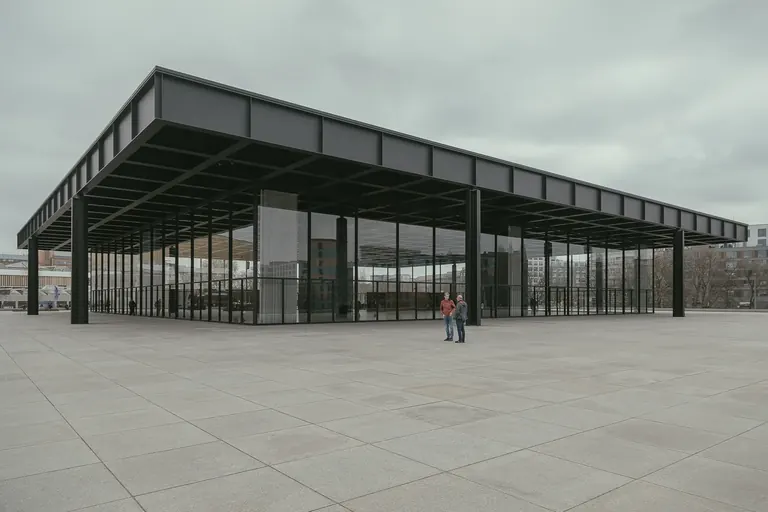
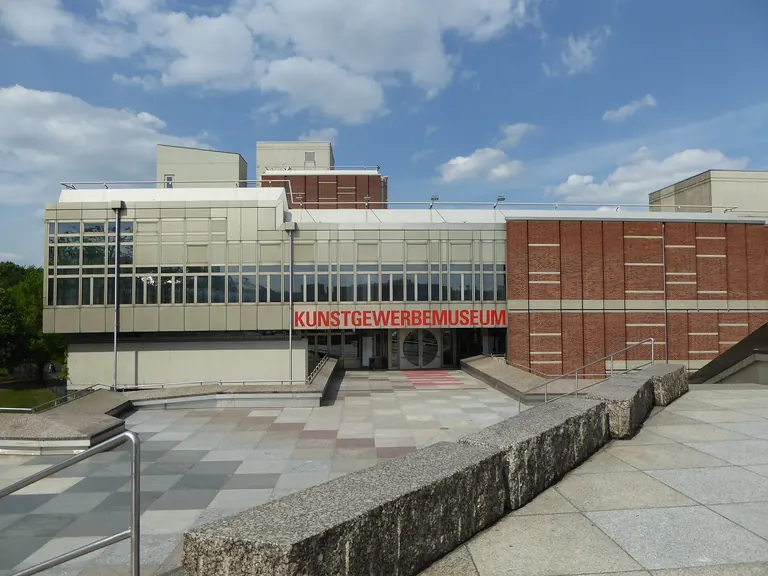
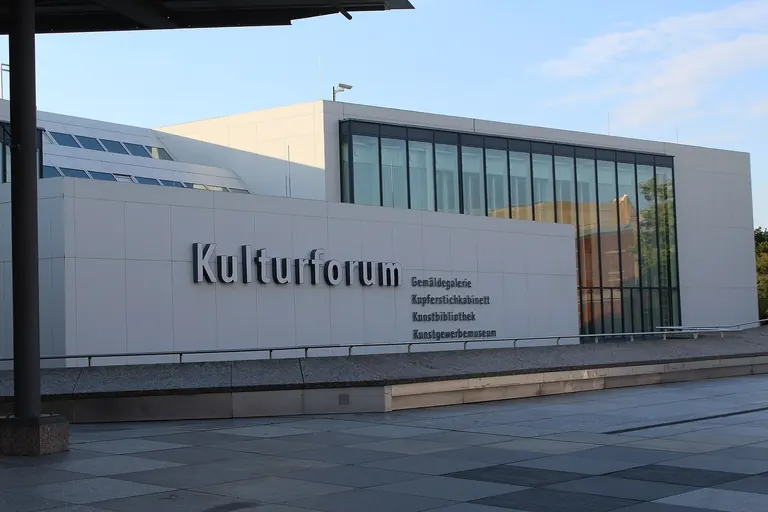
Image credits
8
- Time Travel in the Old Tiergarten District© Bildarchiv Foto Marburg
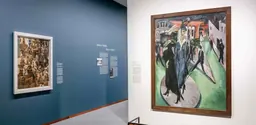
- Ruin and Rush. Berlin 1910–1930Photo: Neue Nationalgalerie – Stiftung Preußischer Kulturbesitz / David von Becker
- Maurizio Cattelan. NIGHT – Preis der Nationalgalerie 2026Courtesy of Neue Nationalgalerie
- Extreme Tension. Art between Politics and Society (1945–2000)Photo credit: Staatliche Museen zu Berlin, Neue Nationalgalerie / Roman März © VG Bild-Kunst, Bonn 2023
- Neue NationalgalerieEvgenii Salganik / Wikimedia Commons, CC BY-SA 4.0
- KunstgewerbemuseumMarsupium / Wikimedia Commons, CC0
- GemäldegalerieOursana / Wikimedia Commons, CC0
- Gropius BauManfred Brückels / Wikimedia Commons, CC BY-SA 3.0