 i
Museu d'Història de CatalunyaPort Vell
Visibles
Women in rural and farming Catalonia, through Llerona farmer Rosa Pruna i Esteve and four decades of rights won since the EU's 1986 directive on self-employed women.
More in Barcelona
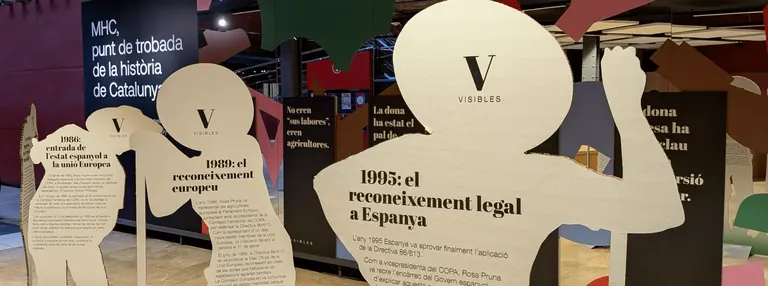
One banner in this show reads "No eren 'sus labores', eren agricultores": they weren't doing housework, they were farmers. That sets the tone for a small, free show on women in rural Catalonia, told through Rosa Pruna i Esteve, a farmer from Llerona who spoke for them for nearly four decades and led Asaja Barcelona until 2024.
You walk among cardboard cut-outs of farm women, each carrying a year of the story. In 1986, as Spain joined the European Community, Pruna became Spain's delegate to the women's committee of COPA, the European farmers' body, in Brussels. The thread is that year's EU Directive 86/613, which Spain only applied in 1995. If your grandmother's old DNI lists her job as "sus labores", this room is arguing with it.
Expect to read: the story is told in text on the cut-outs and banners. It was shown in Les Franqueses del Vallès in September. Entry is free until 15 November, and the museum stays open until 20:00 on Wednesdays.
Look for
The "sus labores" banner
A tall black banner reads "No eren 'sus labores', eren agricultores", throwing the old official label for housewives back at it.
The 1986 silhouette
A cut-out woman carries the year Spain joined Europe, when Pruna went to Brussels for COPA and the Associació Femenina del Medi Rural was founded in Barcelona.
The 1995 silhouette
The biggest cut-out, one arm raised, marks the year Spain finally applied Directive 86/613, with Pruna, as COPA vice-president, sent by the government to explain it.
Good for
- Cheap Culture
- Locals Who've Seen It All
- Nerding Out
Also at Museu d'Història de Catalunya
On now nearby
Nearby
Image credits
9
- VisiblesCourtesy of Museu d'Història de Catalunya
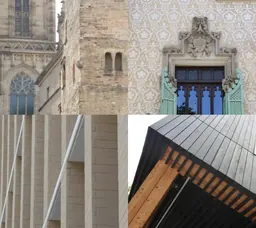
- Barcelona Materials: Local Materials for Regenerative ArchitectureCourtesy of Museu d'Història de Barcelona (MUHBA)
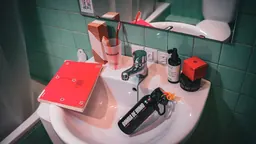
- Disseny en acció. Premis ADG Laus 2026Courtesy of Disseny Hub Barcelona – Museu del Disseny
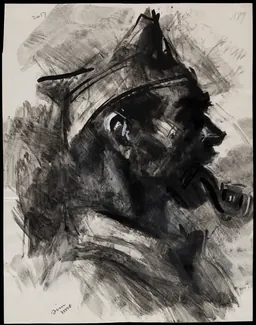
- Sim Acquisition, Drawing and WarCourtesy of Museu Nacional d'Art de Catalunya (MNAC)
- Museu d'Història de CatalunyaJordiferrer / Wikimedia Commons, CC BY-SA 3.0
- Moco Museum BarcelonaRolima.moco / Wikimedia Commons, CC BY-SA 4.0
- Museu Picasso de BarcelonaPere López / Wikimedia Commons, CC BY-SA 3.0
- Museu d'Història de Barcelona (MUHBA)J Irigoyen / Wikimedia Commons, CC BY-SA 3.0
- Museu Frederic MarèsEnfo / Wikimedia Commons, CC BY-SA 4.0