 i
LenbachhausMaxvorstadt / Kunstareal
Beyond the World. The Blue Rider
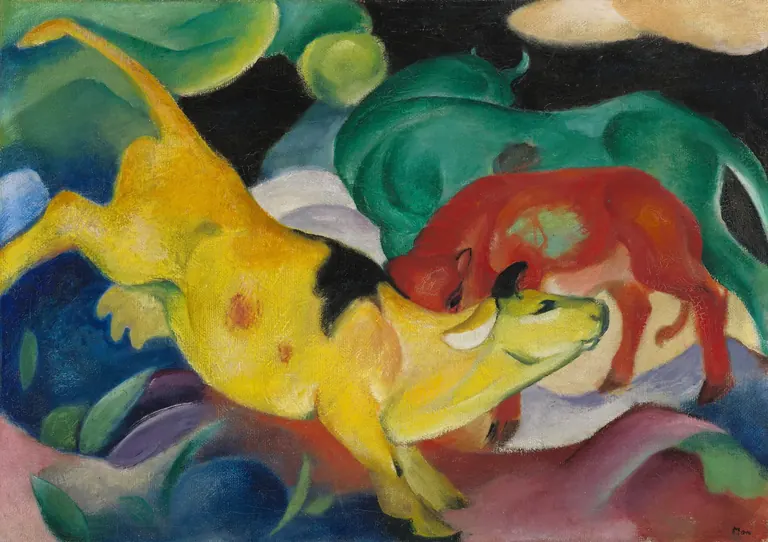
Over 240 works trace the Blue Rider's pioneering visual languages and transnational networks, highlighting the movement's women artists alongside Kandinsky and Franz Marc.
More in Munich
On 2 January 1911 Kandinsky heard Arnold Schoenberg's music at a Munich concert, then painted it. In Impression III (Konzert) a black grand piano juts in like a wedge, the audience's hunched backs lean towards it, and yellow floods across the canvas.
You walk into the first big room and it's all Gabriele Münter, on aquamarine walls. Her 1957 gift made this the world's largest Blue Rider collection, and this rehang of over 240 works gives the circle's women more space than ever. In December 1911 Kandinsky, Marc and Münter quit their artists' association and opened a rival show two weeks later, in the same gallery. Anyone who has left a Munich Verein in a huff will recognise the move.
Critics liked it: the TZ called the night-blue Kandinsky room the high point, the Abendzeitung a "clever, inspiring" rehang. Tickets are €10 (€6 reduced, free under 18), and entry is free for everyone on the first Thursday of the month, 6 to 10pm.
Editor's pick
Kandinsky heard Schoenberg in Munich in January 1911 and painted it: a black piano wedge, hunched listeners, a flood of yellow. This rehang of over 240 works starts in a room of Münter; the Abendzeitung called it "clever, inspiring".
Look for
Kandinsky's Impression III (Konzert)
Look for the black triangle of a grand piano and the bent backs of listeners, swamped in yellow: his painted memory of a Schoenberg concert.
Münter's Lady in an Armchair
A 1929 portrait of a stenographer whose tied harem trousers and pointed red shoes echo the chair's turned legs; the Süddeutsche Zeitung called it great art.
The night-blue Kandinsky room
Named after his essay Concerning the Spiritual in Art, it follows him from riders and figures to pure abstraction on deep blue walls.
The dancer Alexander Sacharoff
A room on the Mariupol-born dancer who held poses motionless in deliberately genderfluid costumes, and whom Werefkin and Jawlensky drew and painted again and again.
Wilhelm Morgner's ornamental compositions
Large-format abstract compositions, new to the collection and on view for the first time.
Good for
- Evening Visits
- First-Timers
- Nerding Out
- Out-Of-Town Guests
With kids
Under-18s get in free. One room covers the more than 250 children's drawings Kandinsky and Münter collected, and room texts also come in Leichte Sprache (easy German).
Free in the same building
Plan a visit to LenbachhausAlso at Lenbachhaus
On now nearby
Nearby
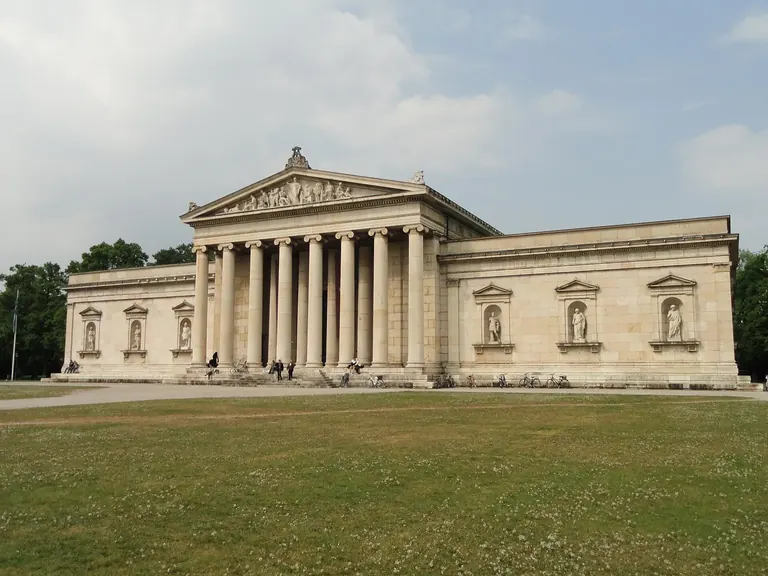
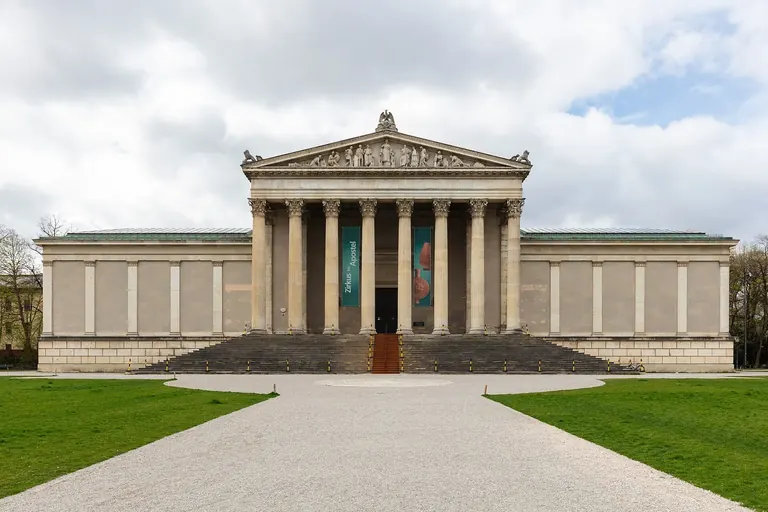
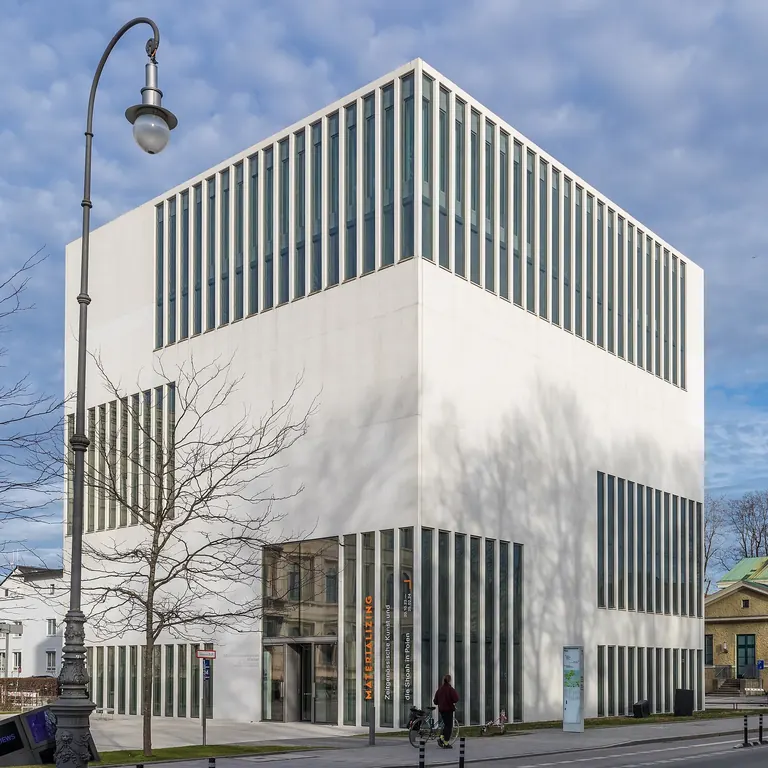
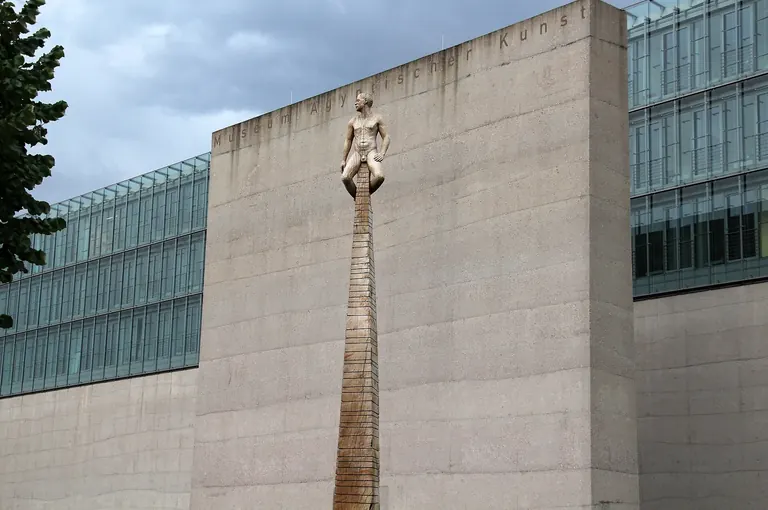
Image credits
7
- Beyond the World. The Blue RiderCourtesy of Lenbachhaus
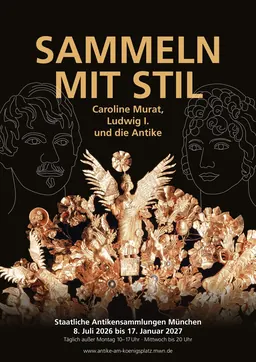
- Collecting with Style: Caroline Murat, Ludwig I and AntiquityCourtesy of State Collections of Antiquities
- LenbachhausBurkhard Mücke / Wikimedia Commons, CC BY-SA 4.0
- GlyptothekDaderot, Public domain
- State Collections of AntiquitiesDiego Delso, delso.photo, CC BY-SA 4.0
- Munich Documentation Centre for the History of National SocialismRaimond Spekking, CC BY-SA 4.0
- State Museum of Egyptian ArtFred Romero / Wikimedia Commons, CC BY 2.0