 i
Kyoto City KYOCERA Museum of ArtOkazaki
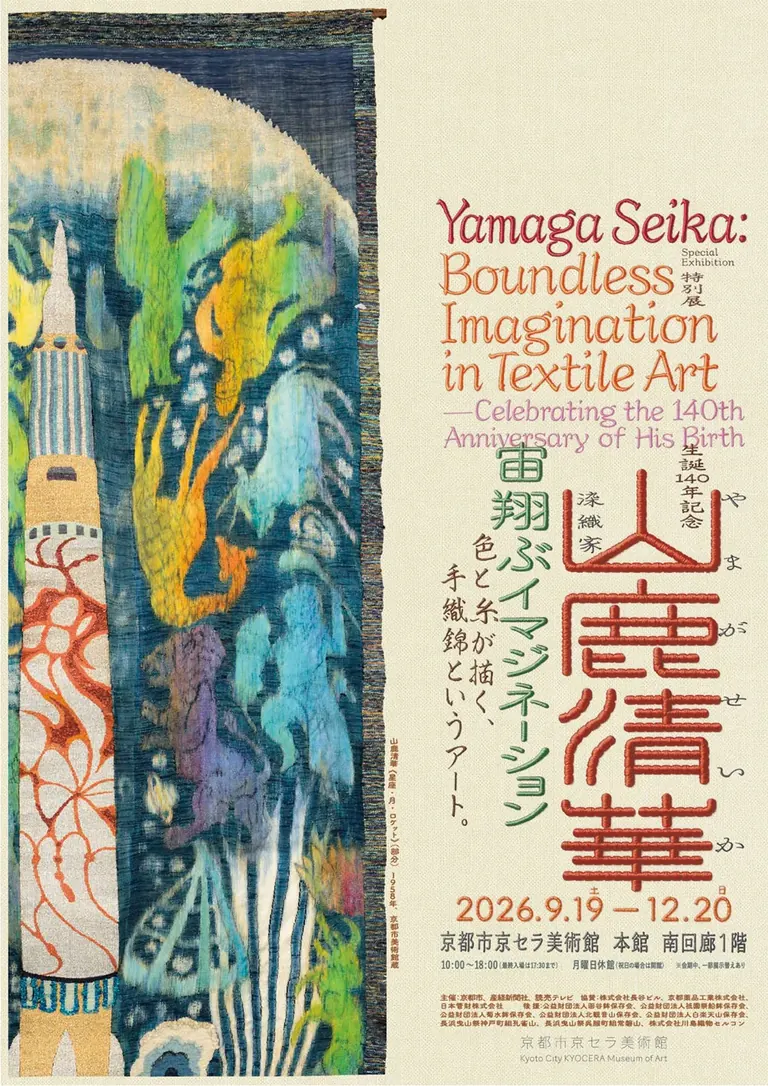
Yamaga Seika: Boundless Imagination in Textile Art – Celebrating the 140th Anniversary of His Birth
First retrospective in 40 years of Kyoto weaver Yamaga Seika, whose handwoven brocades range from Gion Festival tapestries to locomotives and Tokyo Tower.
More in Kyoto
In 1927 a handwoven brocade of a Dutch ship won Yamaga Seika a Special Prize at the Imperial Art Exhibition. It hangs in this show, the first retrospective of the Kyoto weaver in 40 years.
Yamaga (1885-1981) developed teori-nishiki, handwoven brocade in which the artist oversees every stage, from design to weaving. The show runs between two registers. Festival decorations and ritual hangings, including tapestries made for the Gion Festival, use celestial maidens and cloud dragons. The wall hangings he sent to official exhibitions show locomotives, rockets and Tokyo Tower. Yamaga hand-wove a locomotive, which is more effort than most of us put into catching the Tozai Line to Higashiyama.
It is on the first floor of the main building's South Wing. Adults pay ¥1,800, university and high school students ¥1,300, and junior high and younger get in free. Closed Mondays, last admission 17:30. The show moves to Tokyo Station Gallery in February 2027.
Editor's pick
Yamaga Seika hand-wove Gion Festival tapestries with cloud dragons, then turned the same brocade on a locomotive, a rocket and Tokyo Tower. The first retrospective in 40 years includes his prize-winning 1927 Dutch ship.
Look for
Handwoven Brocade: Dutch Ship (1927)
The Special Prize winner at the Imperial Art Exhibition, a sailing ship rendered entirely in woven thread.
Wall Hanging: Tokyo Tower (1958)
The tower itself, woven as a modern subject for an official exhibition.
Wall Hanging: Constellation, Moon, Rocket (1958)
A rocket and the night sky in brocade, from the same year as the Tokyo Tower piece.
Wall Hanging: Fighting Kangaroo (c. 1960)
Two kangaroos squaring up, woven by a weaver best known for Gion Festival tapestries.
Gion Festival tapestries
Festival hangings in traditional motifs such as celestial maidens and cloud dragons.
Good for
- Nerding Out
- Out-Of-Town Guests
Also at Kyoto City KYOCERA Museum of Art
On now nearby


Nearby

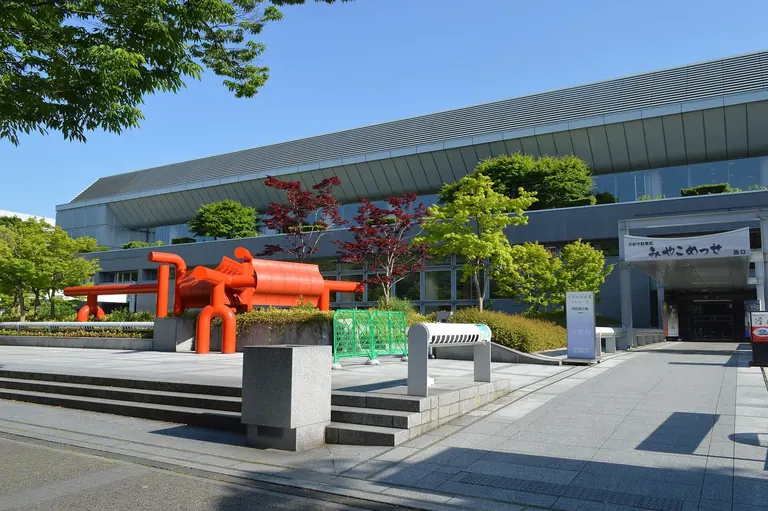

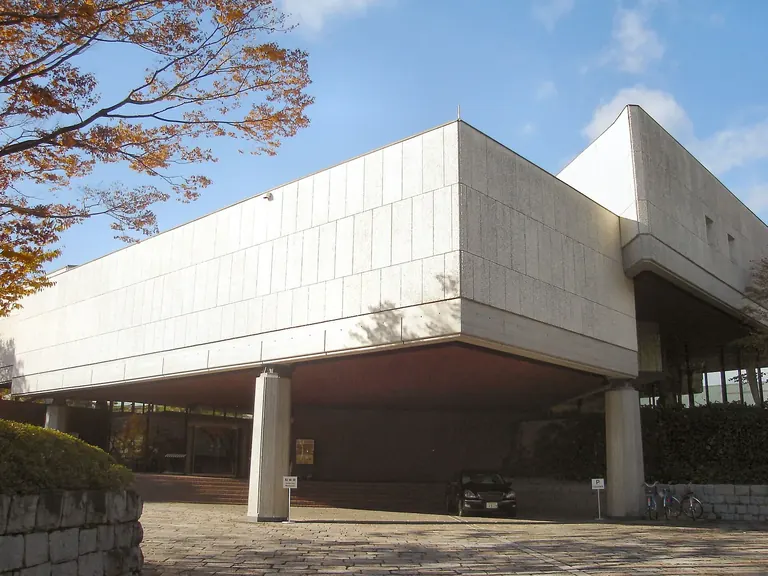
Image credits
8
- Yamaga Seika: Boundless Imagination in Textile Art – Celebrating the 140th Anniversary of His BirthCourtesy of Kyoto City KYOCERA Museum of Art
- 3rd Collection Gallery Exhibition 2026Courtesy of The National Museum of Modern Art, Kyoto (MoMAK)
- Reflections in Jewellery: Memory and IdentityCourtesy of The National Museum of Modern Art, Kyoto (MoMAK)
- Kyoto City KYOCERA Museum of ArtKakidai / Wikimedia Commons, CC BY-SA 4.0
- The National Museum of Modern Art, Kyoto (MoMAK)Wiiii / Wikimedia Commons, CC BY-SA 3.0
- Kyoto Museum of Crafts and DesignAsturio Cantabrio / Wikimedia Commons, CC BY-SA 4.0
- Hosomi MuseumAsturio Cantabrio / Wikimedia Commons, CC BY-SA 4.0
- Sen-oku Hakuko KanPlusMinus / Wikimedia Commons, CC BY-SA 3.0