 i
Neue NationalgalerieTiergarten
Ruin and Rush. Berlin 1910–1930
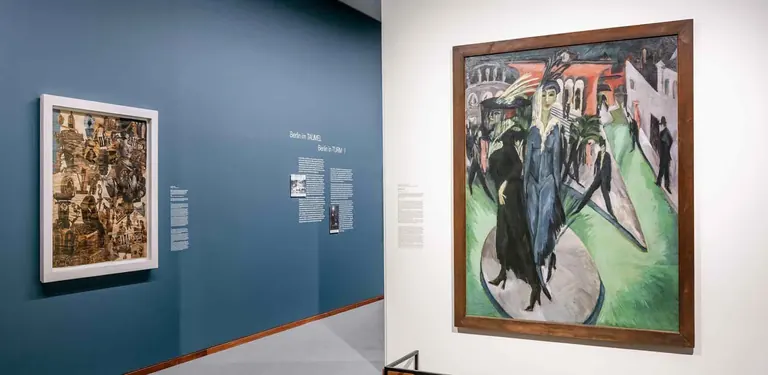
Around 35 collection works by Dix, Höch and others on Berlin between war, excess, poverty and emancipation in the 1910s and 1920s.
More in Berlin
You start in front of Kirchner's Potsdamer Platz (1914). Walk round the back of the wall and Oskar Nerlinger's Berlin Stadtbahn (1930) turns the city railway into a cool, constructivist frame of struts, while a three-minute clip of Fritz Lang's Metropolis plays ahead.
It's a small show: 35 works on 230 square metres in the left-hand side gallery downstairs, in three chapters. The narrow corridor bends 90 degrees into the second, where Otto Dix's war-maimed card players face Otto Nagel's and Ernest Neuschul's scenes of poverty. Three listening stations play poems by Anita Berber, Mascha Kaléko and Erich Kästner.
Monopol's Bernhard Schulz called it small but concentrated and substantial, and found a second story in the labels: the garish pictures were collected in West Berlin, the realist ones in the East. His one complaint is that there's no catalogue, not even a brochure. The exhibition ticket is €10 (€5 reduced), or €20 for the whole museum, and Thursdays run until 20:00.
Look for
Oskar Nerlinger, Berlin's Stadtbahn (1930)
On the back of the Kirchner wall, the city railway becomes a cool, constructivist frame of girders.
Otto Dix, The Skat Players (1920)
Look for war-maimed veterans playing cards, the misery the First World War left behind, drawn in deliberately garish exaggeration.
Two films from 1927
A three-minute clip of Lang's Metropolis opens the show, and Ruttmann's Berlin: Symphony of a Great City plays round the corridor's 90-degree bend.
Otto Dix, Portrait of the Dancer Anita Berber (1925)
The key picture of the last chapter and the show's only loan from outside Berlin, with Josephine Baker dancing on a small monitor nearby.
Lotte Laserstein, Evening over Potsdam (1930)
The closing picture shows young people gathered among friends, often read as sensing the dictatorship to come.
Good for
- An Hour Or Less
- Evening Visits
- Going Solo
- Nerding Out
Skip if
You want a full survey of Weimar art: it's 35 works in one side gallery, with no Beckmann.
With kids
The museum runs a drop-in workshop for children and families tied to the show, "Open Studio: In the Glow of Berlin Nights, 1910–1930", on Thursday 5 November at 16:00.
Also at Neue Nationalgalerie
On now nearby
Nearby
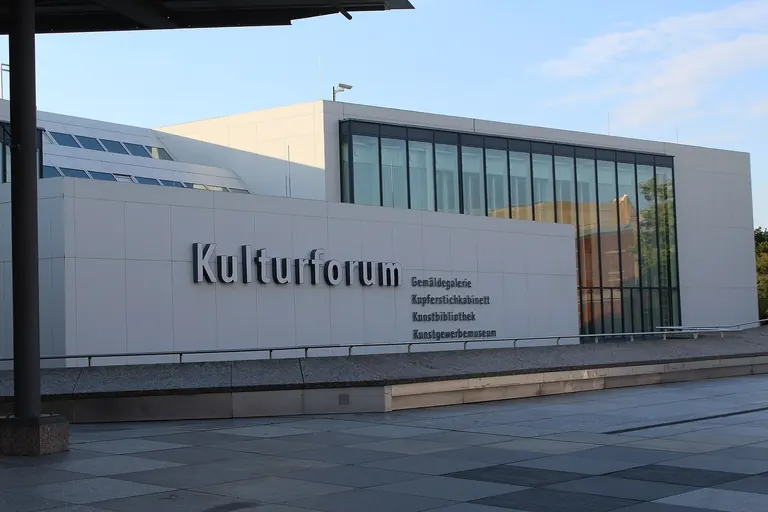
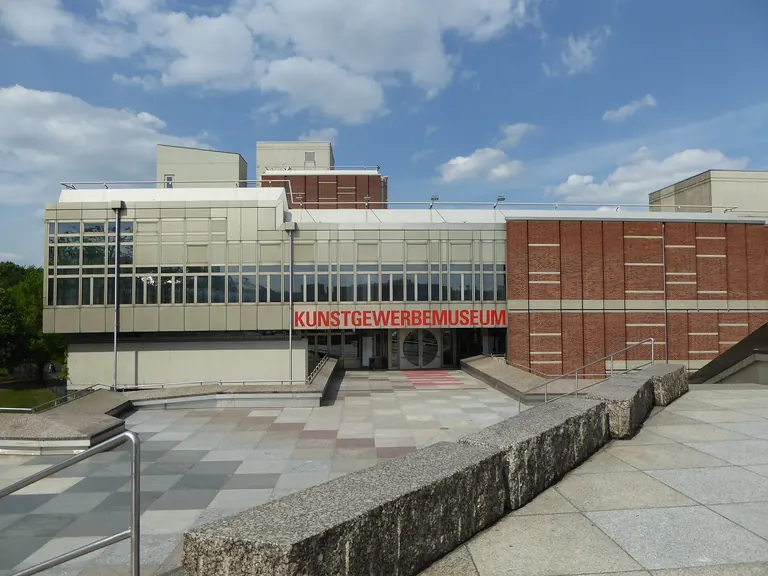
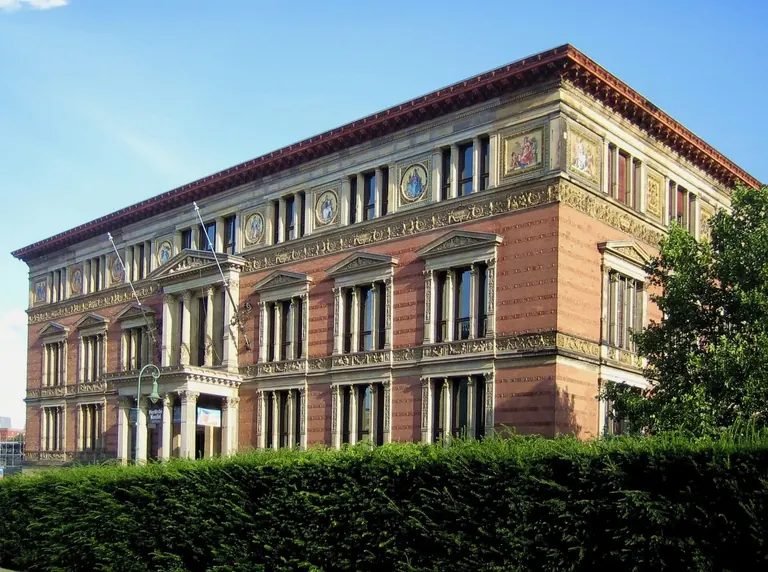
Image credits
8
- Ruin and Rush. Berlin 1910–1930Photo: Neue Nationalgalerie – Stiftung Preußischer Kulturbesitz / David von Becker
- Rubens, Jordaens, van Dyck. Flemish Master DrawingsPhoto: Staatliche Museen zu Berlin, Kupferstichkabinett / Jörg P. Anders
- Time Travel in the Old Tiergarten District© Bildarchiv Foto Marburg
- Daniel Chodowiecki, 1726–1801. Images of the Enlightenment in BerlinCourtesy of Gemäldegalerie
- Neue NationalgalerieEvgenii Salganik / Wikimedia Commons, CC BY-SA 4.0
- GemäldegalerieOursana / Wikimedia Commons, CC0
- KunstgewerbemuseumMarsupium / Wikimedia Commons, CC0
- Gropius BauManfred Brückels / Wikimedia Commons, CC BY-SA 3.0