 i
KulturforumTiergarten
"BIZARRE". The History of the Strangest Word in the World
Traces the word "bizarre" from the Renaissance to 21st-century imagery, with works from the Kunstbibliothek, Gemäldegalerie and Kupferstichkabinett.
More in Berlin
Preview: written before the show opened
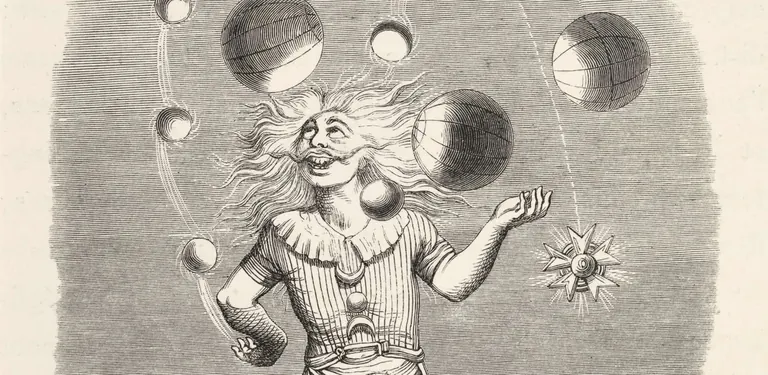
The first "bizarro" in literature is a Florentine nobleman in Dante's Inferno, tearing at himself in a fit of rage in hell. Seven centuries later the same word is the name of Frank Zappa's 1968 record label and of Superman's backwards twin, Bizarro. The Kunstbibliothek says this is the first exhibition to tell the whole story in between.
You walk in with Dante and leave with Superman, through eight sections: Furor, Dream, Capriccio, Grotesques, Wonder, Chimeras, Laughter and Bizarro World. The core is drawings, prints and books from the Kunstbibliothek, many rarely or never shown, with paintings lent by the Gemäldegalerie, Alte Nationalgalerie and Kupferstichkabinett. The Baroque contest to look more original than everyone else is in here too, three centuries before anyone dressed for the Berghain door.
Entry is on the Kulturforum ticket: 22 euros (concessions 11) for every show in the building, Tuesday to Sunday, 10:00 to 18:00. Curator Moritz Wullen leads German-language tours on selected weekend mornings at 11:00 for 6 euros.
Editor's pick
It starts with the first "bizarro", in a 1487 edition of Dante's Inferno, and ends with Superman's Bizarro. In between come Bosch, Piero di Cosimo's Venus, Mars and Amor, and Claude Gillot's Snail-Man.
Look for
Dante's first "bizarro"
A 1487 Brescia edition of Dante with Cristoforo Landino's commentary, at the eighth canto of the Inferno where the word first appears.
Bosch's two-sided panel
One face shows John on Patmos; the reverse is a painted globe filled with scenes from the Passion of Christ, from 1495 to 1500.
Piero di Cosimo's Venus, Mars and Amor
An oil on wood from about 1505 by the painter Vasari called "bizarro, e fantastico", a line from Vasari's 1568 Lives that the show also includes.
Claude Gillot's Snail-Man
An early 18th-century design for a chimera costume, a man turned snail, drawn in chalk, red chalk and pencil.
Bracelli's Bizzarie di varie figure
A 1624 series of capricci, shown in the 1963 Paris edition by Tristan Tzara, the Dadaist who hailed Bracelli as a prophet of modern art.
Good for
- Locals Who've Seen It All
- Nerding Out
Also at Kulturforum
On now nearby
Nearby
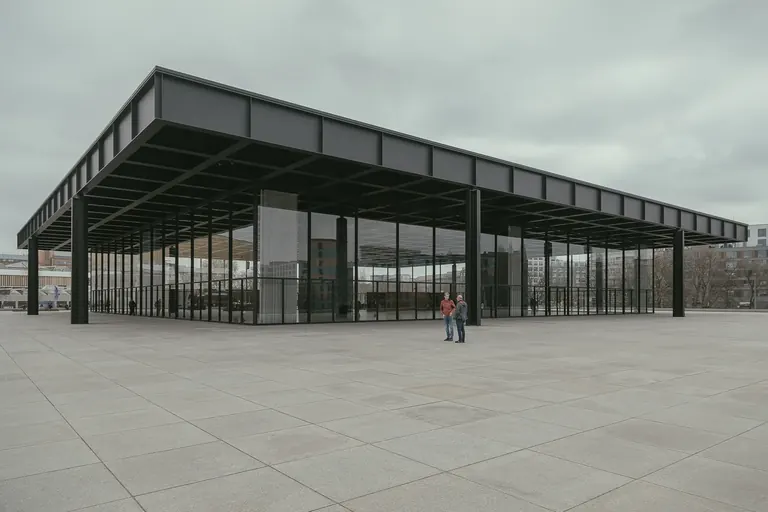
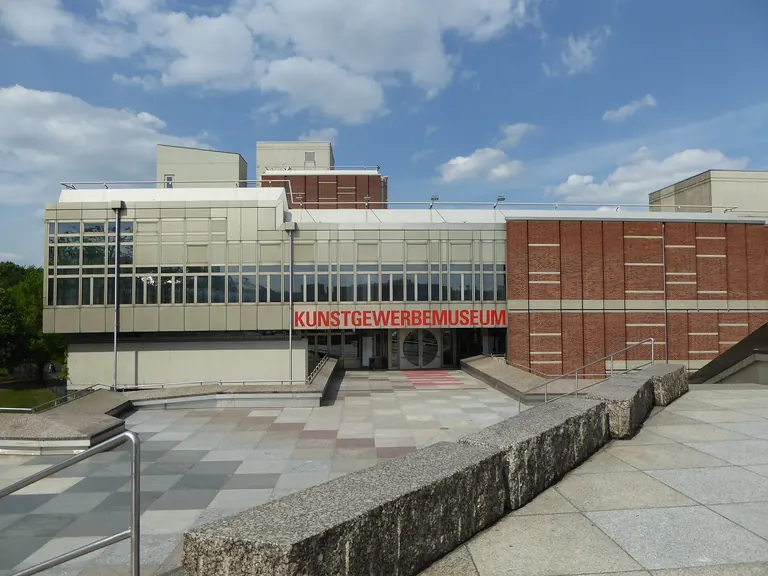
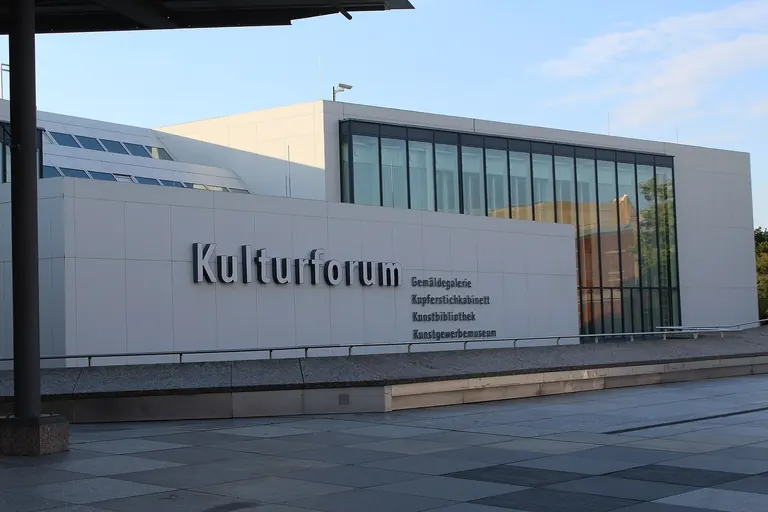
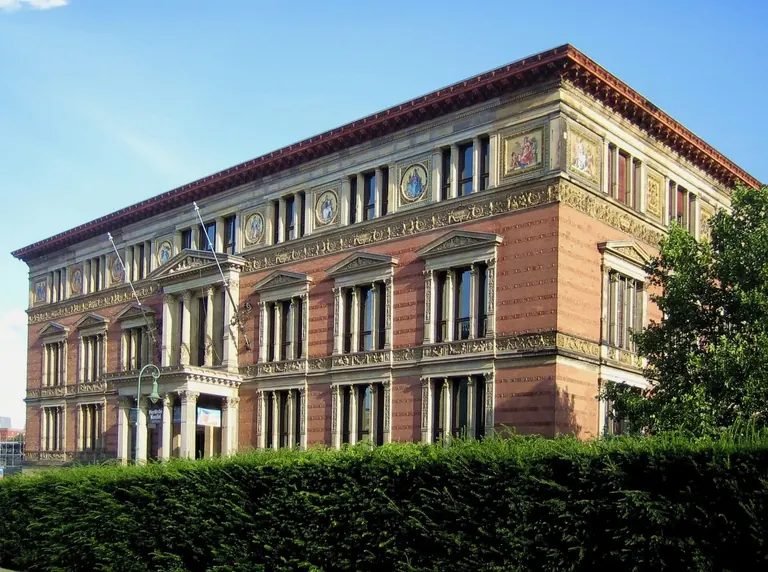
Image credits
8
- "BIZARRE". The History of the Strangest Word in the WorldJean-Jacques Grandville, Un autre Monde (Paris, 1844), detail: Staatliche Museen zu Berlin, Kunstbibliothek
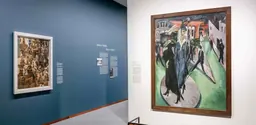
- Ruin and Rush. Berlin 1910–1930Photo: Neue Nationalgalerie – Stiftung Preußischer Kulturbesitz / David von Becker
- Maurizio Cattelan. NIGHT – Preis der Nationalgalerie 2026Courtesy of Neue Nationalgalerie
- Extreme Tension. Art between Politics and Society (1945–2000)Photo credit: Staatliche Museen zu Berlin, Neue Nationalgalerie / Roman März © VG Bild-Kunst, Bonn 2023
- Neue NationalgalerieEvgenii Salganik / Wikimedia Commons, CC BY-SA 4.0
- KunstgewerbemuseumMarsupium / Wikimedia Commons, CC0
- GemäldegalerieOursana / Wikimedia Commons, CC0
- Gropius BauManfred Brückels / Wikimedia Commons, CC BY-SA 3.0