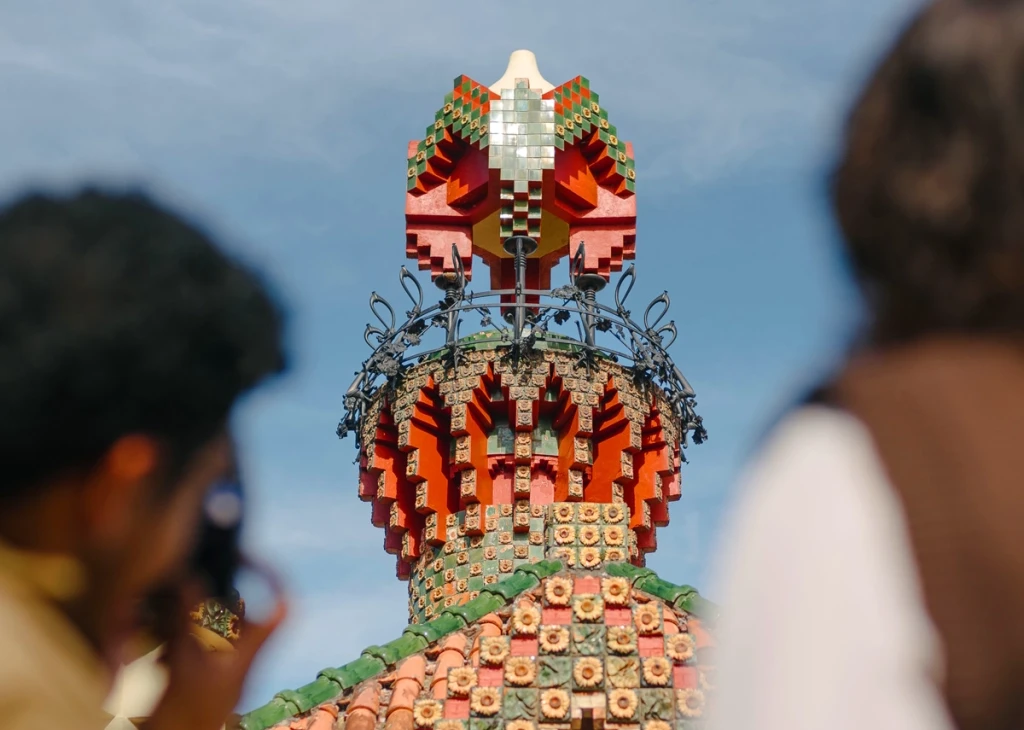
El Capricho de Gaudí is one of the few complete Antoni Gaudí works in the world, a heritage villa in Comillas, on Spain's Cantabrian coast. The house was designed in 1883 for Máximo Díaz de Quijano and is now operated as a museum, drawing visitors from across Spain and internationally.
Challenge
El Capricho's human-led tours are run by guides who know the house intimately, and they will always be the gold standard. But not all visitors want a human-led tour. Some prefer to explore at their own pace, not as part of a group.
The museum had always offered a self-guided audio tour for those visitors. The pain point was that it did not match the depth of the human tour. Director Carlos Mirapeix wanted to close that knowledge gap. Self-guided visitors should be able to ask their own questions and leave with their curiosity fully satisfied, not limited by a fixed script.
Approach
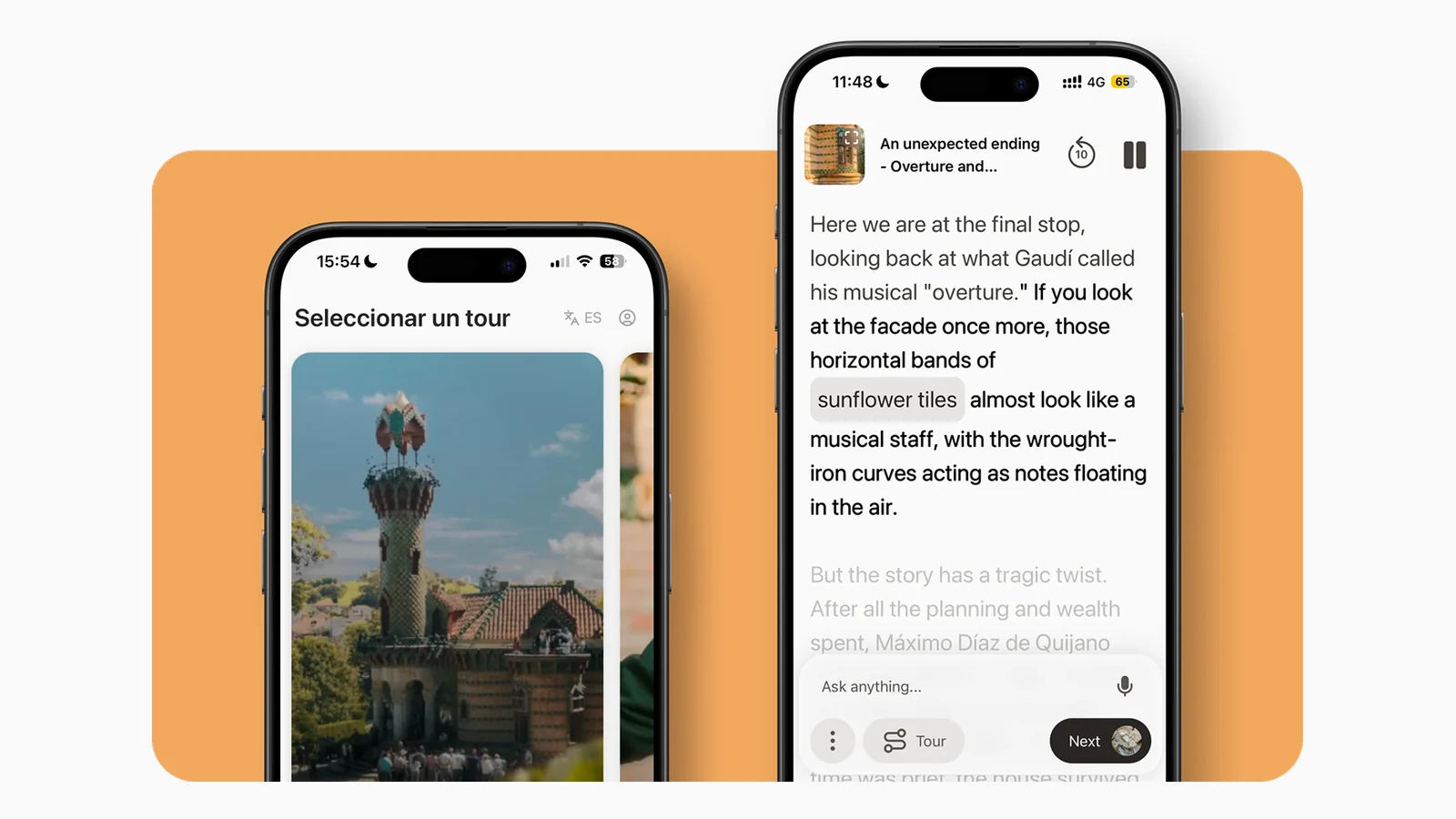
To deploy Musa, the museum put up a single QR code that launches visitors directly into the experience. The guide handles navigation across indoor and outdoor spaces, or a mix like El Capricho itself, with no additional QR codes placed anywhere. Both tours cover the full site, indoors and out.
Two tours are live to visitors:
Standard tour: the on-demand equivalent of the in-house human tour, covering the building's design, history, and Gaudí's architectural moves
Family tour: a parallel tour designed for families with children aged five to twelve, narrated in the first person by the building itself
El Capricho, Comillas. Designed in 1883, one of the few complete Gaudí works outside Catalonia.
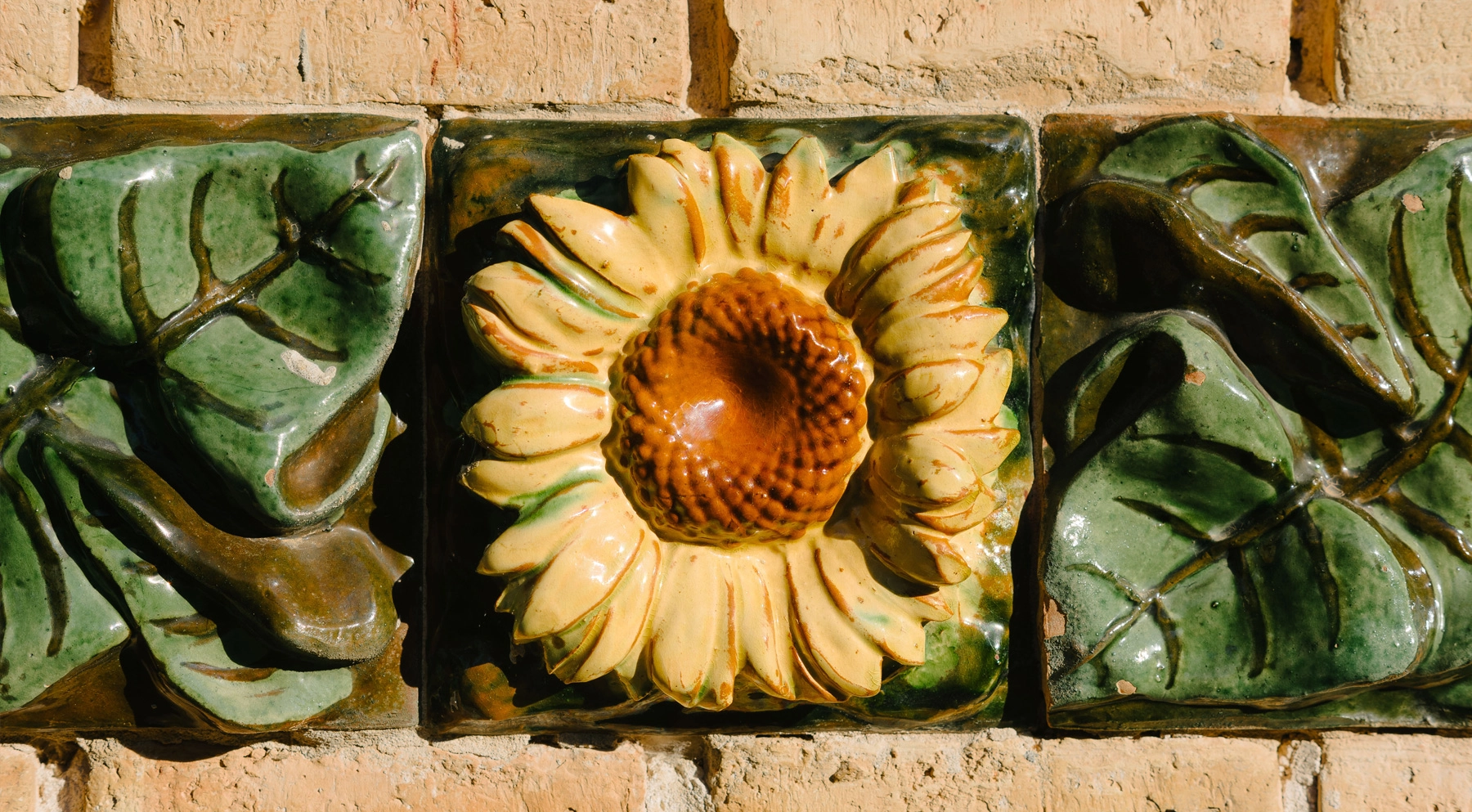
The family tour is built around a macro-loop: a "secret code" hidden across the house that visitors uncover progressively, revealed at the climax: the building is a sunflower. Its C-shape hugs a south-facing greenhouse, and every room tracks the sun across the day, from the east-facing bedroom (sunrise) to the west-facing dining room (sunset). Each stop carries a single game or visual challenge, and the tour closes on the story of Máximo, who fell ill shortly after moving in and barely got to live in the house Gaudí designed for him. Adults stay engaged because the writing is precise; children stay engaged because each room hides something to find.
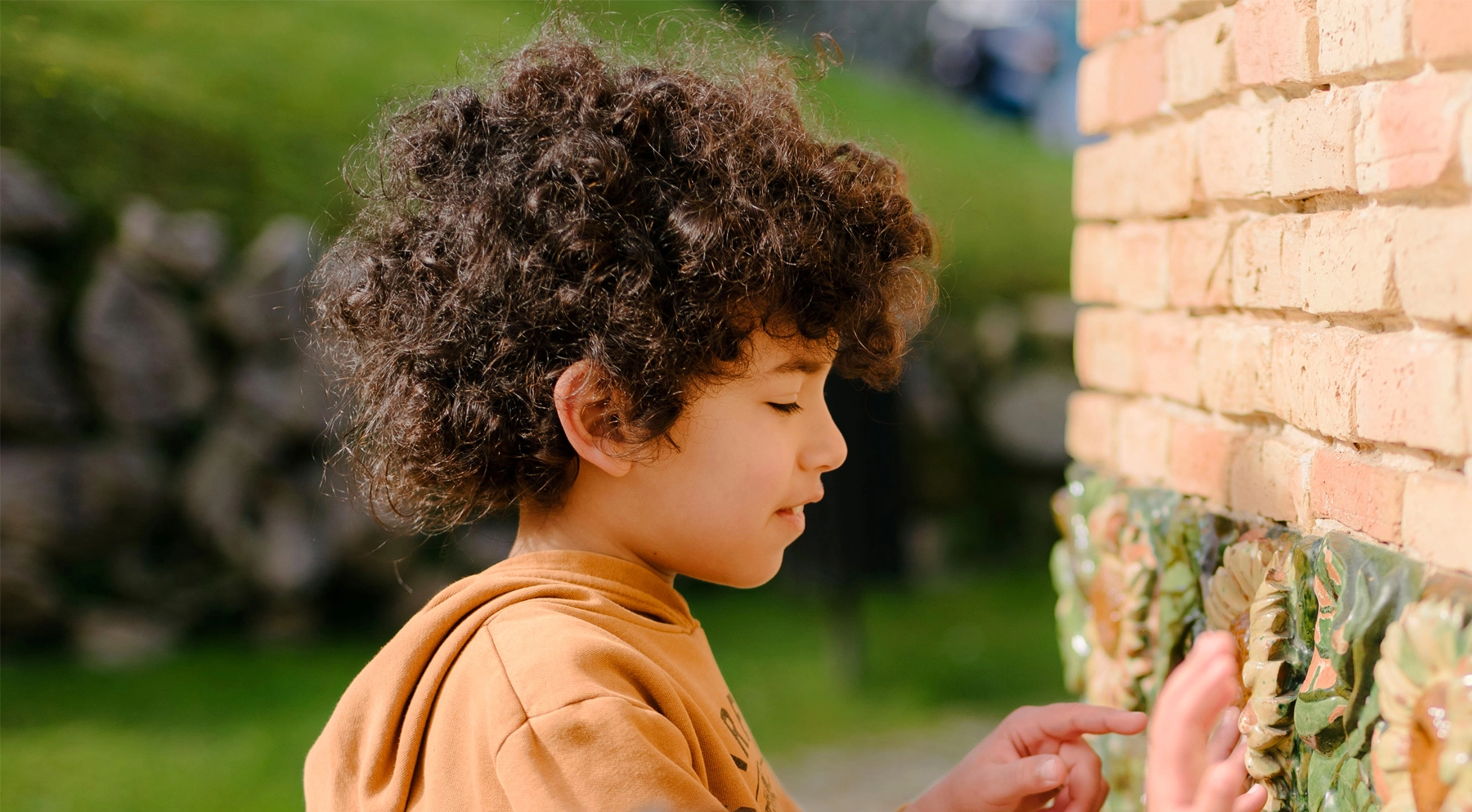
The sunflower, the secret the family tour is built around, and one of the visitors it was built for.
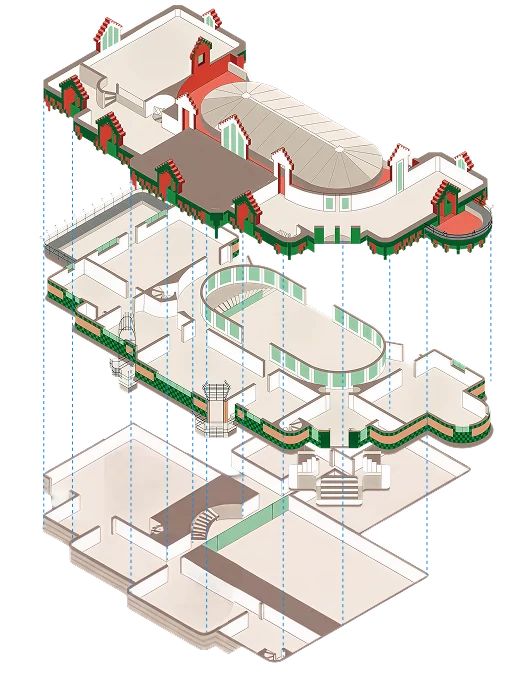
The guide follows visitors across the house and gardens from a single floor plan.
A note on voice
AI voice delivery sits uncomfortably with traditional notions of authenticity: it's not a human reading a script. Musa's response is to shift curatorial control into everything else: what the voice says, the perspective it speaks from, the framing it uses, the way it handles questions on and off the scripted tour. The museum decides the voice's point of view, and that voice carries it consistently, through the curated stops and through whatever a visitor asks next.
For El Capricho, the AI voice was tuned for a Cantabrian Spanish accent. The team sent voice-note examples of how specific words should sound, and Musa matched them. Over 12 languages and counting have been validated so far, and for anything needed beyond, it's as simple as sending a few voice notes to the team.
Outcomes
In the first month of deployment:
~500 visitors served
At the start of the tour, where traditional audio guides typically lose more than half their audience, El Capricho retained 75% of visitors. By the end of the tour, 33% had completed every stop.
28% of all visitor interactions were visitors proactively asking questions, exploring related topics, or deviating from the recommended route.
The numbers matter, but the qualitative signal from Carlos was equally clear. Across the pilot-review meetings, he kept returning to the same themes: the experience felt closer to a conversation than to passive listening, and he was making content changes himself in Studio without Musa's help.
I'm very happy about the content and everything. If anyone asks me about the system I will give
them the best review.
Carlos Mirapeix, Director, El Capricho de Gaudí
Sector validation
The AI audio guide launch at El Capricho was covered by three Spanish-language outlets:
This is not a traditional audio guide. It is a tool capable of interacting with visitors,
answering questions, adapting the route and creating an experience closer to a conversation than
to passive listening.