Max Pechstein Stiftung × Lentos Kunstmuseum Linz · Linz, Austria
Three guides to Max Pechstein, built by his own foundation
How the Max Pechstein Stiftung wrote and ran the AI audio guide for its touring exhibition, with Lentos providing the curatorial review and in-gallery presentation.
Touring exhibition · · 4 min read
3
narrators, including Pechstein himself and his granddaughter
50%
of guide sessions reached stop ten
1 in 3
question interactions were freely formulated by visitors
In brief
The foundation owns and runs the guide. Lentos reviewed the experience, presented it in the galleries and provided detailed curatorial feedback.
The Stiftung's team built the knowledge base, designed the three characters and wrote the narratives themselves in Musa Studio, with very little involvement from Musa.
Every narrator draws on primary sources held by the Stiftung, Pechstein's memoirs, his letters and the archive.
A pilot runs on your own collection and content, the way it did at Max Pechstein Stiftung × Lentos Kunstmuseum Linz, and takes weeks rather than a procurement cycle.
Max Pechstein was a defining figure of German Expressionism, a member of Die Brücke, and in 1937 one of the artists whose work the Nazi regime confiscated as "entartete Kunst", more than 500 pieces in his case. The Max Pechstein Stiftung, run by his family, holds his estate. Its touring exhibition of around 150 exhibits opened at the Lentos Kunstmuseum Linz in spring 2026. Its next confirmed stop is Palazzo Zabarella in Padua.
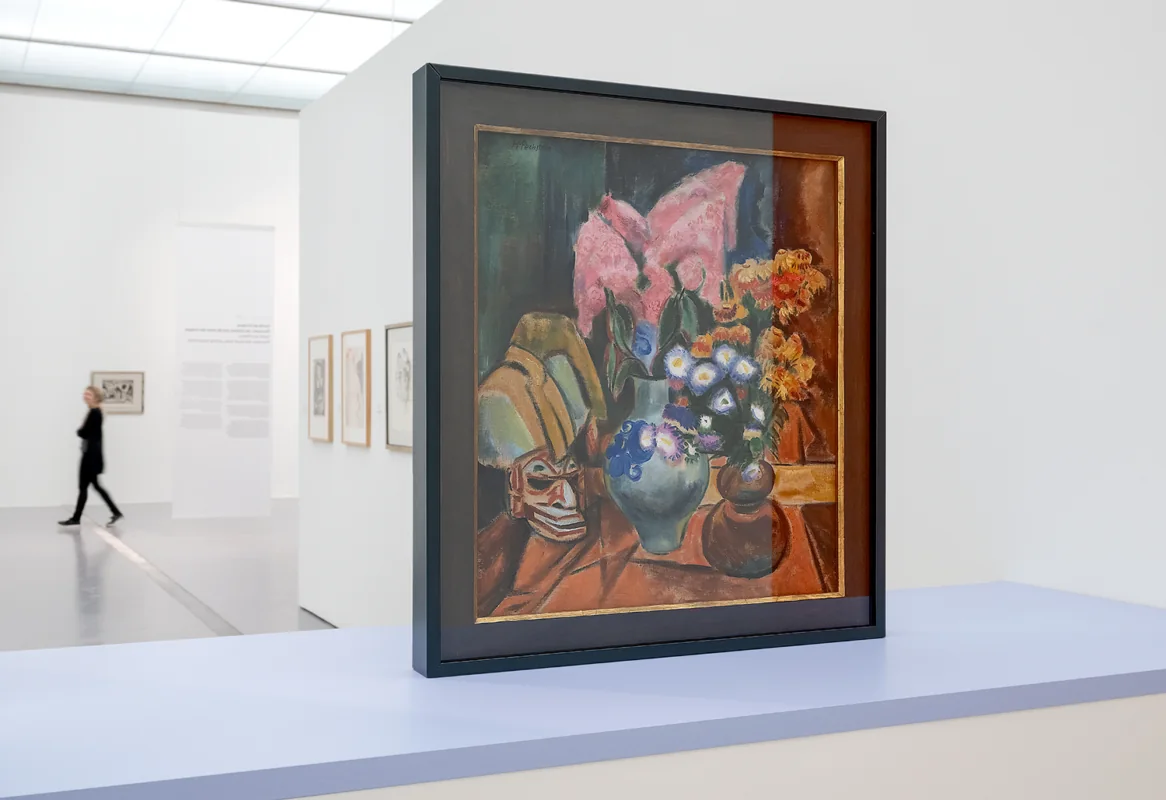
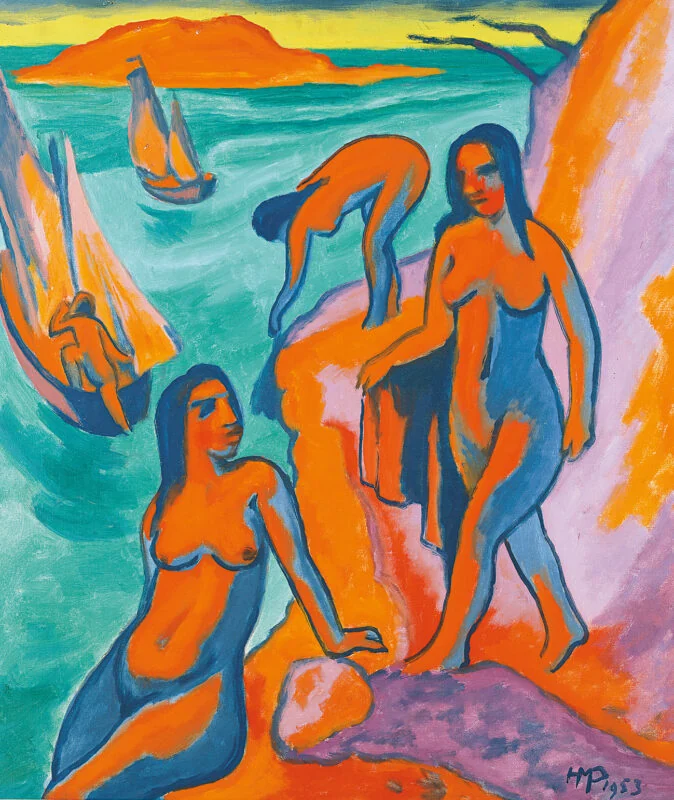
The guide at Frauen am Ufer, 1953, one of the paintings Pechstein remade after the originals were confiscated in 1937.
Challenge
A touring exhibition has a problem that a permanent collection does not: whatever interpretation you build for the first venue has to move. Devices stay behind. Recorded guides commissioned for one museum rarely fit the next. And the institution with the deepest knowledge of the work, the artist's own foundation, is usually not the one operating the audio guide.
Martin and Julia Pechstein wanted the guide to belong to the Stiftung, to be free for visitors, and to draw on material only the family holds. Lentos, for its part, needed something that would not add work to an already full opening schedule.
Approach
The Stiftung used Musa Studio to build the guide itself. Over roughly two months before the opening, its team built the knowledge base from Pechstein's memoirs, his letters and the foundation's archive, designed the characters and wrote the narratives, with very little involvement from Musa.
Three guides are available to visitors:
Max Pechstein, speaking about his own work and life
Julia, his granddaughter, who also led the editorial work on the exhibition texts
An art historian, for visitors who want the scholarly reading
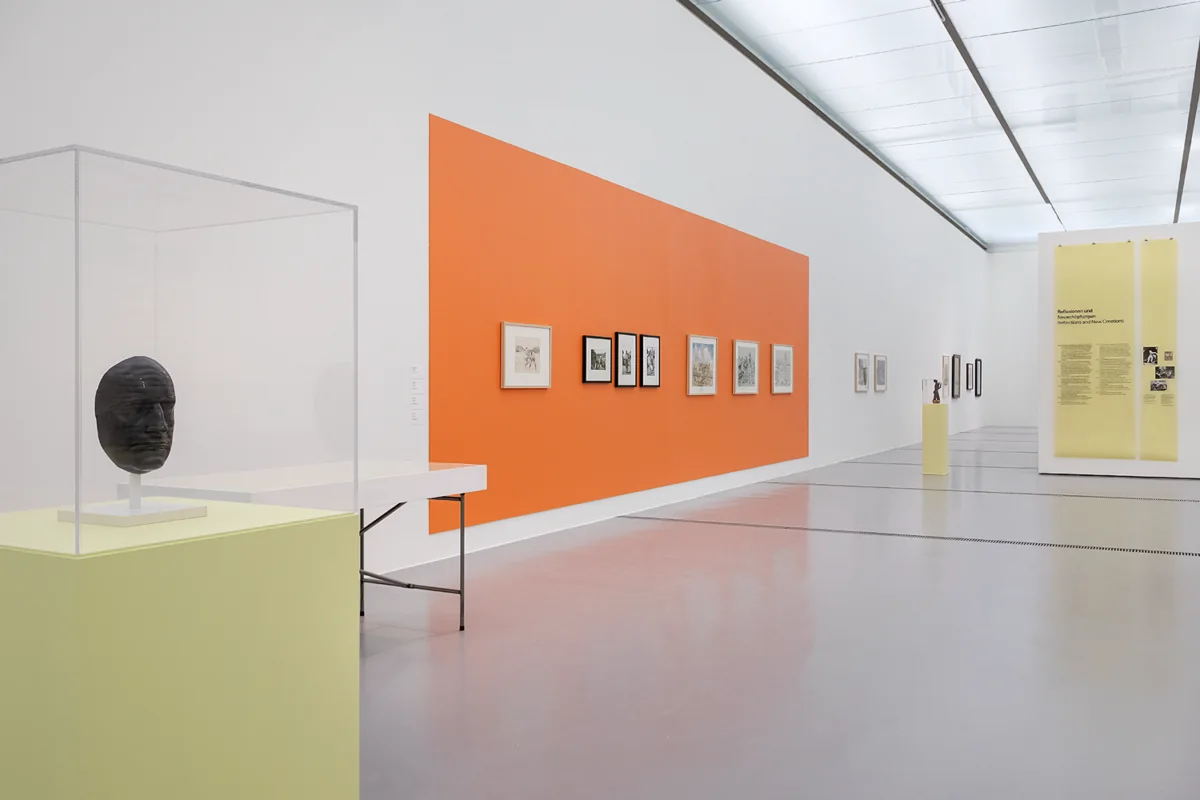
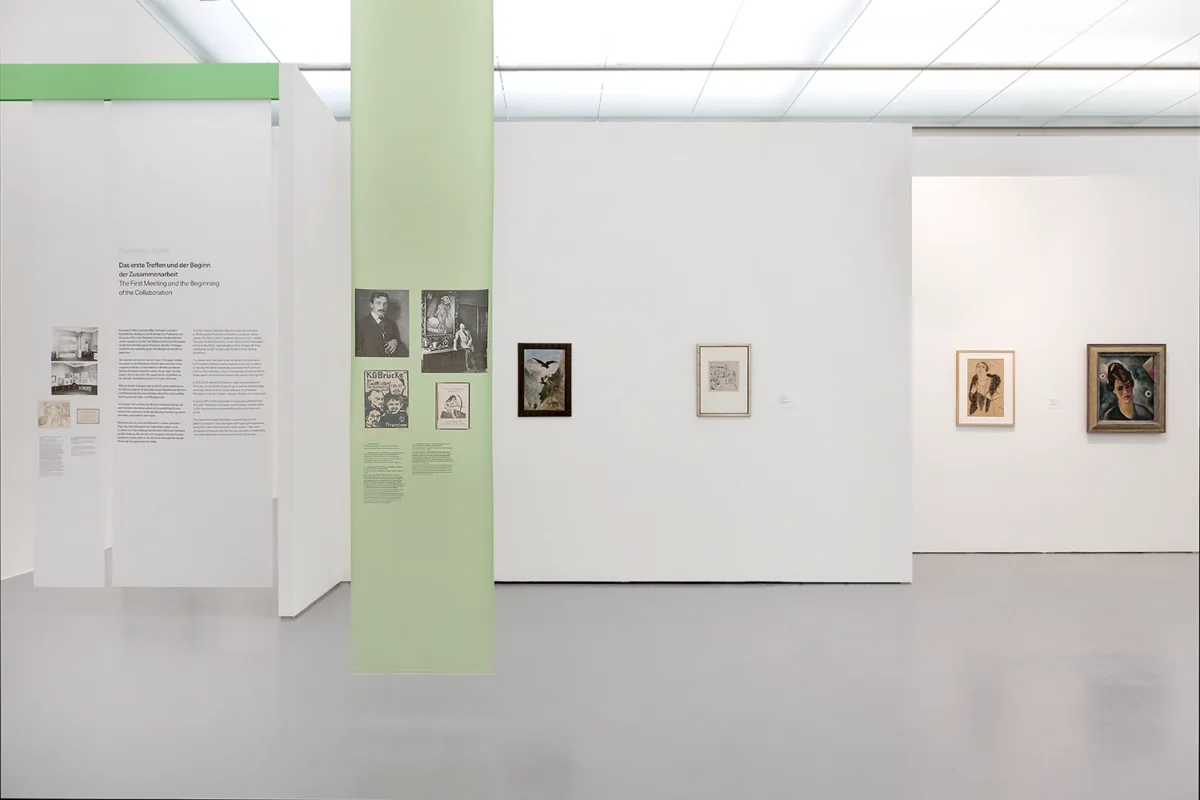
Around 150 exhibits at the Lentos, the opening venue of the international tour.
Visitors can go deeper at any point: his voyage to Palau, what gave Expressionism its name, or what happened in 1937. Because the guide answers from the Stiftung's sources rather than the open web, the foundation keeps control of what is said about the artist.
The arrangement with Lentos was deliberately light. The Stiftung covered the cost and visitors paid nothing. Lentos reviewed the experience, presented the QR material in the galleries and gave the prototype a detailed curatorial review.
Outcomes
The Lentos saw the guide before the opening. Brigitte Reutner-Doneus, who leads the museum's painting and sculpture collection and curated the exhibition, tried the prototype in the galleries and sent back a page of notes on the running order and the reproductions, all of which the Stiftung worked in. Her verdict on the guide itself:
Ich finde den Audioguide sehr informativ und auch sehr angenehm anzuhören, wenn man vor den
Kunstwerken steht. Das ist ein spannendes Zusatzangebot.
Brigitte Reutner-Doneus, Sammlungsleiterin Gemälde und Skulpturen, Lentos Kunstmuseum Linz
"I find the audio guide very informative, and very pleasant to listen to while standing in front of the works. It is an exciting extra offering."
The guide went live with the exhibition and has been used throughout its run. The Stiftung uses the visitor data from Musa in two ways: to tighten the content (the data showed where visitors drop off deep into a long tour, so the next version is more compact) and as quantitative evidence when raising sponsorship for the tour's later venues.
The route held attention deep into its 30 stops. Half of guide sessions reached stop ten, 40% reached stop 25 and 23% reached stop 30. When visitors went beyond the main route through a question, roughly one third wrote or spoke the question themselves; the other two thirds chose one of the guide's suggested topics.
That compares favourably with a recent analysis of 42,261 British Museum audio-guide journeys, where most drop-off happened after three or four stops and 18% completed a full tour. The settings are different, so this is a directional comparison rather than a controlled benchmark. Read the study.
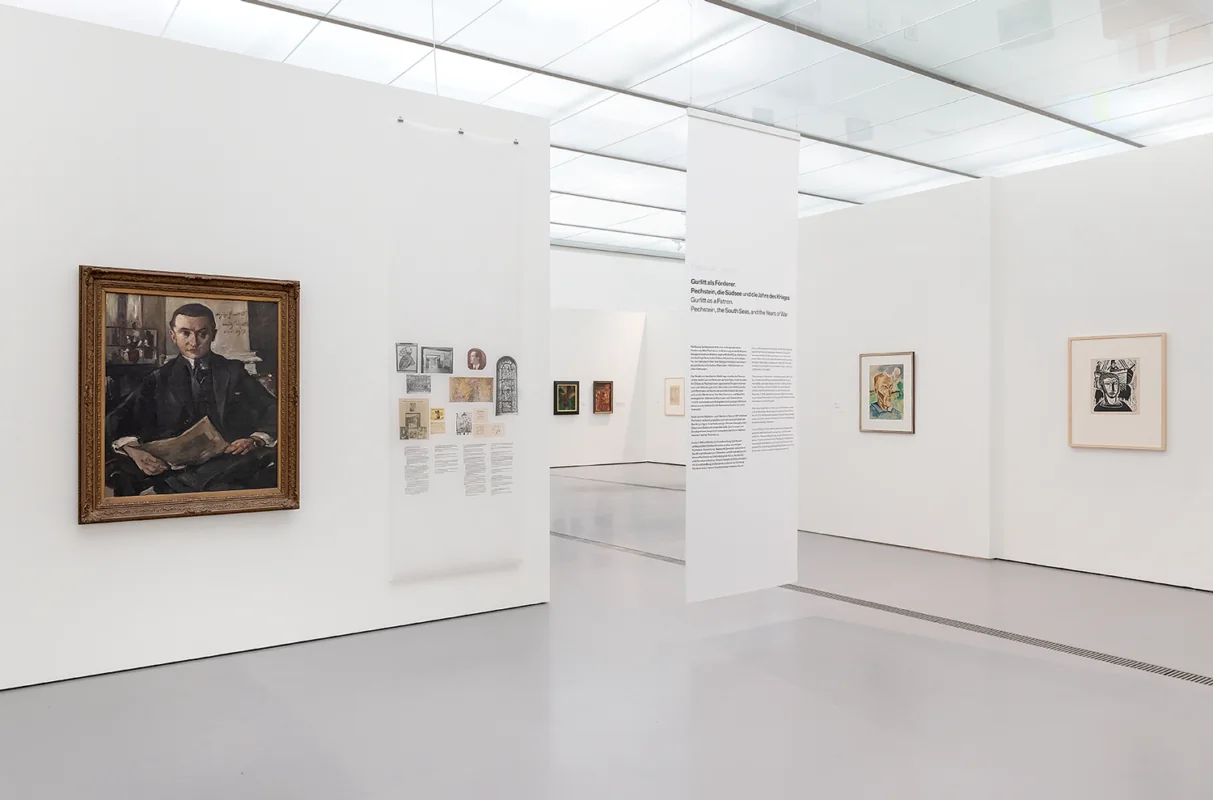
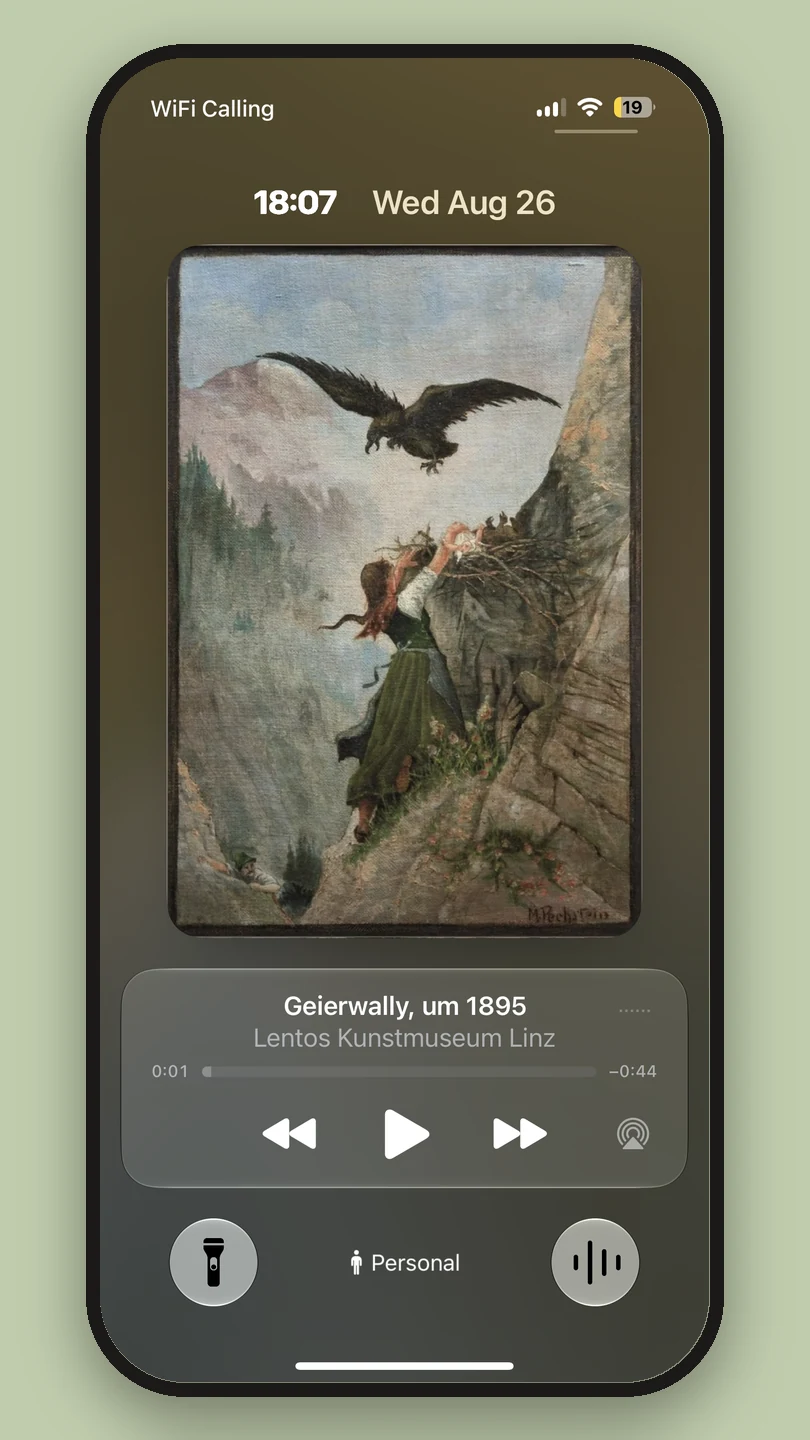
Audio keeps playing with the phone locked and in a pocket, next to the exhibition texts edited by Julia Pechstein, who is also one of the three narrators.
Because the knowledge base, the characters and the narratives all belong to the foundation, they can move with the works. The Stiftung is now looking at how to adapt the same approach for the tour's next stop at Palazzo Zabarella in Padua.