Four narrators, two museums, one team that built it all themselves
How Culture Trois-Rivières spent a year testing Musa, then launched guides at Boréalis and the Manoir Boucher de Niverville without a developer in the loop.
Permanent deployment · · 5 min read
2
museums live, Boréalis and the Manoir Boucher de Niverville
4
narrators, each with a voice and personality the team wrote
1 year
of hands-on testing before opening to visitors
In brief
The heritage team built the guides themselves in Musa Studio. After a short learning period, the developers were no longer needed.
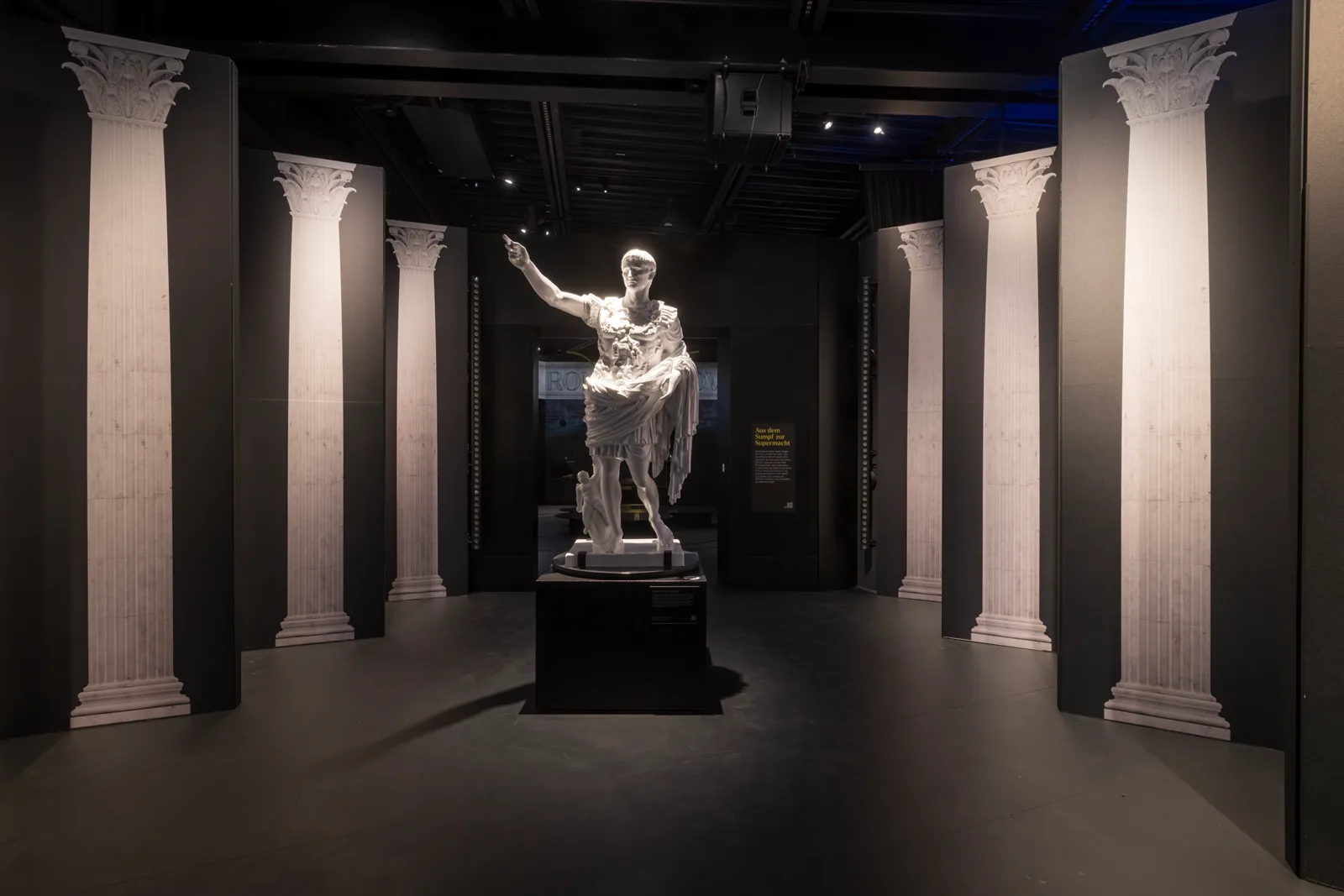
At the Manoir, an 18th-century seigneur narrates in the accent and vocabulary of his time. Visitors are surprised it is not an actor.
At Boréalis, a retired papermaker draws on the museum's oral-history collection, and a mouse living in the mill tells the story to children.
For us, it is not about replacing the human, but about giving them new tools to tell stories. And in heritage and tourism, telling good stories has always been the best way to create memorable experiences.
Elsa Barkats and Romain Nombret, Culture Trois-Rivières, writing in IA Tourisme
Pilot Musa at your museum.
A pilot runs on your own collection and content, the way it did at Culture Trois-Rivières, and takes weeks rather than a procurement cycle.
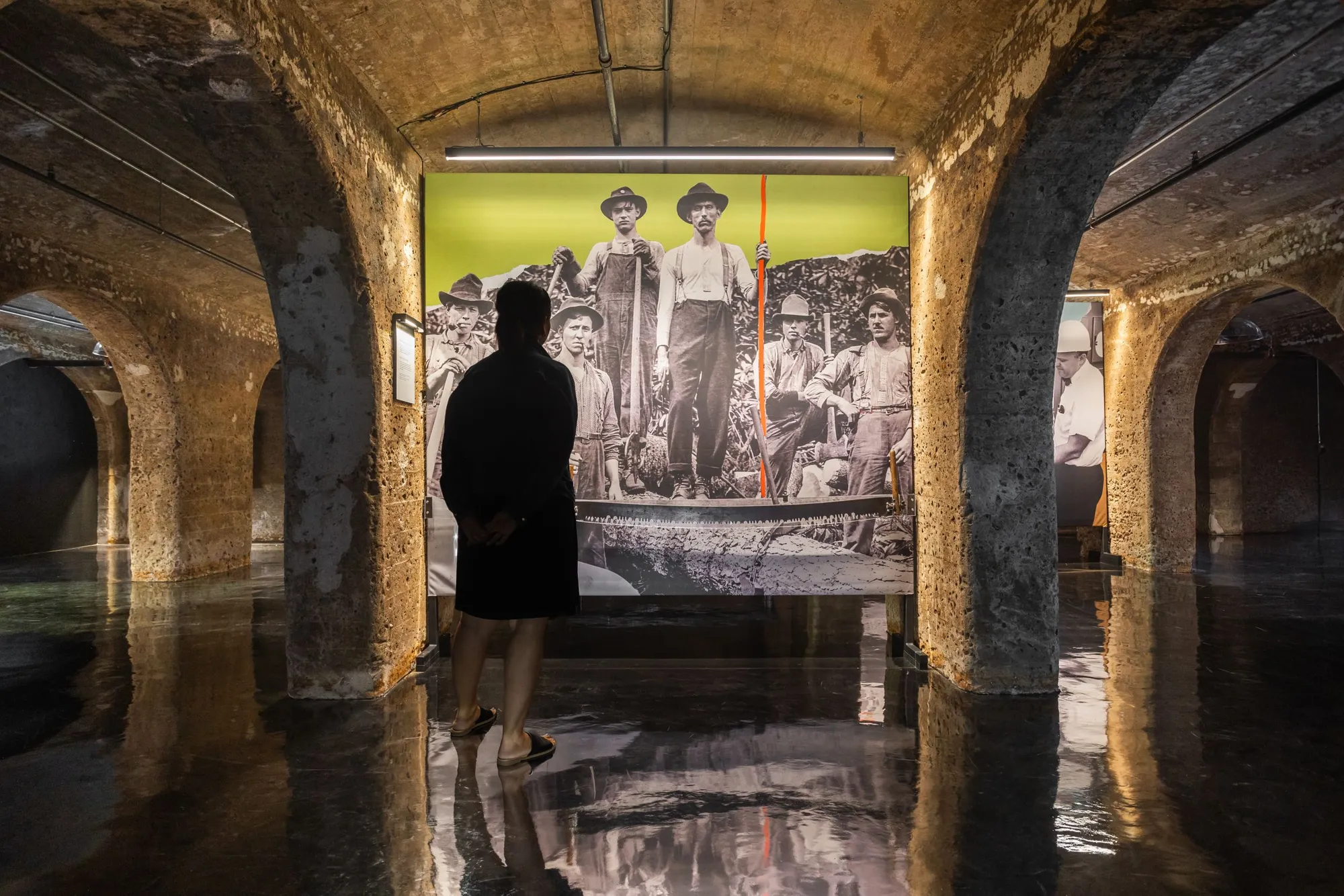
Culture Trois-Rivières runs the cultural and heritage sites of Trois-Rivières, Québec, halfway between Montréal and Québec City. Two of them now carry a Musa guide: Boréalis, the museum of the paper industry housed in a former mill filtration plant on the Saint-Maurice river, and the Manoir Boucher de Niverville, the oldest house in the city.
Boréalis, in the former Canadian International Paper filtration plant on the Saint-Maurice.
Challenge
The team wanted to create original, personalised audio experiences quickly, and to keep changing them, without a complex development project and without going back to a supplier for every edit. Existing options were either a chatbot bolted onto a website or a traditional recorded audio tour, and neither let a small heritage team iterate on its own.
They also had a recurring visitor request at the Manoir: people wanted to know more about the building itself, not just the family who lived in it.
Approach
Culture Trois-Rivières tested Musa for over a year before opening it to visitors. In their own account of the project, the team describes the workflow as: imagine and create one or more narrators, give each a voice, add the content to the knowledge base (text, PDF and so on), then assemble those points into a route. After a short learning period they were autonomous, and, in their words, "it is practically no longer necessary to call on the developers."
Four narrators were written, each with a personality, a history, a vocabulary and a way of speaking, all defined in prompts that can be changed in minutes:
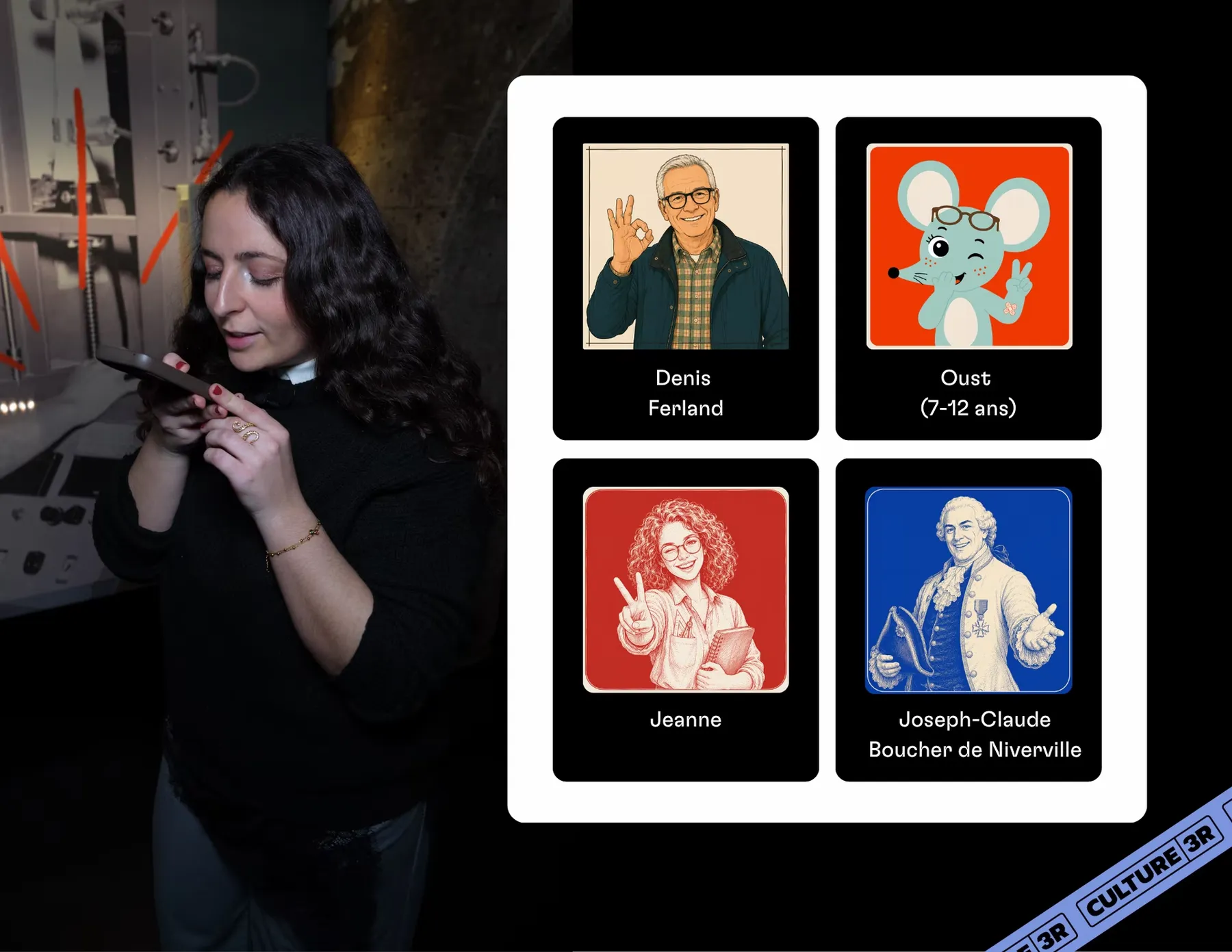
At the Manoir Boucher de Niverville, an architecture specialist who walks visitors through the oldest residence in Trois-Rivières, and Joseph-Claude Boucher de Niverville, the seigneur of New France who once owned it, recreated with an 18th-century accent and vocabulary
At Boréalis, Denis Ferland, a retired papermaker whose account draws directly on the testimonies preserved in the collection, and Oust, a mouse living in the mill who tells its stories to children aged seven to twelve
The four narrators, as visitors choose them. Photo: Agence BAMZ, Alexis Mandon.
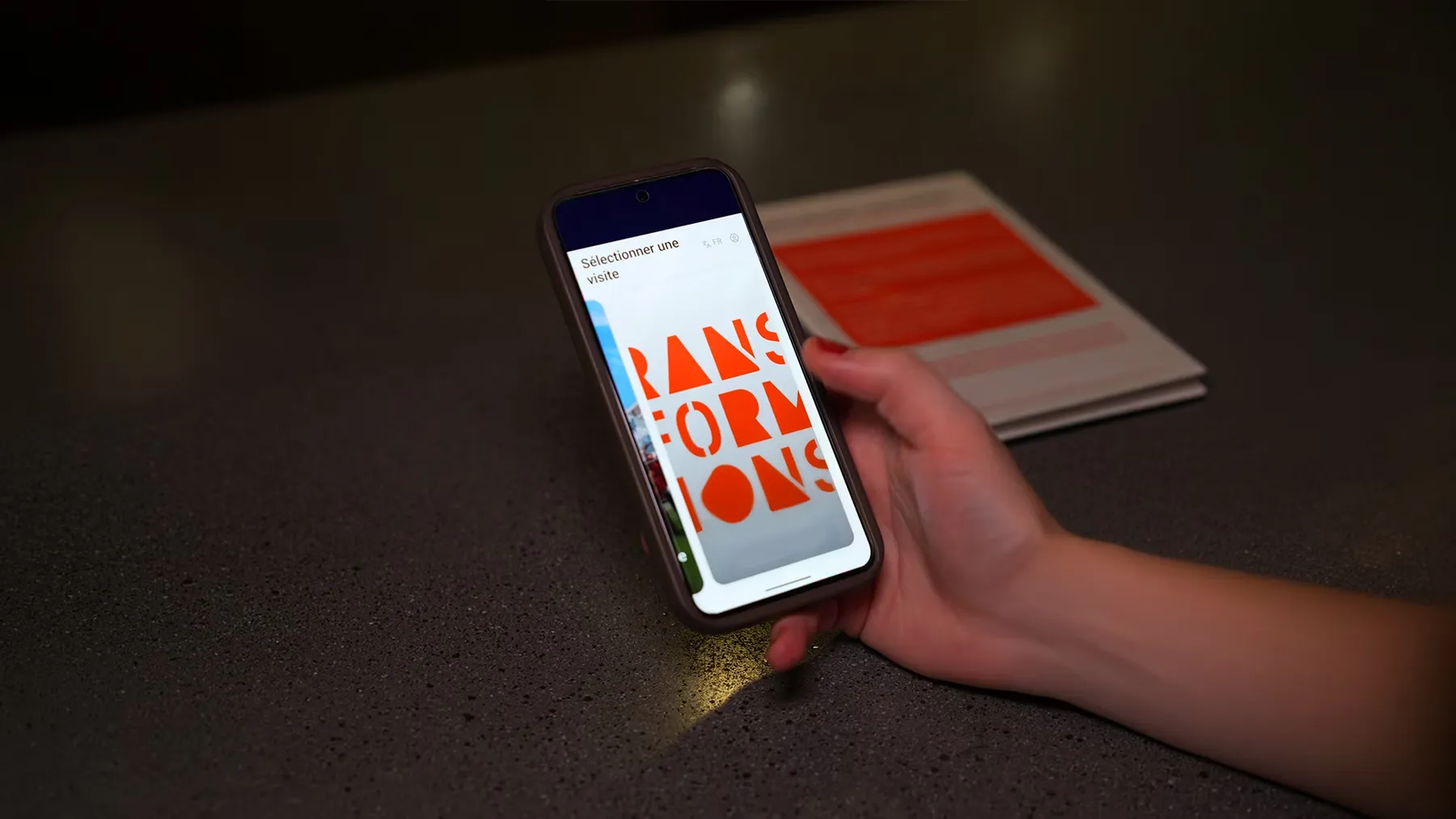
Scan the code at the desk, pick a route. Film and photo: Culture Trois-Rivières, Agence BAMZ (Alexis Mandon).
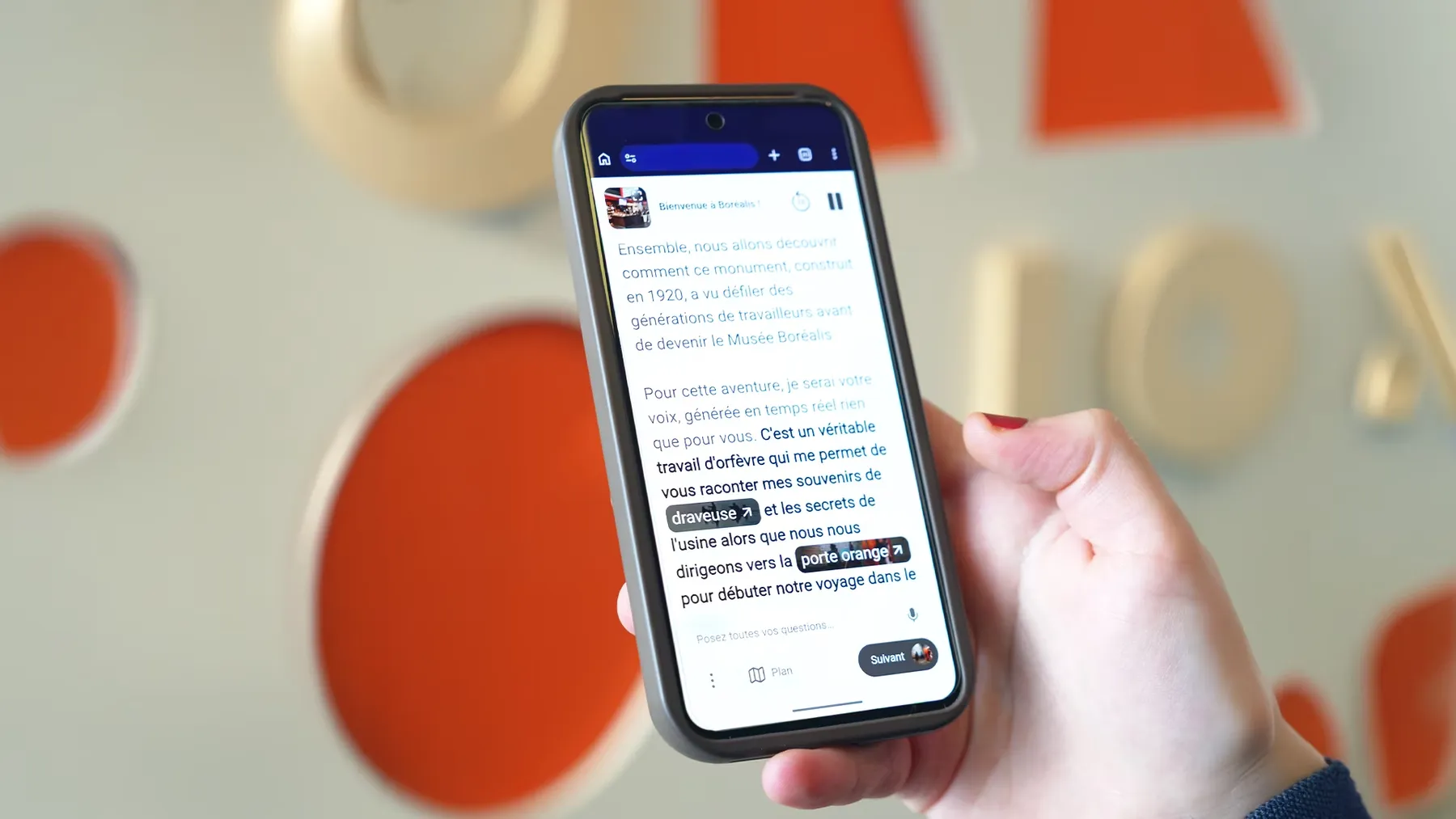
On any route, visitors can ask the narrator to change register or level in real time, through the written or spoken chat, and the guide answers from the museum's documentation only. That constraint was one of the reasons the team chose Musa: the historical, scientific and heritage content stays entirely under their control, and there is no need to write every text word by word or to produce several variants of the same content by hand.
Asking the narrator for directions to the pump room.
Outcomes
Several visitors are surprised to learn that the voice they have just heard is not that of an
actor.
Elsa Barkats and Romain Nombret, Culture Trois-Rivières
The team uses Musa's dashboard to see the questions the guide could not answer, and feeds those gaps back into the knowledge base, so both guides keep improving after launch. Before deployment, Culture Trois-Rivières carried out a privacy impact assessment; visitors do not need an account, and the museum's staff keep scientific responsibility for everything the guide says.
In July 2026 the team published a first-person account of the project in IA Tourisme, the Québec publication on AI in tourism, framing what they built as a path for heritage sites, interpretation centres, urban trails and destinations well beyond museums.