 i
Peggy Guggenheim CollectionDorsoduro
Fucina degli Angeli: Peggy Guggenheim and 20th-Century Artistic Glass
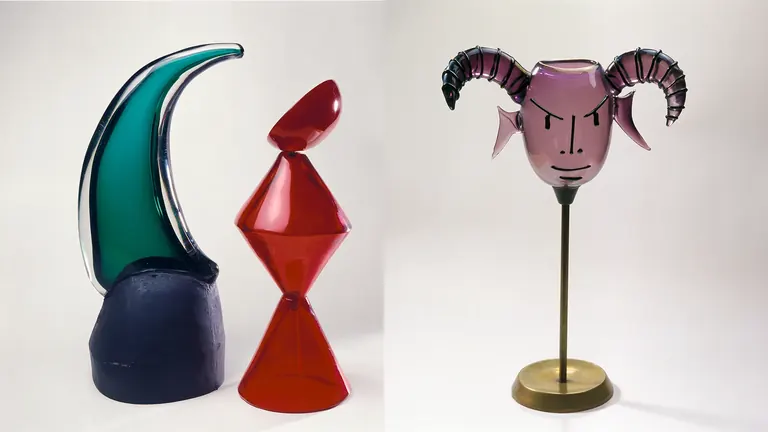
Postwar Murano glass by Egidio Costantini's Fucina degli Angeli, founded 1955, which turned artists' designs into glass with Peggy Guggenheim's backing.
More in Venice
Preview: written before the show opened
Jean Cocteau named the workshop: Fucina degli Angeli, the Foundry of the Angels. Egidio Costantini opened it as a glass gallery in Campo Santi Filippo e Giacomo in 1955 and spent decades turning designs by Picasso, Max Ernst, Arp and Fontana into glass in Murano's furnaces. Peggy Guggenheim bought pieces, backed him at crucial moments and helped him find buyers abroad.
More than a hundred works trace the Fucina in order, from early pieces based on Braque and Picasso ceramics to its 1980s experiments. The glass sits beside the drawings, paintings and archive papers behind it, so you can follow a piece from sketch to furnace. One section covers Japanese artists in 1960s and 70s Venice, Yokoo Tadanori among them. Venice sells Murano glass on every bridge from San Marco to the Rialto; this is the batch Max Ernst designed.
Before the opening, curator Cristina Beltrami gives a free online talk on 30 October (registration required). Her after-hours tours in November and January are for members only.
Editor's pick
Jean Cocteau named the workshop, and it turned designs by Picasso, Max Ernst and Arp into Murano glass. Over a hundred pieces sit beside the sketches behind them, so you can follow each one from drawing to furnace.
Look for
Max Ernst, King and Queen (1964)
Look for two figures about 54 cm tall, hot-modelled in clear cristallo glass with a green layer sealed inside and black ground glass.
Jean Cocteau, Billy Goat (or Lucifer) (1962)
A goat blown in amethyst glass, picked out in black and mounted on a metal support, by the man who named the Fucina.
Jean Arp, Doll (1963-64)
A 63 cm figure of hot-modelled amethyst glass, lent by the Fondazione Marguerite Arp in Locarno.
Arman, Procession (1966)
A wall panel more than a metre wide, made of moulded semi-iridescent, straw-coloured and opaline glass set in acrylic.
Good for
- Nerding Out
- Out-Of-Town Guests
Also at Peggy Guggenheim Collection
On now nearby
Nearby
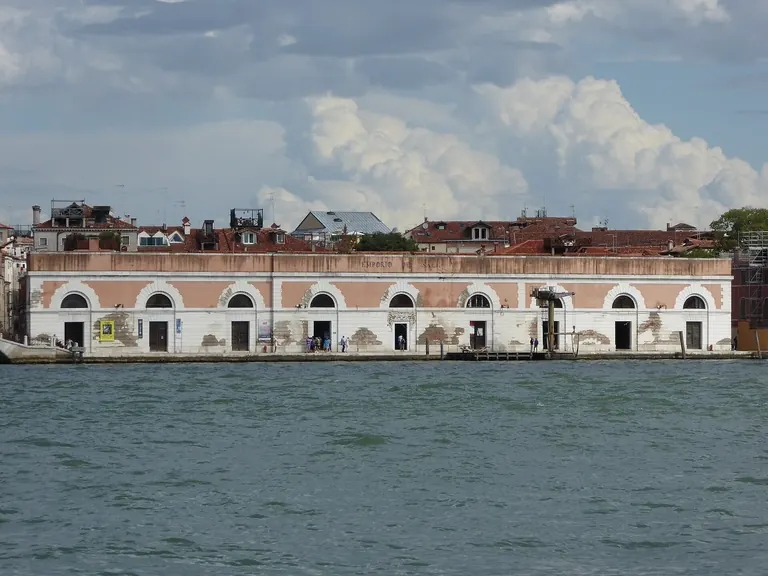
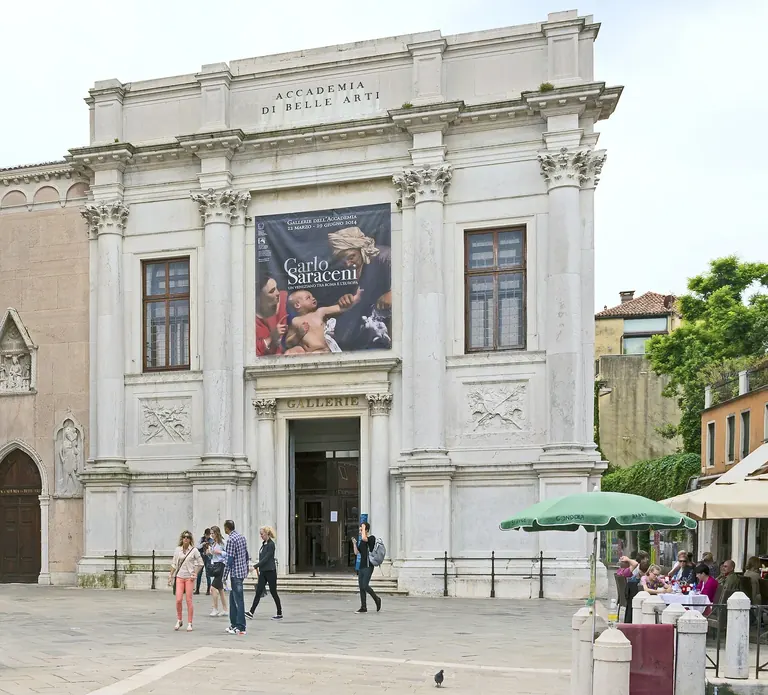
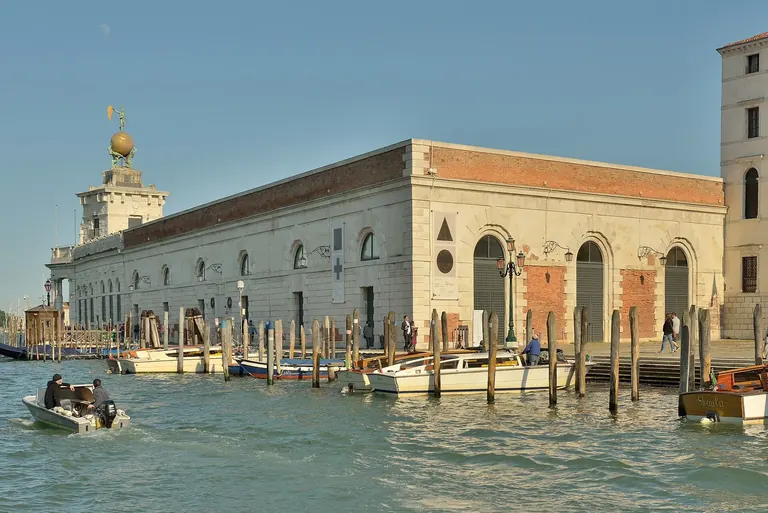
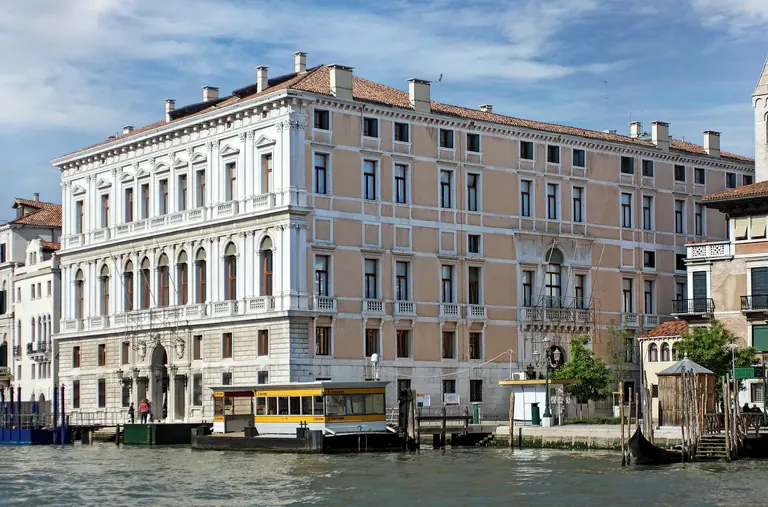
Image credits
9
- Fucina degli Angeli: Peggy Guggenheim and 20th-Century Artistic GlassCourtesy of Peggy Guggenheim Collection
- Leiko Ikemura. TransLucent — La forma della luce© Leiko Ikemura. Photo: Jörg von Bruchhausen
- Lorna Simpson. Third PersonCourtesy of Punta della Dogana
- Paulo Nazareth. AlgebraCourtesy of Punta della Dogana
- Peggy Guggenheim CollectionG.Lanting / Wikimedia Commons, CC BY 3.0
- Fondazione Emilio e Annabianca Vedova (Magazzino del Sale)Abxbay / Wikimedia Commons, CC BY-SA 4.0
- Gallerie dell'AccademiaDidier Descouens / Wikimedia Commons, CC BY-SA 4.0
- Punta della DoganaWolfgang Moroder / Wikimedia Commons, CC BY-SA 3.0
- Palazzo GrassiDidier Descouens / Wikimedia Commons, CC BY-SA 4.0