 i
La Biennale di Venezia (Giardini & Arsenale)Castello
Italian Pavilion: Con te con tutto – Chiara Camoni
Chiara Camoni fills the Tese delle Vergini at the Arsenale with 24 life-sized sculptures woven from plants, flowers, plastics and debris, curated by Cecilia Canziani.
More in Venice
You walk into near-darkness and make out a crowd: 24 terracotta women, a little taller than you, studded with grasses, stones, leaves and plastic scraps Chiara Camoni picked up near her studio. One of them holds two ceramic bowls by Fausto Melotti.
The second of the two Tese delle Vergini is the opposite, all daylight with the windows and door open. It holds a half-built village of furniture sculptures in verdigris, a little house, a tent, a bench. In the middle, a Venus and three Odalisques recline beside a recycled plastic floor that shines like water. Venice spent billions on MOSE to keep the water out; Camoni built a floor that only looks flooded.
Finestre sull'Arte's Federico Giannini found "remarkable poetic intensity", but warned that its calculated disorder can become a "cacophony that repels more than it welcomes". It's in the Arsenale, covered by the €30 Biennale ticket, Tuesday to Sunday, 10am to 6pm, until 22 November.
Look for
The forest of Sisters
In the dim first room, 24 slightly larger-than-life terracotta figures, built up in coils, stand among you with leaves, stones and plastic fragments pressed into their bodies.
The figure with Melotti's bowls
Look for the female figure holding two ceramic bowls by Fausto Melotti in her hands, one of several pieces where Camoni works in other artists' objects.
The plastic lake
One Venus and three Odalisques recline on either side of a large recycled plastic floor whose surface reflects the daylight like water.
The amphora and the film
Alice Rohrwacher's video What Remains, reworking material from her film La Chimera, is set against a 7th-century BC amphora lent by the Rovati Foundation.
The square facing the garden
At the heart of the bright second room, seats converge on a small plaza that looks out through the open door to the garden's large trees.
Good for
- Going Solo
- Nerding Out
- Out-Of-Town Guests
Skip if
You find cluttered rooms tiring: Finestre sull'Arte's critic called the deliberate disorder a cacophony.
Also at La Biennale di Venezia (Giardini & Arsenale)
On now nearby



Nearby
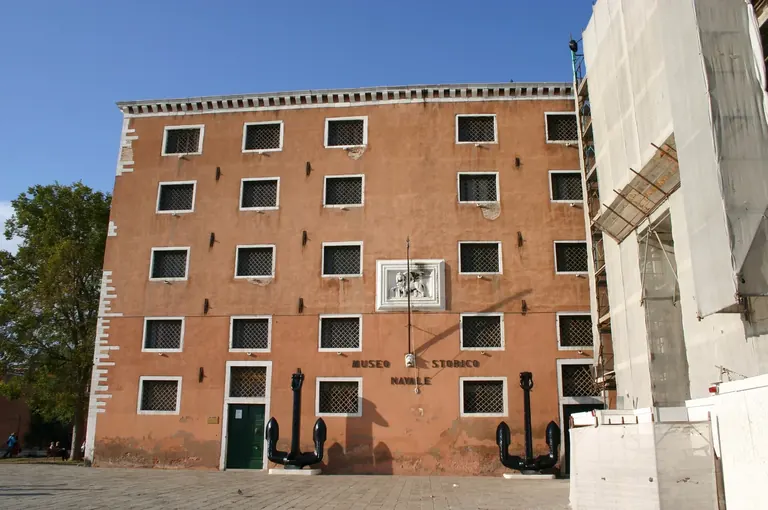
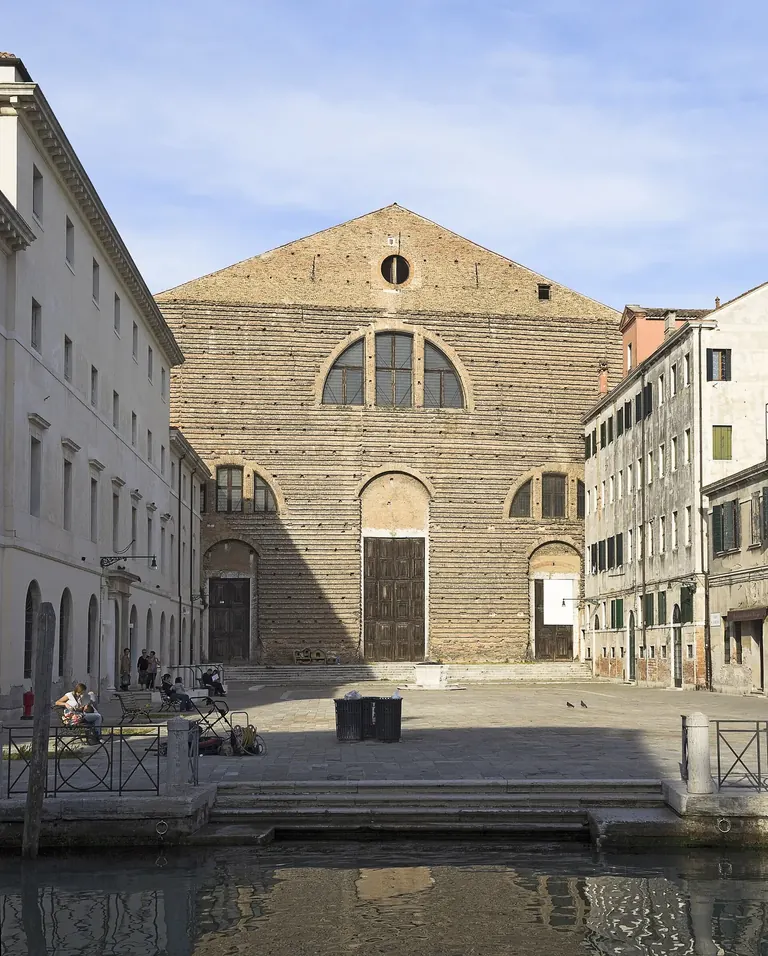
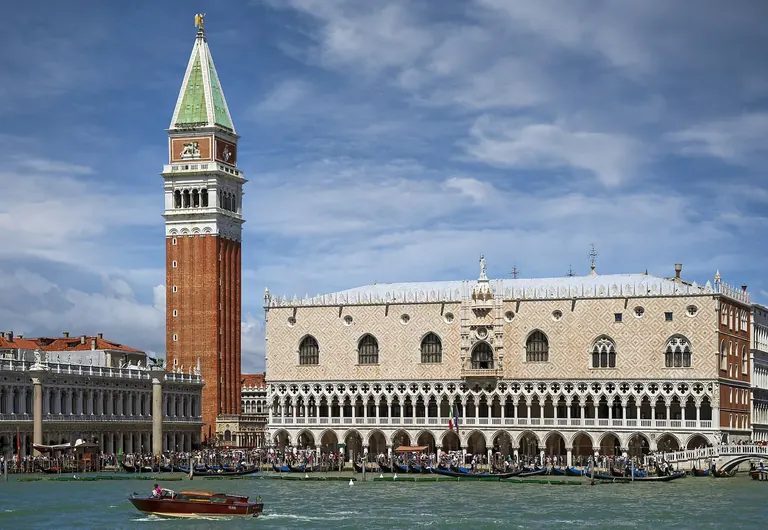
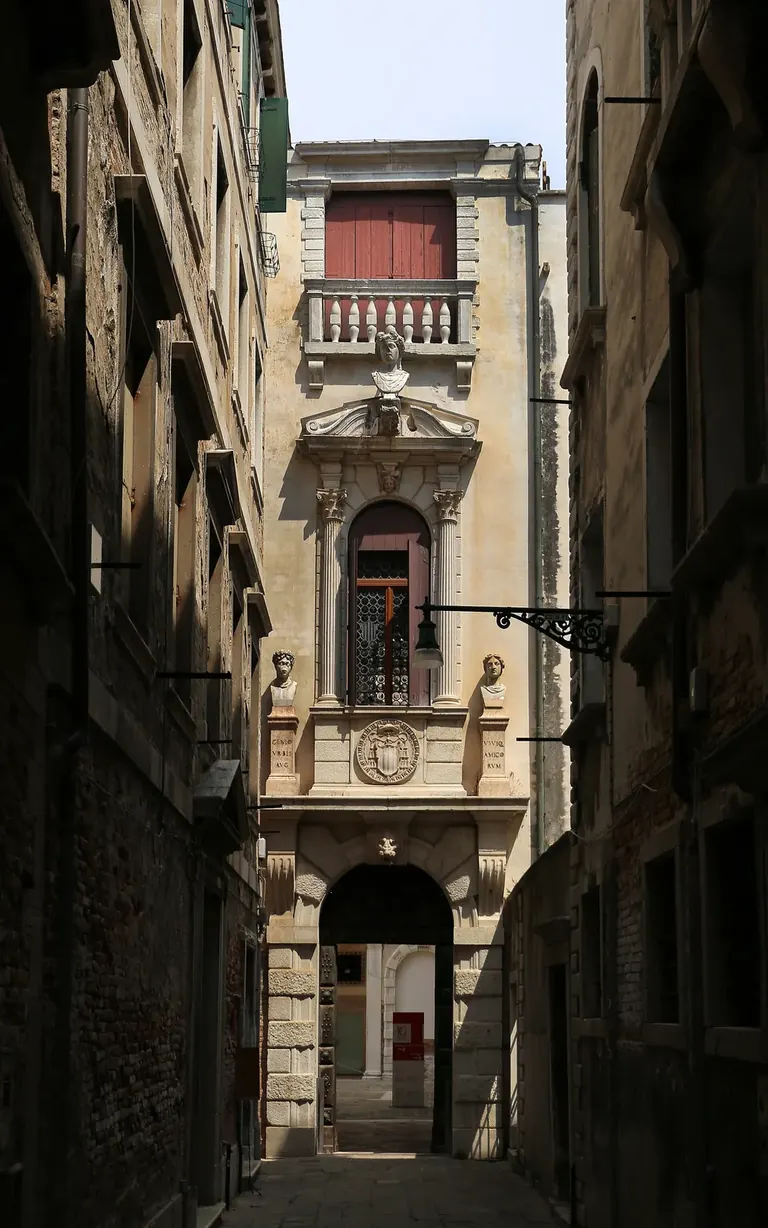
Image credits
9
- Italian Pavilion: Con te con tutto – Chiara CamoniCourtesy of La Biennale di Venezia (Giardini & Arsenale)
- Alfred Eisenstaedt. La fotografia era nell'ariaCourtesy of Museo Storico Navale
- EMPORION – Andrea ValleriCourtesy of Museo Storico Navale
- Amoako BoafoCourtesy of Museo di Palazzo Grimani
- La Biennale di Venezia (Giardini & Arsenale)AlMare / Wikimedia Commons, CC BY-SA 2.5
- Museo Storico NavaleGiovanni Dall'Orto / Wikimedia Commons, CC BY-SA 2.5 IT
- Ocean Space (Chiesa di San Lorenzo)Didier Descouens / Wikimedia Commons, CC BY-SA 4.0
- Palazzo Ducale (Doge's Palace)Didier Descouens / Wikimedia Commons, CC BY-SA 4.0
- Museo di Palazzo GrimaniSailko / Wikimedia Commons, CC BY-SA 4.0