 i
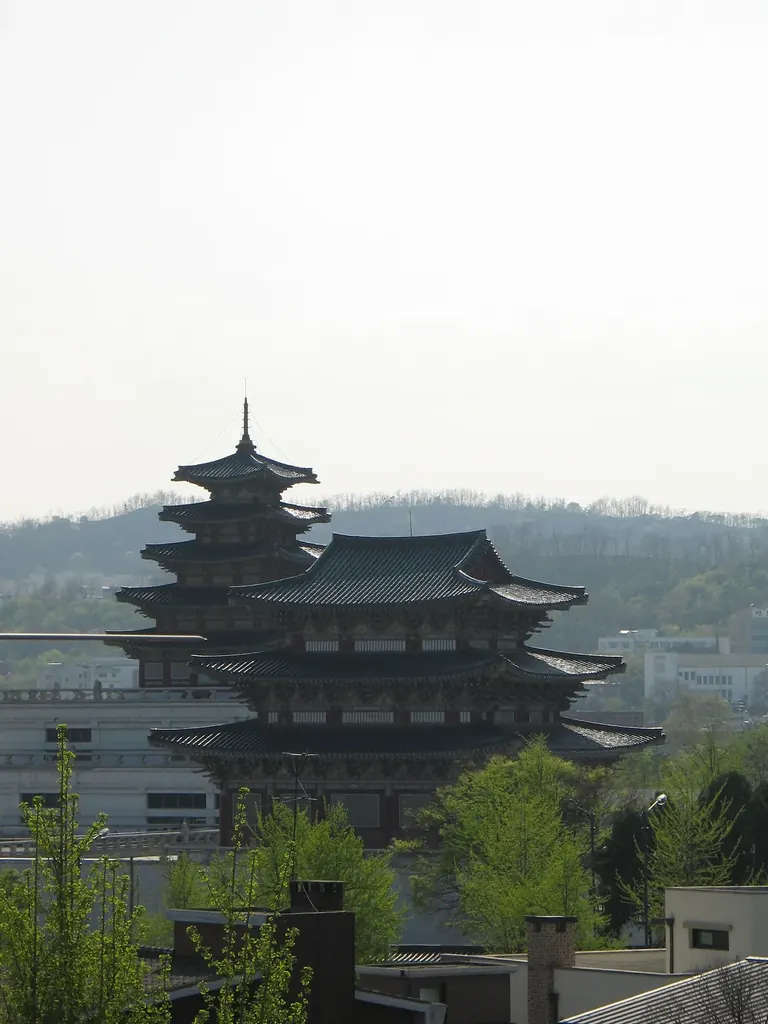
National Folk Museum of KoreaJongno-gu
Cups, Between Us
This exhibition has ended.
Over 190 folkloric cups, from ancient earthenware and celadon to modern glass and paper, shown alongside 13 contemporary artists' works on how cups connect people.
Museum websiteMore in Seoul
Dozens of cups hang from cotton thread in a web that Bae Ju-hyun built, and you're invited to reach out and hold them. It sits in a show of about 190 cups from the museum's own stores, plus work by 13 contemporary makers.
This is an open-storage show at the museum's Paju branch, not the Seoul building at Gyeongbokgung. Four sections run from 1,500-year-old Gaya and Silla earthenware through Goryeo celadon and brass ritual cups to glass coffee sets, paper cups and standard soju glasses. A section on cups shared between people has wedding cups and the makgeolli bowls passed round after farm work; the last holds commemorative cups, down to 2002 World Cup souvenirs. Goryeo tea bowls and the standard soju glass have ended up in the same national collection.
Entry is free with no booking. Paju opens 10am to 6pm, last entry 5:30pm, closed Mondays, and express buses 2200 and 2200-1 run from Hongdae Station. The show closes on 1 November.
Look for
Bae Ju-hyun's hanging cups
Look for ceramic cups bound together with cotton thread into a spider-web, which you can reach out and hold.
Gaya and Silla cups with handles
Unglazed earthenware cups, some on pedestal feet, still rough with clay texture, made about 1,500 years ago as burial goods.
Goryeo celadon tea bowls
Bowls in the pale jade-green glaze, shaped for whisking tea.
Kim Gyeong-chan's heobeok
Jeju's traditional water jar remade in the island's own volcanic soil.
Lee Hye-jin's lily-of-the-valley cups
White porcelain cups with lily-of-the-valley flowers carved in relief on the sides.
Good for
- Cheap Culture
- Locals Who've Seen It All
- Nerding Out
Skip if
You only have time for central Seoul: the show is at the Paju branch, not Gyeongbokgung.
Also at National Folk Museum of Korea
On now nearby
Nearby
Image credits
8
- National Folk Museum of KoreaGaël Chardon, CC BY-SA 2.0
- MMCA×LG OLED Series 2026: Christine Sun KimCourtesy of MMCA Seoul
- Korea Artist Prize 2026Courtesy of MMCA Seoul
- Do Ho SuhCourtesy of the artist; Lehmann Maupin, New York, Seoul, and London; Victoria Miro © Do Ho Suh
- MMCA Seouljens kuu, via Wikimedia Commons, CC BY 2.0
- Art Sonje CenterBonnielou2013 / Wikimedia Commons, CC BY-SA 4.0
- National Palace Museum of KoreaJinho Jung, via Wikimedia Commons, CC BY-SA 2.0
- Seoul Museum of Craft ArtYoungjin, via Wikimedia Commons, CC BY-SA 4.0