 i
Asian Art MuseumCivic Center, San Francisco
Vishnu’s Cosmic Ocean
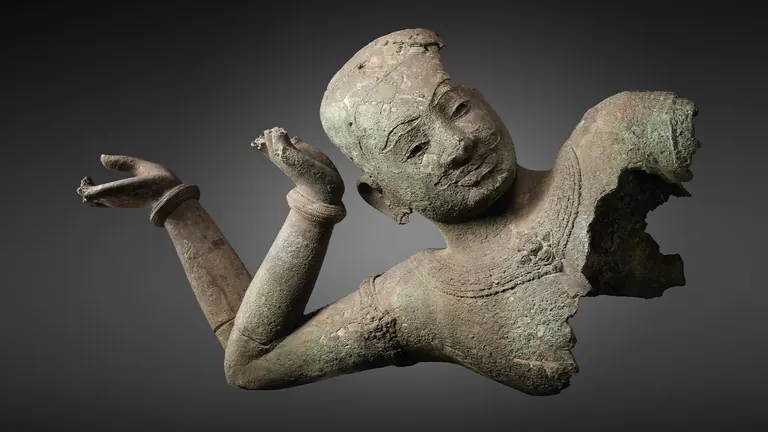
The nearly 20-foot West Mebon Reclining Vishnu, Southeast Asia's largest ancient bronze, on loan from Cambodia; its only West Coast stop before it returns home.
More in San Francisco
Preview: written before the show opened
In 1936 a villager reportedly dreamed of a statue buried beneath the West Mebon, an island temple in the middle of a reservoir at Angkor. In a pit there lay a bronze head and torso of Vishnu, with dozens of loose bronze fragments. For decades only the head and torso were shown. Conservators have now reconnected the remnants of a reclining god that was nearly twenty feet long when complete, the largest ancient bronze found in Southeast Asia.
You find him in the Osher Foundation Gallery. Around him, maps, videos and displays explain how Angkor's canals and reservoirs fed one of the medieval world's largest cities, and what recent research found: the bronze was once gilded. Picture Golden Gate Park flooded end to end, then add two miles: that was the reservoir, with the god on an island in the middle.
This is the tour's final stop before the Vishnu returns to Cambodia. Entry is included with general admission, and the museum is open until 8 PM on Thursdays.
Editor's pick
For decades only the West Mebon Vishnu's head and torso were shown. Conservators have rejoined the bronze fragments found with them at Angkor: the remains of a reclining god once nearly 20 feet long.
Look for
The reassembled Vishnu
Look for the head and torso shown alone since 1936, now joined to the bronze fragments found with them in the pit, the god reclining on his serpent.
Awkun, praCh Ly's film
The Cambodian American director follows a fisherman, a merchant and a young Buddhist monk through a day around the reservoir as it is today.
Angkor's waterworks
Maps and videos show the canals, reservoirs, moats and embankments that managed Angkor's seasonal water, including the five-mile West Baray where the statue lay.
Good for
- Evening Visits
- Nerding Out
- Out-Of-Town Guests
Also at Asian Art Museum
On now nearby
Nearby
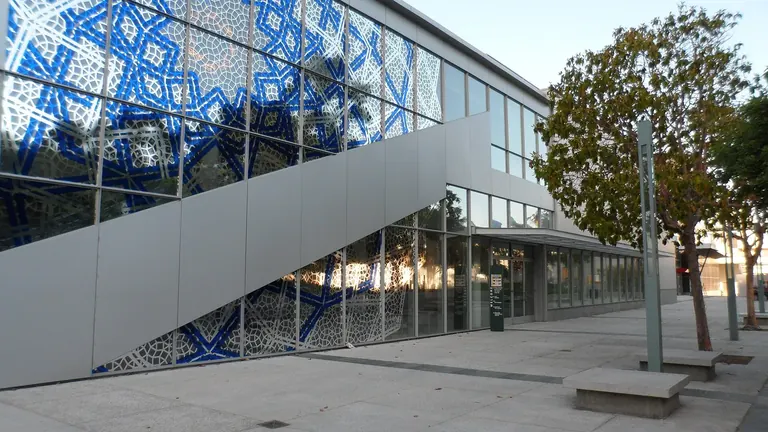
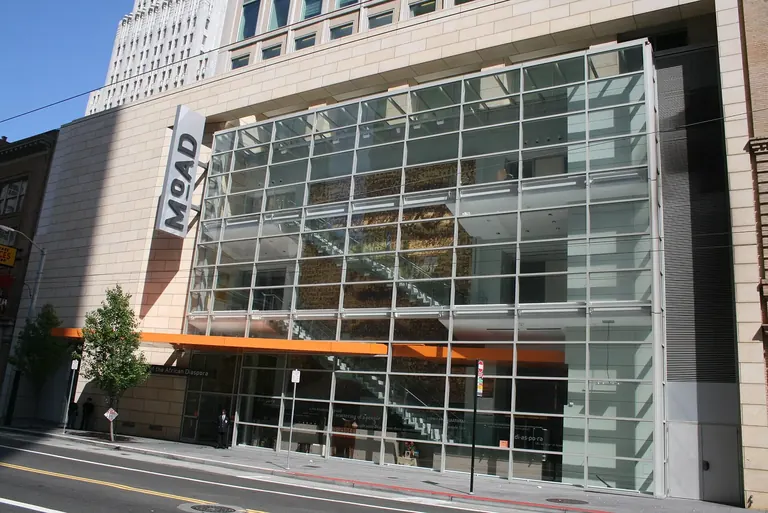
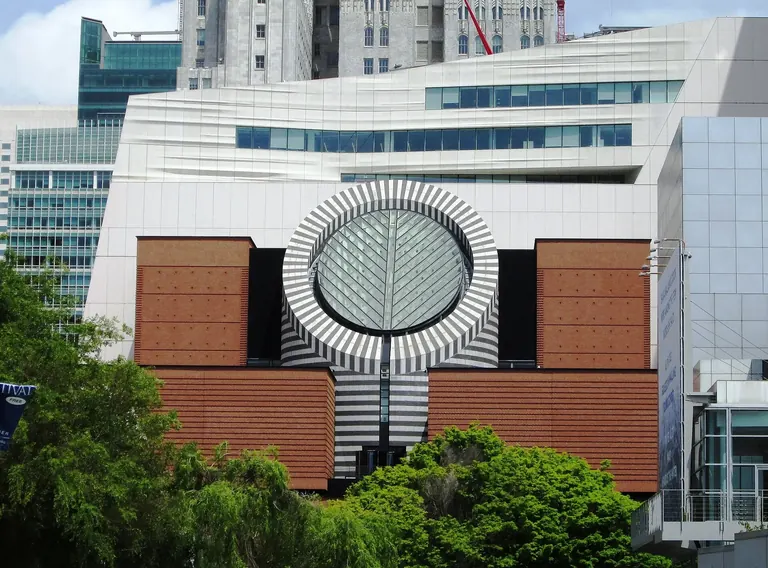
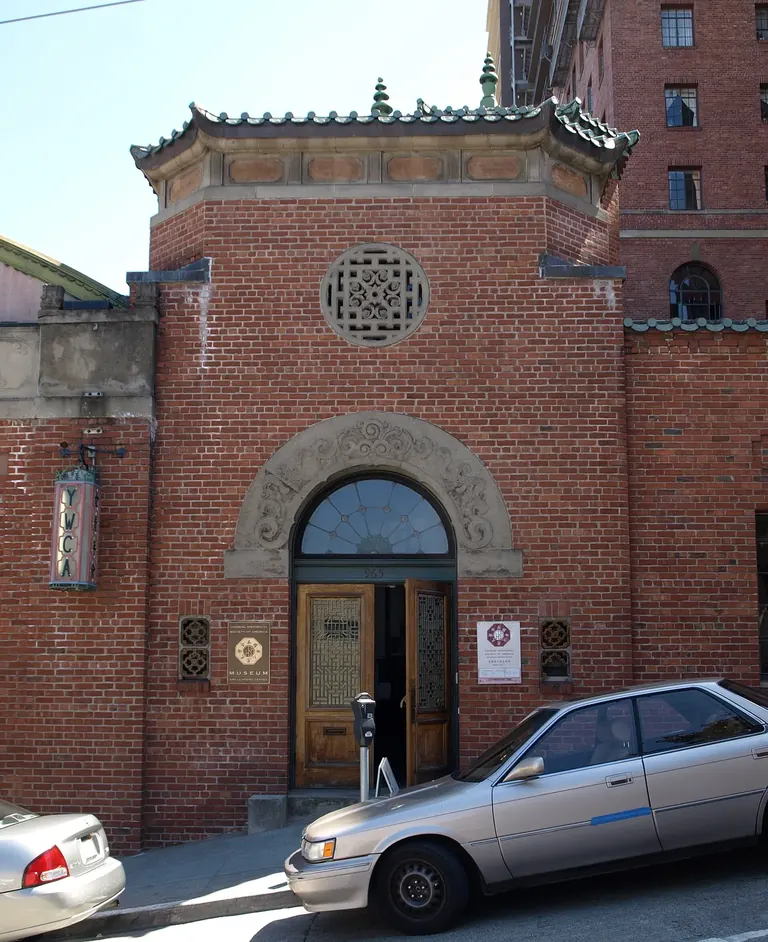
Image credits
9
- Vishnu’s Cosmic OceanAsian Art Museum
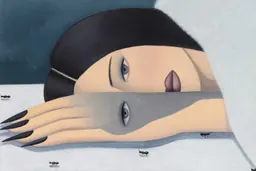
- GaHee Park: Behind the CurtainGaHee Park; photo Guillaume Ziccarelli; courtesy Perrotin Gallery
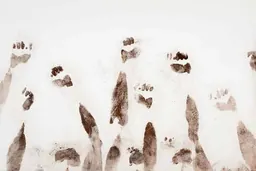
- Dread Scott: The Body PoliticDread Scott / YBCA
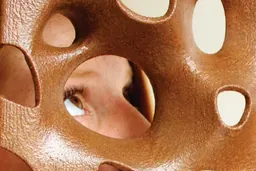
- Rael San Fratello: Prototypes and ProvocationsRael San Fratello / YBCA
- Asian Art MuseumDale Cruse, CC BY 4.0
- Yerba Buena Center for the Arts (YBCA)JCruzTheTruth / Wikimedia Commons, CC BY-SA 4.0
- Museum of the African Diaspora (MoAD)Jllm06 / Wikimedia Commons, Public domain
- San Francisco Museum of Modern Art (SFMOMA)Beyond My Ken / Wikimedia Commons, CC BY-SA 4.0
- Chinese Historical Society of America MuseumAnna Majkowska / Wikimedia Commons, CC BY 2.0