 i
Museum of Modern Art (MoMA)Midtown Manhattan
Brancusi: The Artist and His Studio
For the first time in decades, rarely lent sculptures leave Brancusi's Paris atelier (closed for renovation) to join MoMA's Brancusi collection, alongside his photographs, films, hand-carved furniture, tools and archival materials.
More in New York
Arriving in New York in 1926, Brancusi looked around and said: "Why, it is my studio. All these blocks, all these shapes to be shifted and juggled with, as the experiment grows and changes." The studio he meant, on the impasse Ronsin in Paris, is where he lived and worked until his death. He saw the skyline as a studio; most New Yorkers see rent.
Its contents went to France as the Atelier Brancusi, shut for the Centre Pompidou's renovation. They fill the sixth floor in largely chronological order: Leda, Bird in Space, Fish, and versions of Mlle Pogany and The Kiss. In the middle you walk into the studio's footprint, marked out in translucent fabric and coloured flooring, with films, plaster studies and his carved stools.
Hyperallergic's Aruna D'Souza called the work "glorious" and the show "more than a survey". Her catch is MoMA itself: "a space problem, or an elegance problem, or a crowd mitigation problem." It is included with general admission, $30 for adults.
Editor's pick
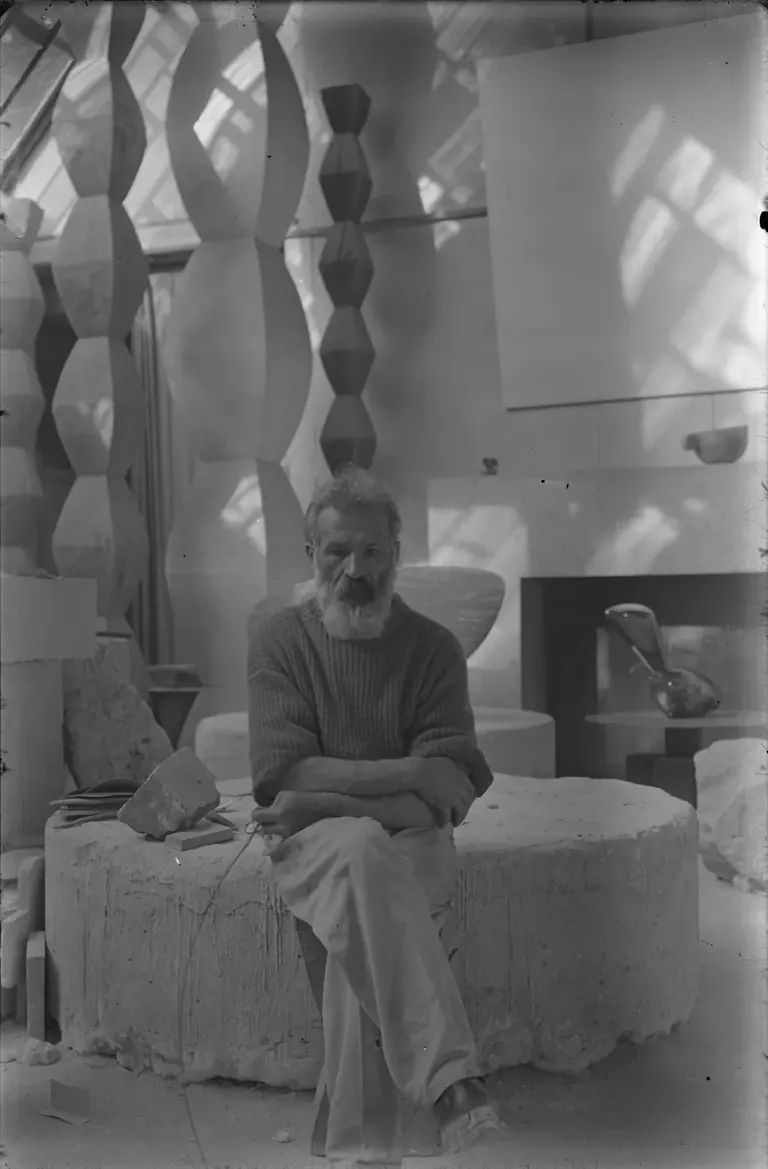
Brancusi treated his Paris studio as a work in itself and photographed his sculptures there rather than trust anyone else to. MoMA gathers rarely lent pieces from the atelier with those photographs, his films, furniture and tools.
Look for
Sculptures on their original bases
Works stand on Brancusi's own hand-carved wood and stone bases, which the museum treats as being as carefully formed as the sculptures they hold.
Three versions each of The Kiss and Mlle Pogany
Versions dated between 1912 and 1940 hang together, showing one motif recurring in different materials and configurations.
The ghost studio
At the centre of the floor, translucent fabric and coloured flooring trace the studio's final footprint, with projected films of the room, plaster studies and hand-carved stools.
Brancusi's own films
Films he made show his mobile sculptures in motion.
Studio photographs
Photographs he took himself record how the sculptures were rearranged in the studio over four decades.
Good for
- First-Timers
- Nerding Out
- Out-Of-Town Guests
Also at Museum of Modern Art (MoMA)
On now nearby
Nearby
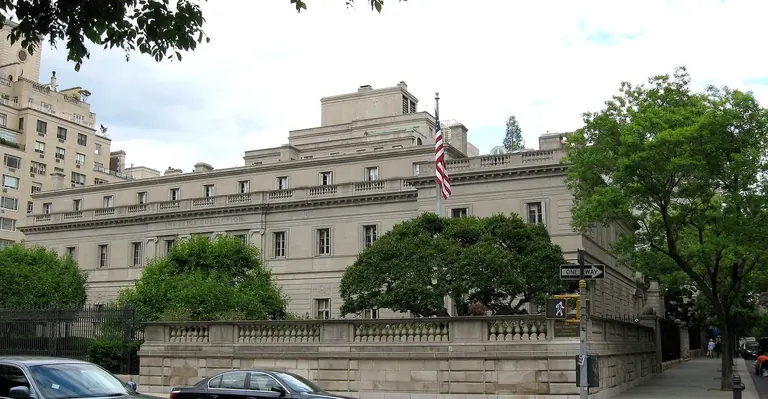
Image credits
6
- Brancusi: The Artist and His StudioCourtesy of Museum of Modern Art (MoMA)
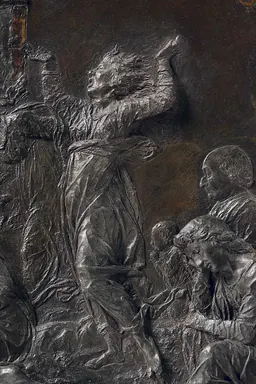
- Siena: The Art of Bronze, 1450-1500The Frick Collection
- Splendido, As Seen by Chris RhodesCourtesy of Aperture
- Museum of Modern Art (MoMA)hibino via Wikimedia Commons, CC BY 2.0
- The Frick CollectionJim.henderson / Wikimedia Commons, Public domain
- The Morgan Library & MuseumMike Peel, CC BY-SA 4.0