 i
The Metropolitan Museum of ArtUpper East Side
There Are No Words: Si Lewen's Parade
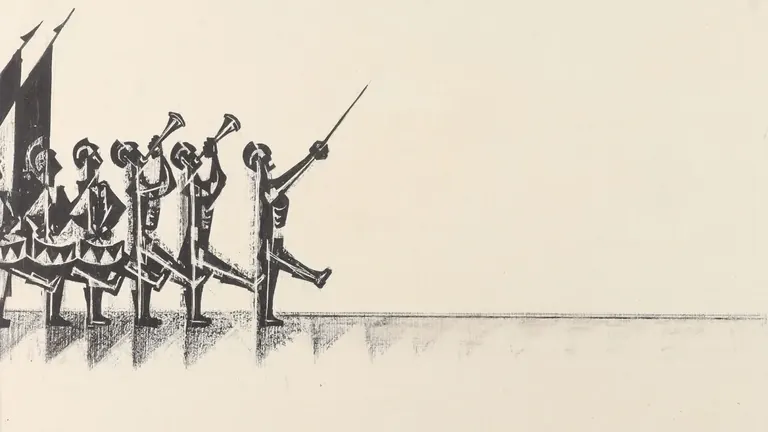
Conceived by Si Lewen (1918–2016) in the aftermath of World War II, The Parade is informed by the artist's extraordinary life.
More in New York
It starts as a march: men in uniform, and an army horse in dress regalia dropping dung mid-spectacle. Children watch in awe. A few drawings on, they are led away, and the parade turns into war.
The Parade is 63 charcoal, pencil and ink drawings Si Lewen made around 1950, a wordless novel after Frans Masereel's woodcuts. There are no captions: "just the picture itself is the narrative," Lewen said. You read it by walking around the gallery, and curator Maria Castro describes sparse scenes of small groups giving way to dense, dark, chaotic ones. Lewen, a Jewish refugee from Germany, went back as one of the Ritchie Boys and reached Buchenwald just after its liberation in 1945.
Reviewing the cycle at James Cohan Gallery in 2024, David D'Arcy saw "the absurd pomp and horror of war" told with the punch of comics. The Met bought it that year, and this is its first showing here: one room, Gallery 690, free with Museum admission, through 5 January.
Look for
The parade horse
Look for the army horse in full dress regalia at the head of the march, leaving its droppings as part of the pageant.
The children who watch
Early drawings show children gazing at the soldiers in awe; a few frames later they are led away.
The scratched battle frames
War arrives as abstract lines scratched into the surface, then explosions, then destruction and boxes of bodies carried off.
Good for
- An Hour Or Less
- Locals Who've Seen It All
- Nerding Out
Skip if
You want a light visit: the drawings move from parades into war, devastation and mourning.
Also at The Metropolitan Museum of Art
On now nearby
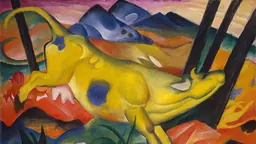
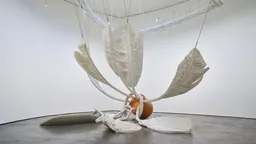

Nearby
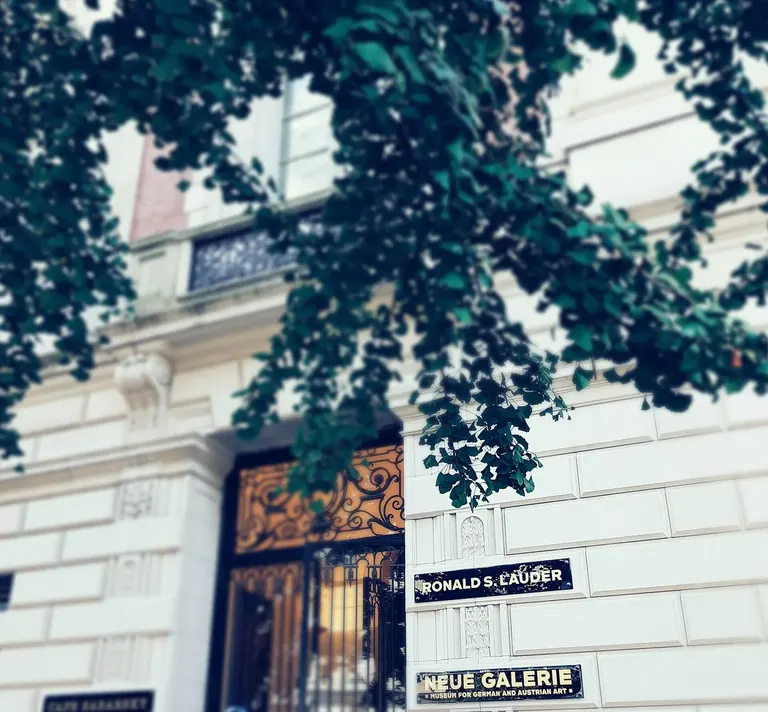
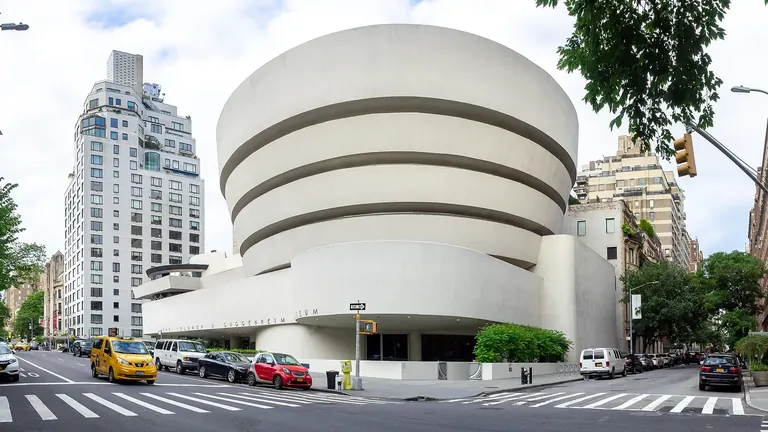
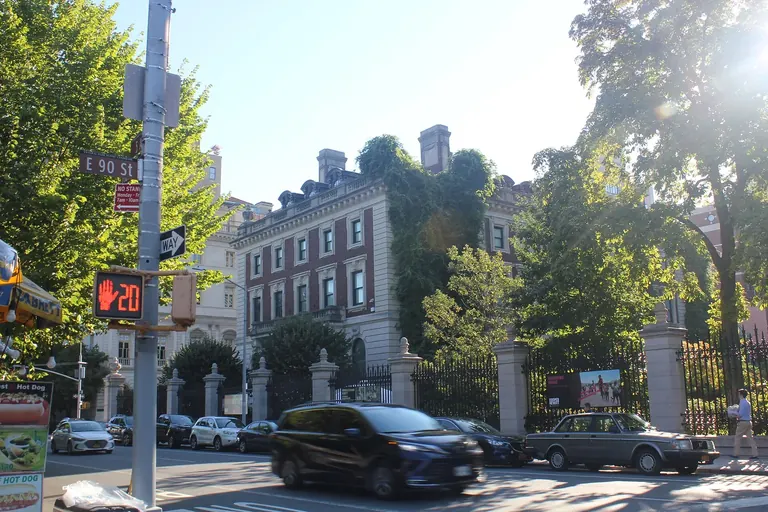
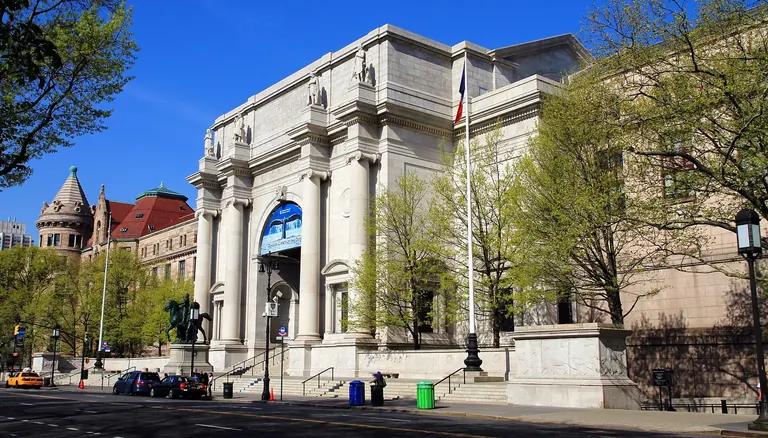
Image credits
9
- There Are No Words: Si Lewen's ParadeCourtesy of The Metropolitan Museum of Art
- Collection in Focus: Modern European CurrentsPhoto: Ariel Ione Williams, Solomon R. Guggenheim Museum, New York
- Guggenheim Pop: 1960 to NowCourtesy of Solomon R. Guggenheim Museum
- Taryn Simon | Father Country I Do Love YouCourtesy of Solomon R. Guggenheim Museum
- The Metropolitan Museum of ArtHugo Schneider, via Wikimedia Commons, CC BY-SA 2.0
- Neue Galerie New YorkFrancesca.hyanna19 via Wikimedia Commons, CC BY-SA 4.0
- Solomon R. Guggenheim MuseumAjay Suresh, via Wikimedia Commons, CC BY 2.0
- Cooper Hewitt, Smithsonian Design MuseumEpicgenius, Wikimedia Commons, CC BY-SA 4.0
- American Museum of Natural HistoryIngfbruno, Wikimedia Commons, CC BY-SA 3.0