 i
The Metropolitan Museum of ArtUpper East Side
The Infinite Artistry of Japanese Ceramics
Explores Japan's extensive and rich history of ceramic art.
More in New York
Near the entrance stands a 15th-century Shigaraki storage jar, built up from coils of clay rather than thrown, with kiln ash melted into a glaze that drips down one side. The label calls its surface "a collaboration among the clay, the wood-fired kiln, and the potter's hand."
That jar opens ten galleries and about 350 works, most from the Harry G. C. Packard Collection the Met acquired 50 years ago, and many rarely or never shown. The themes run from Jōmon clay figures to gold-mended tea bowls, Nabeshima porcelain made for the shogun's circle, tea wares and pieces by living potters, with screens, robes and lacquer alongside. You can sit while you look: George Nakashima's wooden benches are set out through the rooms.
The catch: a selection of works changes five times over the run, so check the rotation dates if you're going for one piece. It's free with Museum admission, in Galleries 223 to 232 on Floor 2, through August 8, 2027.
Look for
The Shigaraki storage jar (ōtsubo)
Look for the late-15th-century jar in Gallery 223: orange-brown clay flecked with white feldspar, and a run of ash glaze down one side from the wood-fired kiln.
A Chinese tea bowl mended in gold
In Gallery 224, a 13th-century celadon bowl has gold lacquer along a repaired rim, proof it was kept in Japan; in China the crack would have been stapled.
Ogata Kenzan's dish sets
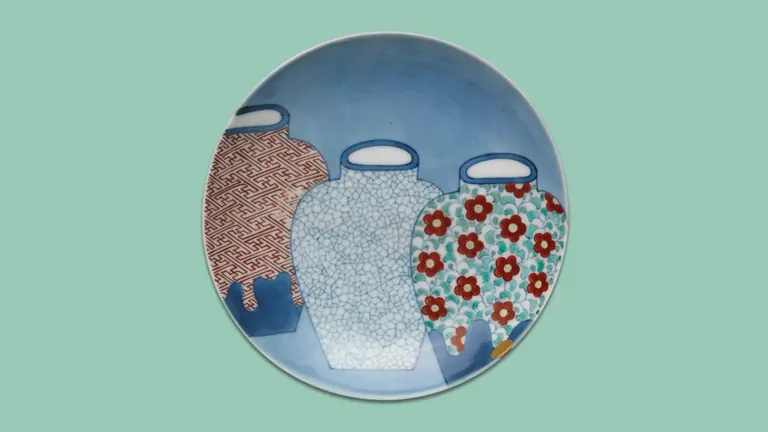
In Gallery 228, five camellia-shaped side dishes and five plum-blossom plates from Kenzan's 18th-century workshop, in bright enamels and bold patterns that look surprisingly modern.
Good for
- Going Solo
- Locals Who've Seen It All
- Nerding Out
Also at The Metropolitan Museum of Art
On now nearby

Nearby
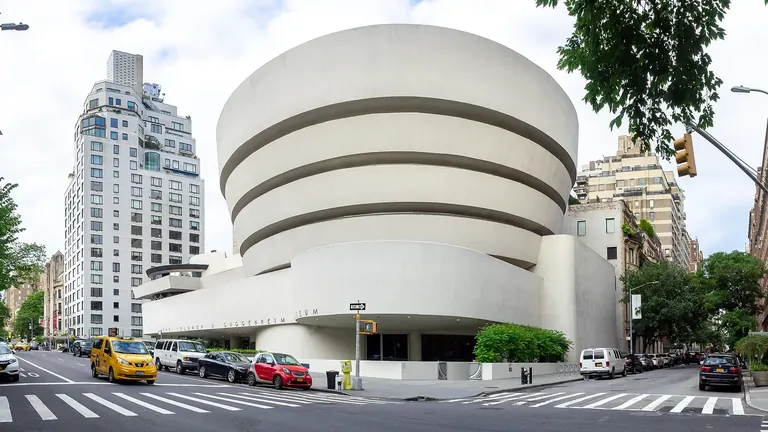
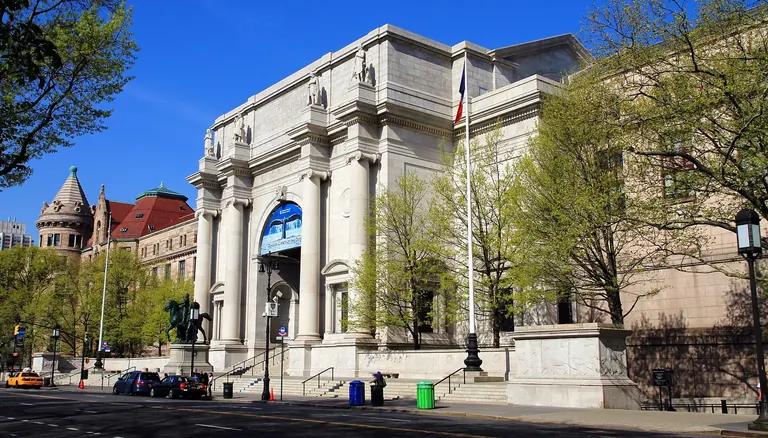
Image credits
9
- The Infinite Artistry of Japanese CeramicsCourtesy of The Metropolitan Museum of Art
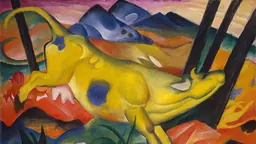
- Collection in Focus: Modern European CurrentsPhoto: Ariel Ione Williams, Solomon R. Guggenheim Museum, New York
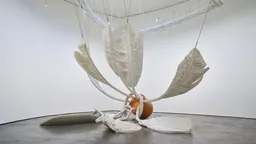
- Guggenheim Pop: 1960 to NowCourtesy of Solomon R. Guggenheim Museum
- Taryn Simon | Father Country I Do Love YouCourtesy of Solomon R. Guggenheim Museum
- The Metropolitan Museum of ArtHugo Schneider, via Wikimedia Commons, CC BY-SA 2.0
- Neue Galerie New YorkFrancesca.hyanna19 via Wikimedia Commons, CC BY-SA 4.0
- Solomon R. Guggenheim MuseumAjay Suresh, via Wikimedia Commons, CC BY 2.0
- Cooper Hewitt, Smithsonian Design MuseumEpicgenius, Wikimedia Commons, CC BY-SA 4.0
- American Museum of Natural HistoryIngfbruno, Wikimedia Commons, CC BY-SA 3.0