 i
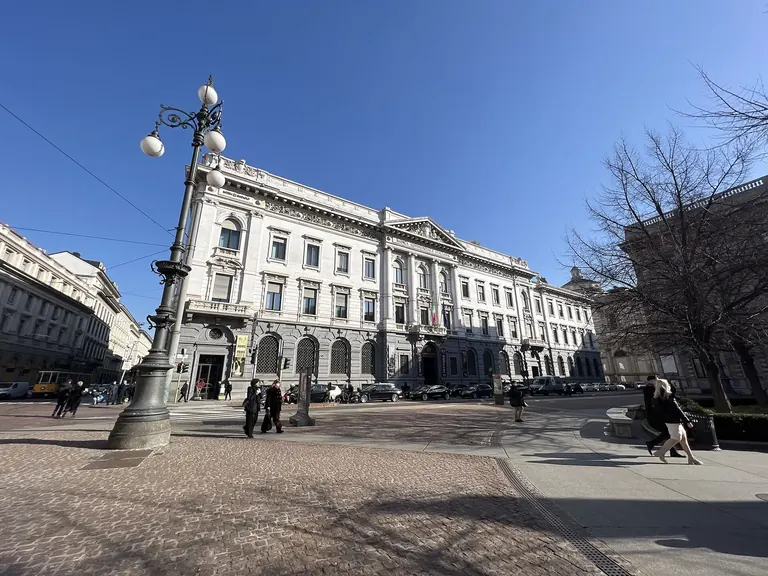
Gallerie d'Italia MilanoCentro Storico / Piazza della Scala
Arnaldo Pomodoro. Una vita
This exhibition has ended.
Some 45 works trace six decades of Arnaldo Pomodoro's sculpture, from his 1950s beginnings to 2000s experiments, with archive material and displays inspired by his own.
Museum websiteMore in Milan
You walk into the Salone Scala and the first sculptures are white fiberglass forms on one large white platform, a lightweight material Pomodoro took up in America in the 1960s so his work could travel. The hall is where the route starts, and where it brings you back.
From there 45 works, 40 of them from the artist's foundation, run through the decades in the side rooms: 1950s reliefs in iron, lead, tin and cement, a five-metre column, the cut-open spheres. In one room you can pull open four drawers of his archive. His columns then stand among Fontana and Consagra in the Cantiere del '900, and the show ends outdoors in the cloister and garden. Afterwards, the big bronze disc in Piazza Meda, a few minutes' walk away, is his too.
Ada Masoero in Il Giornale dell'Arte called it rigorous and spectacular, crediting the lighting. It closes on 18 October. Tickets are €12, free for under-26s and on the first Sunday of the month.
Look for
The white platform in the Salone Scala
Look for white fiberglass spheres and forms set out together on one large white platform, the opening and closing room of the show.
Colonna del viaggiatore (1965-66)
A five-metre bronze column, a later version of the iron one Italsider cast for the 1962 Spoleto festival.
The archive drawers
Four cabinets you can open hold the magazines, photographs, drawings and fossils Pomodoro kept and worked from.
Disco in forma di rosa del deserto n. 1 (1993-94)
A bronze disc in the octagonal cloister, based on the desert rose crystals of the Sahara, that changes as the light moves.
Sfera grande (1966-67)
Out in the Giardino di Alessandro, a fiberglass sphere 3.5 metres across, the version of his famous bronze sphere in Rome.
Good for
- Nerding Out
- Out-Of-Town Guests
With kids
Entry is free for anyone under 26, and the museum runs school workshops on sculpture materials and techniques with the Fondazione Arnaldo Pomodoro.
Also at Gallerie d'Italia Milano
On now nearby

Nearby
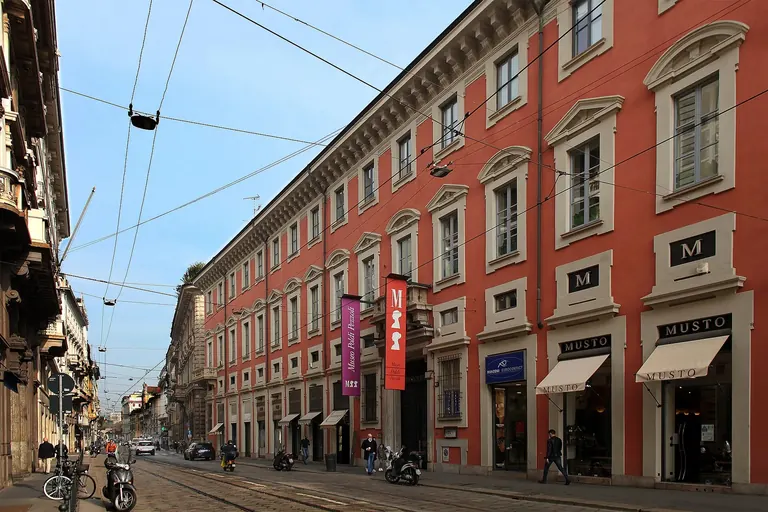
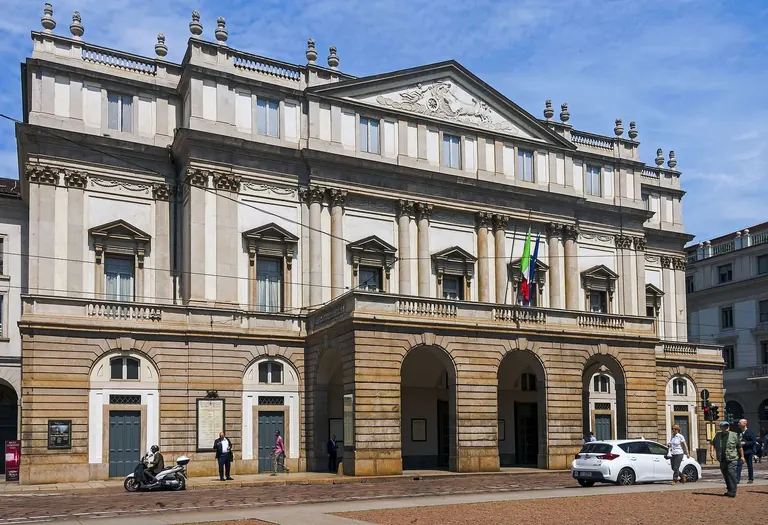
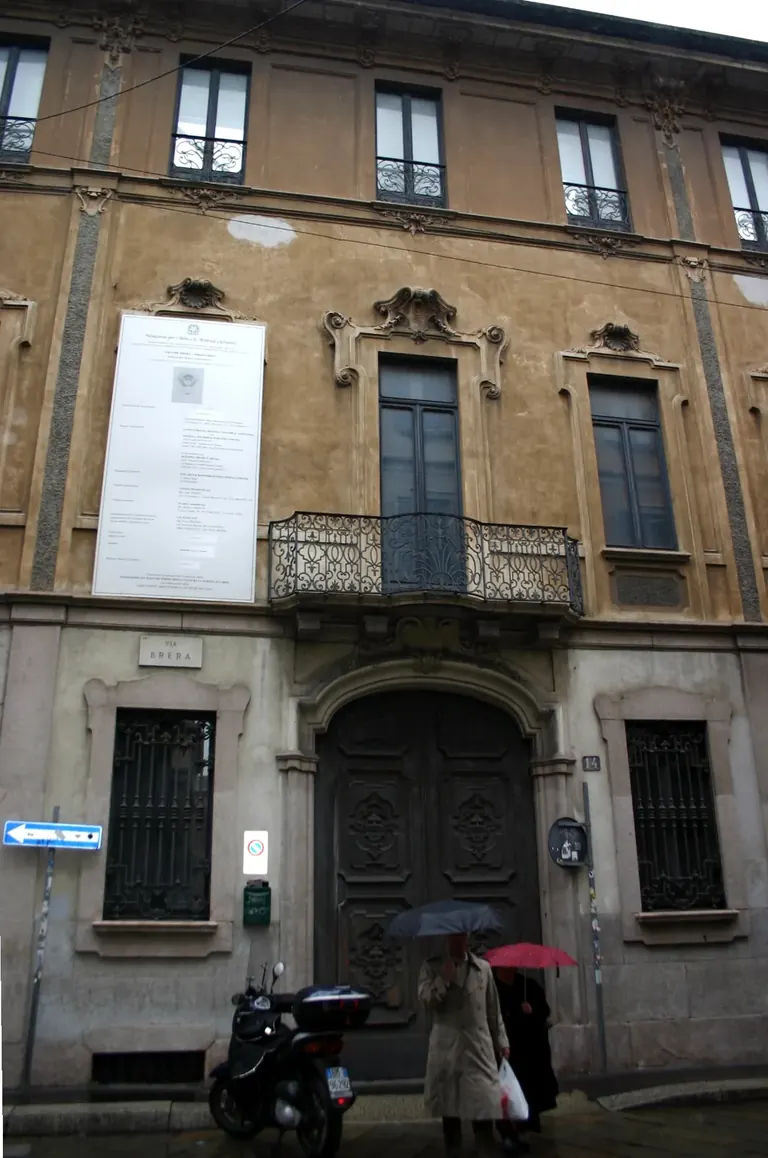
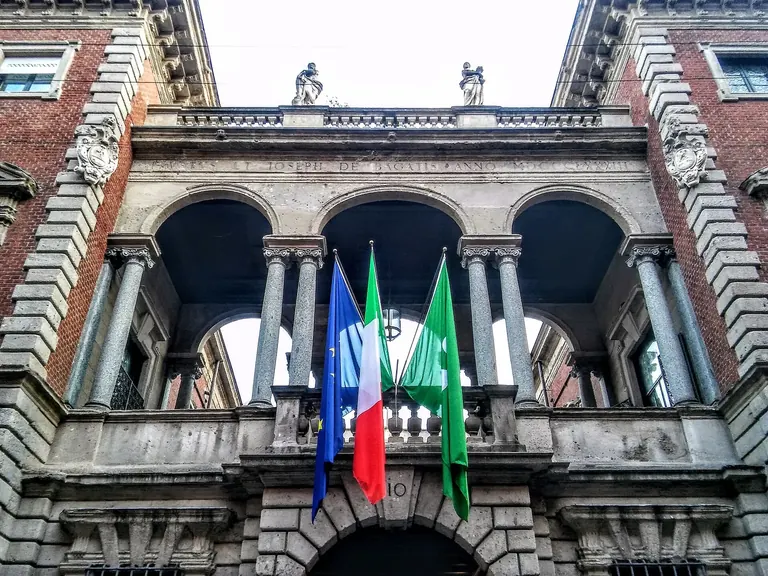
Image credits
8
- Gallerie d'Italia MilanoJwslubbock / Wikimedia Commons, CC BY-SA 3.0
- Un Tiziano per MilanoCourtesy of Museo Poldi Pezzoli
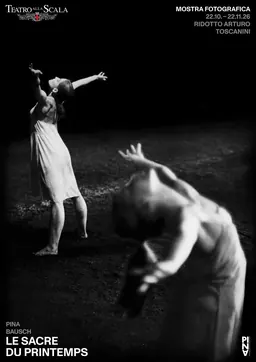
- Pina Bausch, Le Sacre du printempsCourtesy of Museo Teatrale alla Scala
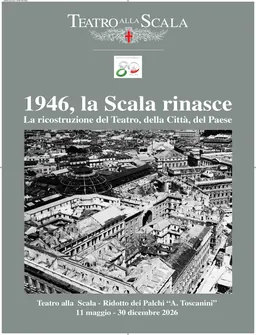
- 1946, La Scala rinasceCourtesy of Museo Teatrale alla Scala
- Museo Poldi PezzoliPaolobon140 / Wikimedia Commons, CC BY-SA 4.0
- Museo Teatrale alla ScalaDaniel Case / Wikimedia Commons, CC BY-SA 3.0
- Palazzo CitterioGiovanni Dall'Orto / Wikimedia Commons
- Museo Bagatti ValsecchiMelancholia~itwiki / Wikimedia Commons, CC BY-SA 4.0