 i
Museu Nacional de História Natural e da CiênciaPríncipe Real
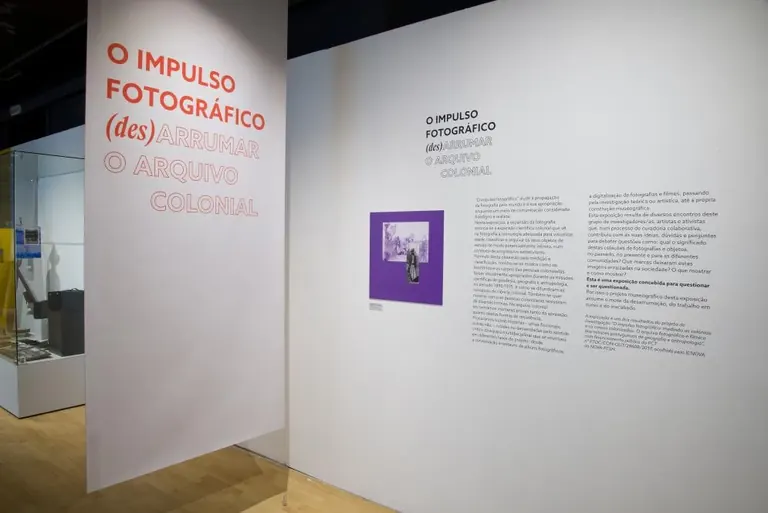
The Photographic Impulse: (Un)settling the Colonial Archive
A decolonial reading of photographs and scientific objects from Portuguese geodesy and anthropology expeditions to colonised territories, from the late 19th century to 1974.
More in Lisbon
The first photographs are of stones. Border marker L5 on Angola's southeastern frontier, 1912 to 1914, with surveyor Gago Coutinho posed in front. The original captions stay on the wall, racist words included, and a panel headed "Words Matter" explains why.
The room has two sections. The border missions (1890 to 1932) show the African porters who carried the surveys, lined up and labelled by job. The anthropology missions (1936 to 1975) show what came next: identification photographs, fingerprint sheets from Timor, measurements meant to rank people by race. Between them sit new works by the show's artists. You finish at the Mural of Contradictions, where the curators ask you to leave your own response on the wall.
It's a research show, heavy on wall text and archive images, and it names racist science and forced labour plainly. It's in Room A001, covered by the museum ticket, and free on Sundays from 10:00 to 13:00. An English hall sheet is on the museum's site.
Look for
Border marker L5, Angola, 1912 to 1914
Look for the survey photograph of men posed around a stone boundary marker on Angola's southeastern border, with Gago Coutinho in the foreground.
Fingerprints and palmprints from Timor
Sheets of fingerprints and palmprints taken by the Anthropological Mission of Timor in its 1968 campaign, the measuring turned on hands.
ELSE (Elsewhere, Somewhere, Everywhere)
Helena Elias's installation sets out nine types of the geodesic and border landmarks used to fix the colonial frontiers.
What else is measured?
Marinho de Pina's installation is a mirror with a vinyl sticker asking that question, so the face being measured is yours.
The Mural of Contradictions
A wall at the end where visitors leave their reactions, started by the curators' own questions, such as whether anyone still thinks colonisation meant well.
Good for
- Going Solo
- Nerding Out
- Rainy Days
Skip if
You came for specimens: this room is colonial photographs, documents and video art.
Also at Museu Nacional de História Natural e da Ciência
On now nearby
Nearby
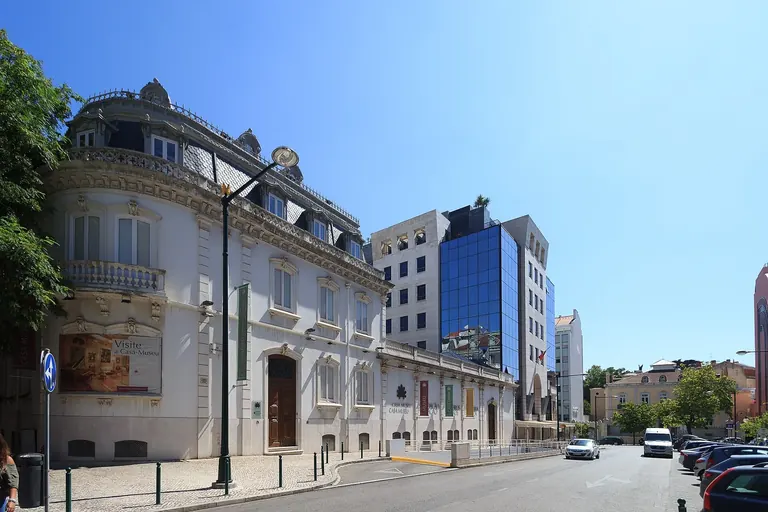
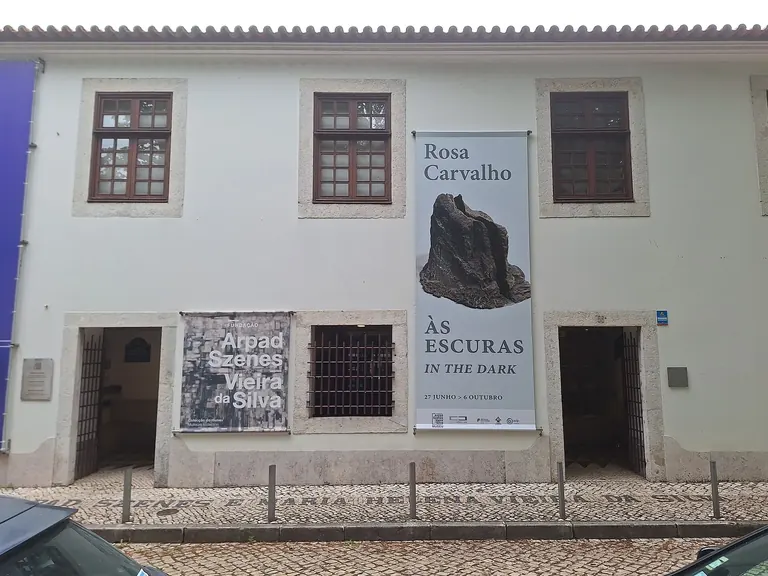
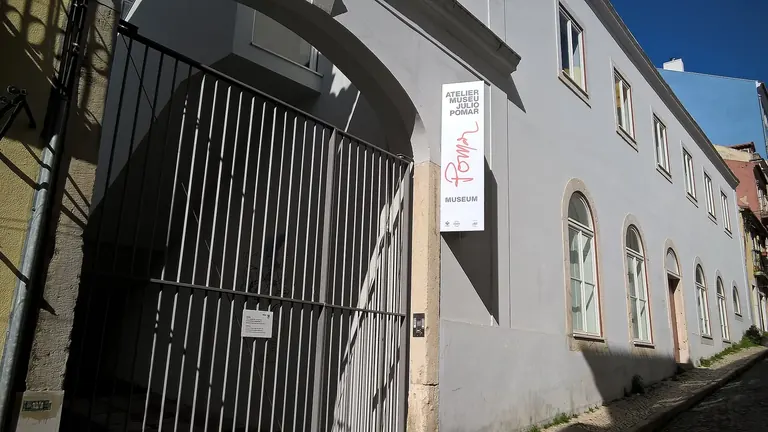
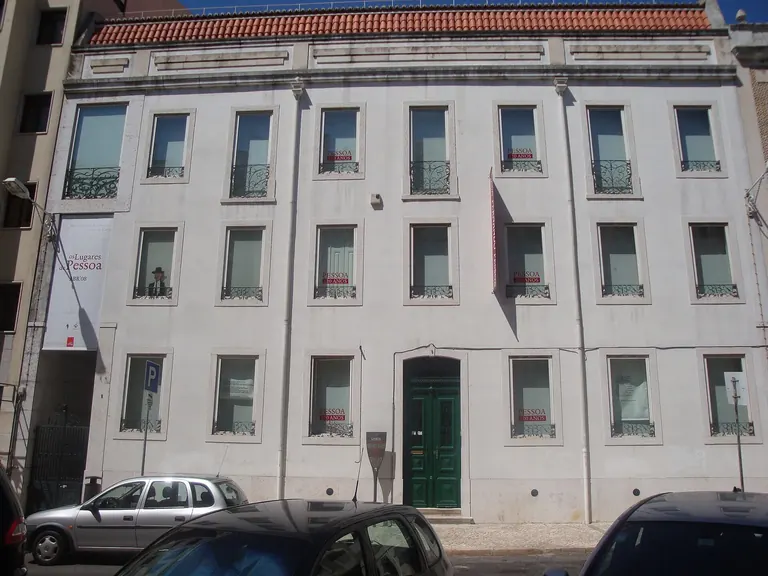
Image credits
9
- The Photographic Impulse: (Un)settling the Colonial ArchiveCourtesy of Museu Nacional de História Natural e da Ciência
- Arpad Szenes: Collection Highlights (Third Exhibition Cycle 2026)Courtesy of Fundação Arpad Szenes – Vieira da Silva
- Tragedy and Farce: Júlio Pomar and Gabriel AbrantesCourtesy of Atelier-Museu Júlio Pomar
- The Eternal Ark – Fernando Pessoa and PosterityGualdimG / Wikimedia Commons, CC BY-SA 4.0
- Museu Nacional de História Natural e da CiênciaJoaomartinho63 / Wikimedia Commons, CC BY-SA 3.0
- Casa-Museu Medeiros e AlmeidaRedpill 87 / Wikimedia Commons, CC BY-SA 4.0
- Fundação Arpad Szenes – Vieira da SilvaJnpoJuwan / Wikimedia Commons, CC0
- Atelier-Museu Júlio PomarGualdimG / Wikimedia Commons, CC BY-SA 4.0
- Casa Fernando PessoaLijealso / Wikimedia Commons, CC BY 3.0