 i
Harvard Museum of Natural HistoryHarvard Square, Cambridge
Collecting Wonders: Tomorrow's Discoveries
Rare specimens from Harvard's 26-million-object vaults, many on public display for the first time - from George Washington's golden pheasants to the only complete Lewis & Clark bird specimen.
More in Boston
Inside a pearl oyster from around 1856, a pearlfish hiding for shelter is mummified under layers of mother of pearl. "Like a gruesome, fish-shaped pearl," the label says.
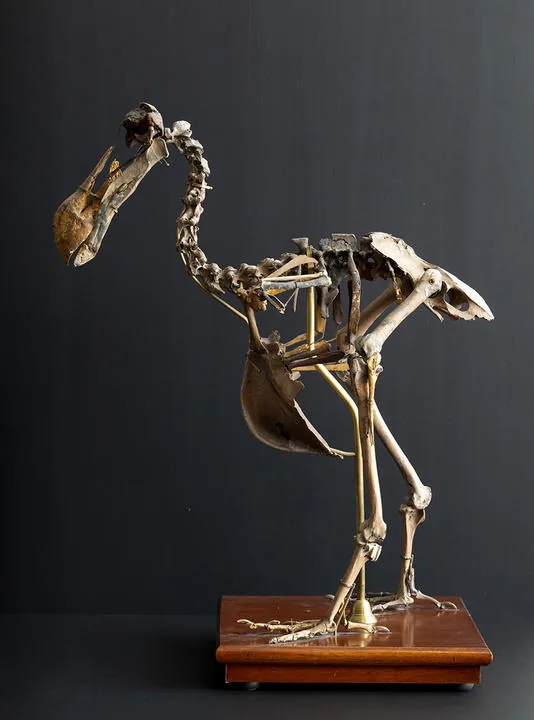
Harvard keeps 26 million specimens, and this show brings some of the rarest out of the vaults, many on public display for the first time: a dodo skeleton, a Komodo dragon skull from the 1926 expedition that inspired King Kong, a fossil sand dollar collected by Darwin, a sunfish caught by Thoreau. A 600-million-year-old rock from Burundi holds the rare earths that run your phone, so photographing it is oddly circular. You end face to face with a polar bear at the back of the room.
It's a sampler across Harvard's three natural history collections, not a deep dive into one. It's in the main gallery space and is included in the $20 adult admission, which also covers the Peabody Museum. Tickets are sold only at the desk; Massachusetts residents get in free on Sunday mornings and Wednesday afternoons.
Look for
The pearlfish oyster
Look for the oyster from around 1856 with a pearlfish sealed inside under layers of mother of pearl, which the label calls a gruesome, fish-shaped pearl.
The half-and-half blue morpho
One wing carries the male markings and the other the female, a condition the museum says turns up in about one in 10,000 butterflies.
George Washington's golden pheasants
Two birds from Louis XVI's aviary, sent by Lafayette to Washington in 1786, on a wooden base whose labels may be original to Peale's Philadelphia museum.
Crystalline gold
A raw chunk of gold that grew so fast it looks like metallic coral, a form found in less than 1 percent of the world's gold.
The polar bear
A fully articulated polar bear, in the collection since at least 1878, stands behind glass at the back; scientists still sample its skin and fur for research.
Good for
- Nerding Out
- Out-Of-Town Guests
- Rainy Days
Also at Harvard Museum of Natural History
On now nearby
Nearby
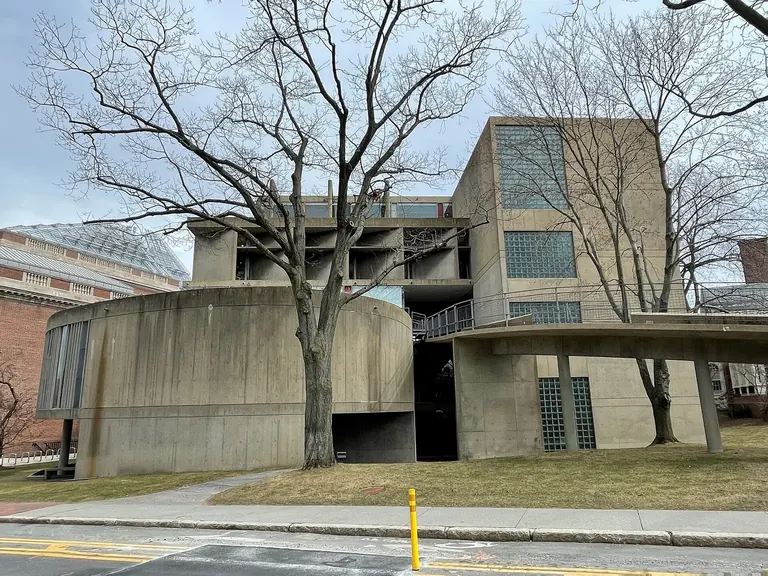
Image credits
6
- Collecting Wonders: Tomorrow's Discoveries© Tony Rinaldo / Harvard Museum of Natural History
- From Iran: A Visual TestimonyAzadeh Akhlaghi, via Peabody Museum of Archaeology & Ethnology
- Harvard Museum of Natural Historyajay_suresh via Wikimedia Commons, CC BY 4.0
- Peabody Museum of Archaeology & EthnologyDaderot, via Wikimedia Commons, Public domain
- Harvard Art Museumsajay_suresh via Wikimedia Commons, CC BY 4.0
- Carpenter Center for the Visual ArtsBobak Ha'Eri via Wikimedia Commons, CC BY 3.0