 i
Deutsches Historisches MuseumMitte
Controversial Kinship. Colonial and National Socialist Violence
A comparative exhibition on colonial and Nazi violence in the 20th century: racism, forced labour and concentration camps, and how the two regimes resemble and differ.
More in Berlin
You start between two glass cases: a pale hippopotamus-hide whip on the left, an empty, rusty Zyklon B can from Auschwitz on the right. Which belongs to which regime seems obvious. But, as the NZZ points out, people were whipped to death in Nazi camps too, and poison gas was used in colonial wars.
The show tells the history of a comparison, from 1900 to 1960. As early as the 1930s, anticolonial thinkers, politicians and Holocaust survivors set colonial and Nazi power side by side. Rooms on racism and antisemitism, forced labour and colonial fascism follow. One has no colonial counterpart: the wall facing a huge model of Auschwitz is left empty.
The taz found it vivid yet complex, condensing without trivialising. The NZZ's critic left enriched but overwhelmed, wishing for fewer exhibits and clearer conclusions. It's in the basement of the Pei building, in English and German, at €7 (€3.50 reduced), with group-free quiet hours on Tuesdays 4 to 6 pm and Saturdays 10 am to noon.
Editor's pick
A side-by-side look at colonial and Nazi violence in the 20th century, from racism to forced labour and concentration camps, setting out where the two regimes resemble each other and where they differ.
Look for
The two cases at the entrance
Look for the pale hippopotamus-hide whip beside an empty, rusty Zyklon B can from Auschwitz, still showing its skull emblem and the word "Giftgas!".
The Italian gas bomb
An original Italian gas bomb from the 1935-36 war on Ethiopia hangs in the air above your head.
Ambrosi's Bombardment in East Africa
A 1936 Futurist aerial painting of an idealised warplane, its bombs raising small puffs like cigarette smoke over an empty East African landscape, faces a life-size photo of Haile Selassie.
The Auschwitz model and the empty wall
A Polish sculptor's huge model of Auschwitz faces a wall left bare, because this room has no colonial counterpart.
The Rhodes room
Snapshots of the Jewish community of Rhodes close the show: girls at school sport, women in hats over coffee, Maccabi club men posing in suits in 1938.
Good for
- Cheap Culture
- Nerding Out
Skip if
You want a clear verdict on the comparison: the NZZ found much of it vague and associative.
With kids
Under-18s get in free.
Also at Deutsches Historisches Museum
On now nearby
Nearby
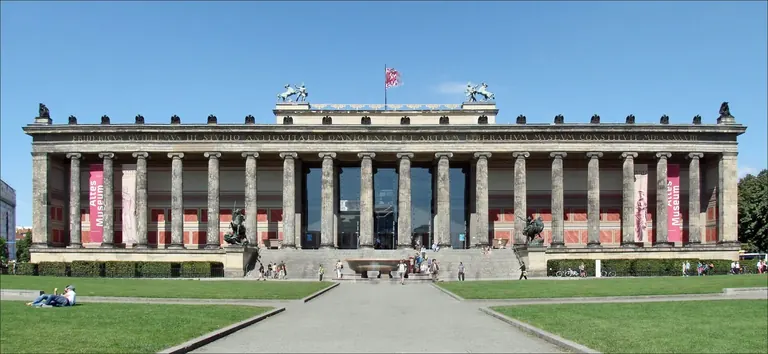
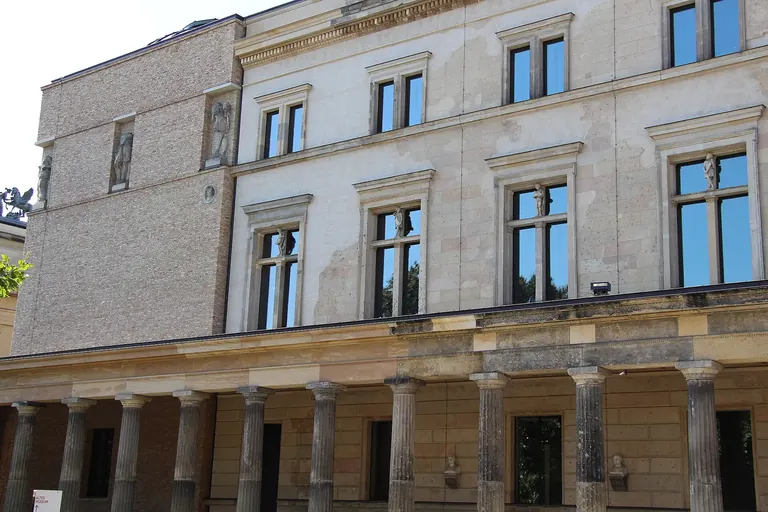
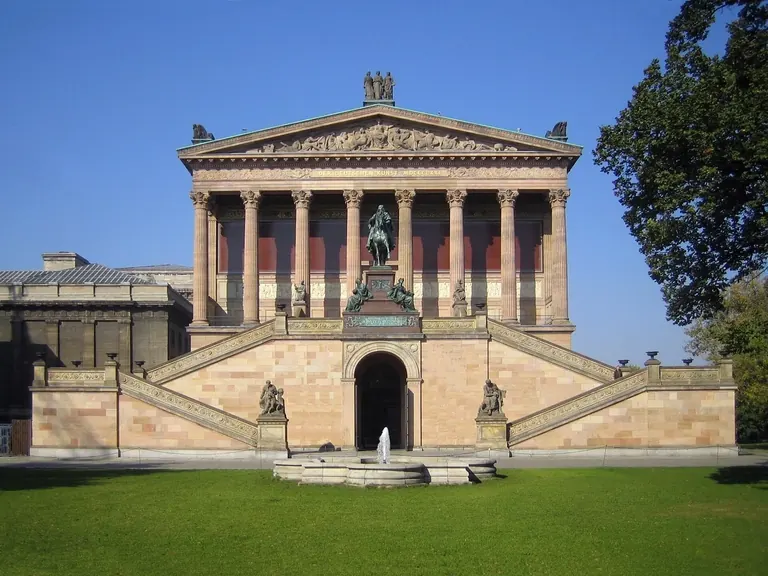
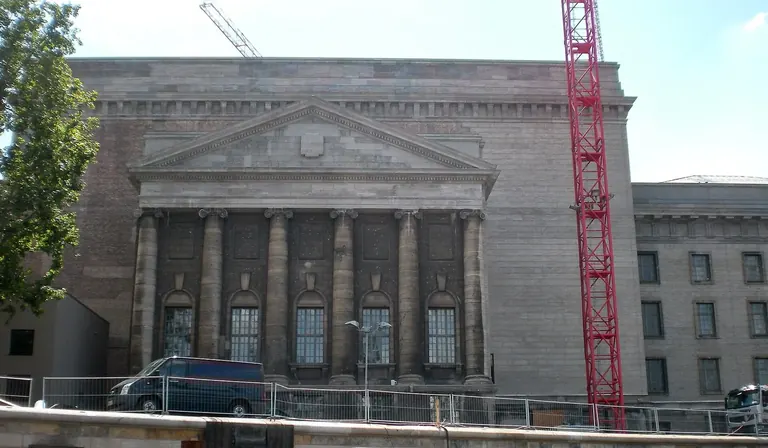
Image credits
9
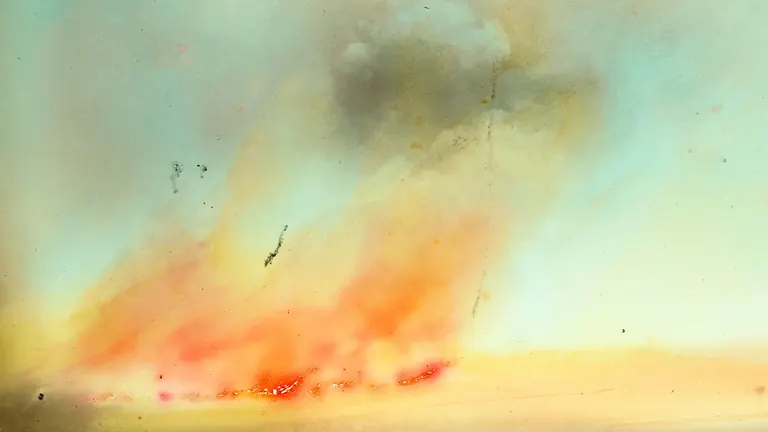
- Controversial Kinship. Colonial and National Socialist ViolencePhotographer: Edwin Hennig or Werner Janensch © Berlin, Museum für Naturkunde, K 002, 414
- Founded on Antiquity: Berlin's First MuseumPhoto: Johannes Laurentius
- 100 Years of the Dictionary of the Egyptian Language© Ägyptisches Wörterbuch
- Destiny in the Stars: The Beginnings of the Zodiac© Staatliche Museen zu Berlin, Ägyptisches Museum und Papyrussammlung, Foto: Sandra Steiß
- Deutsches Historisches MuseumAvda / Wikimedia Commons, CC BY-SA 3.0
- Altes MuseumJean-Pierre Dalbéra / Wikimedia Commons, CC BY 2.0
- Neues MuseumFred Romero / Wikimedia Commons, CC BY 2.0
- Alte NationalgalerieManfred Brückels / Wikimedia Commons, Public domain
- PergamonmuseumHerrAdams / Wikimedia Commons, CC BY-SA 4.0