A 53-stop Cantonese guide, nine days from final content to opening
How exhibition designers Noiseless Design gave walk-in visitors a guided experience for a temporary show, in a language no Musa guide had spoken before.
Temporary exhibition · · 5 min read
9 days
from final content to opening day
53
stops, up from 41 at opening
67%
of sessions in Cantonese
24%
of sessions longer than 30 minutes
In brief
First Cantonese deployment on Musa. Spoken Cantonese with Standard Written Chinese on screen.
Billed per visitor who activates the guide, free for visitors. Nothing to buy, return or decommission.
New content reached visitors' phones as soon as it was published, 41 stops growing to 53.
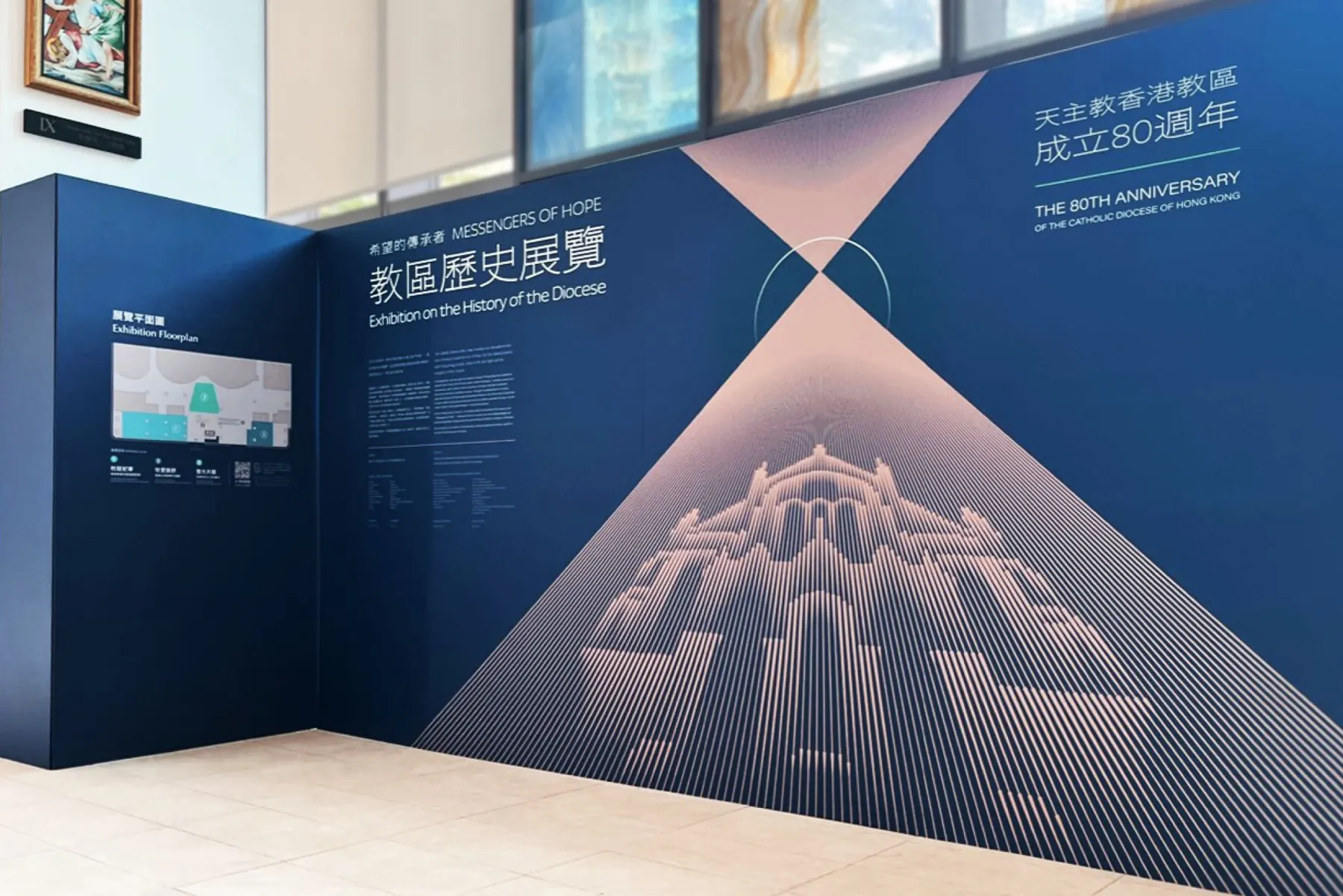
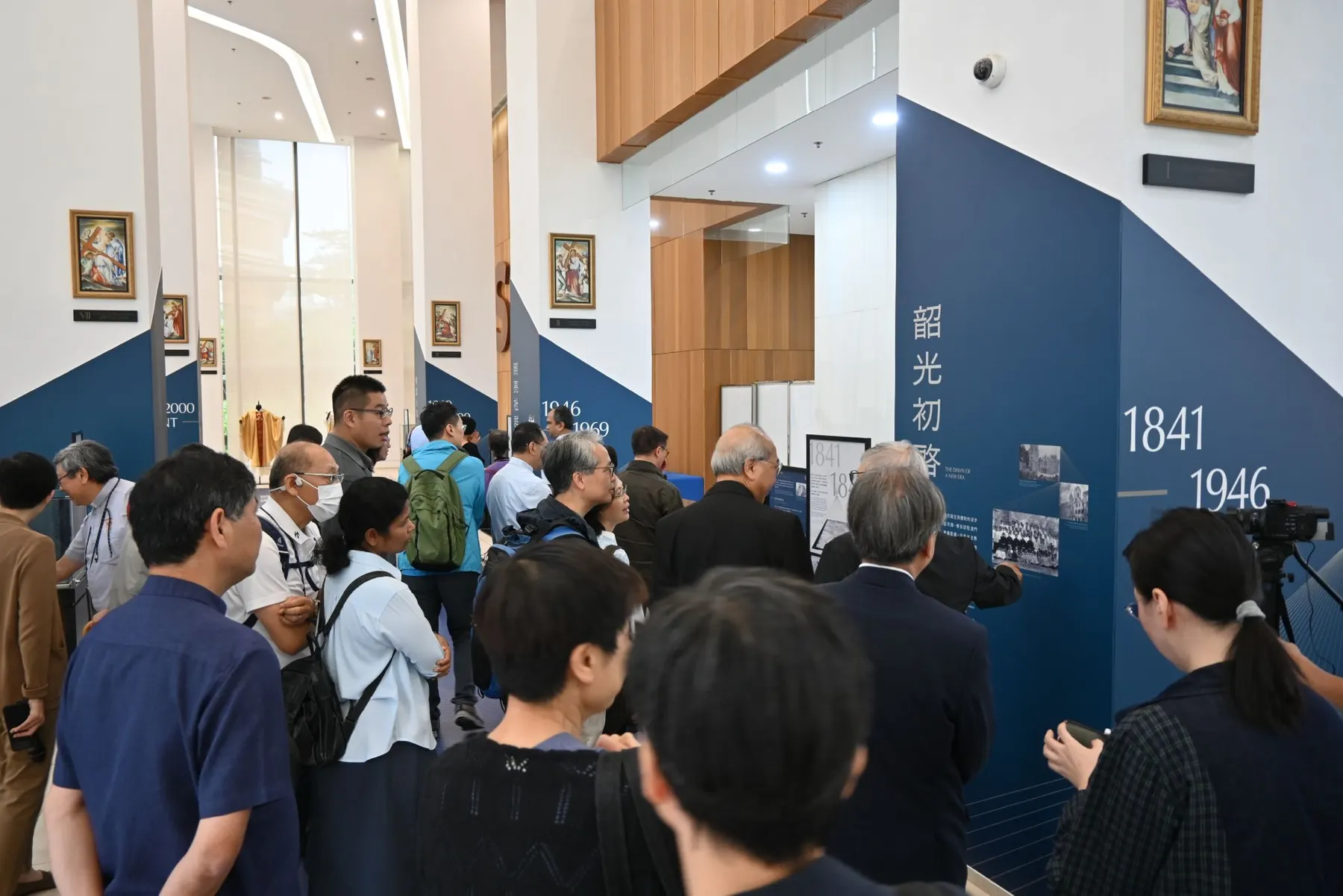
"Messengers of Hope: Exhibition on the History of the Diocese" marked the 80th anniversary of the Catholic Diocese of Hong Kong. Free to visit and open daily in the ground-floor hall of Saint Francis University in Tseung Kwan O, it was inaugurated on 9 May 2026 by Cardinal Stephen Chow, Bishop of Hong Kong. The exhibition was designed and produced by Noiseless Design, a Hong Kong exhibition design studio led by founder Christopher Lee, who brought Musa in as the audio guide for the show.
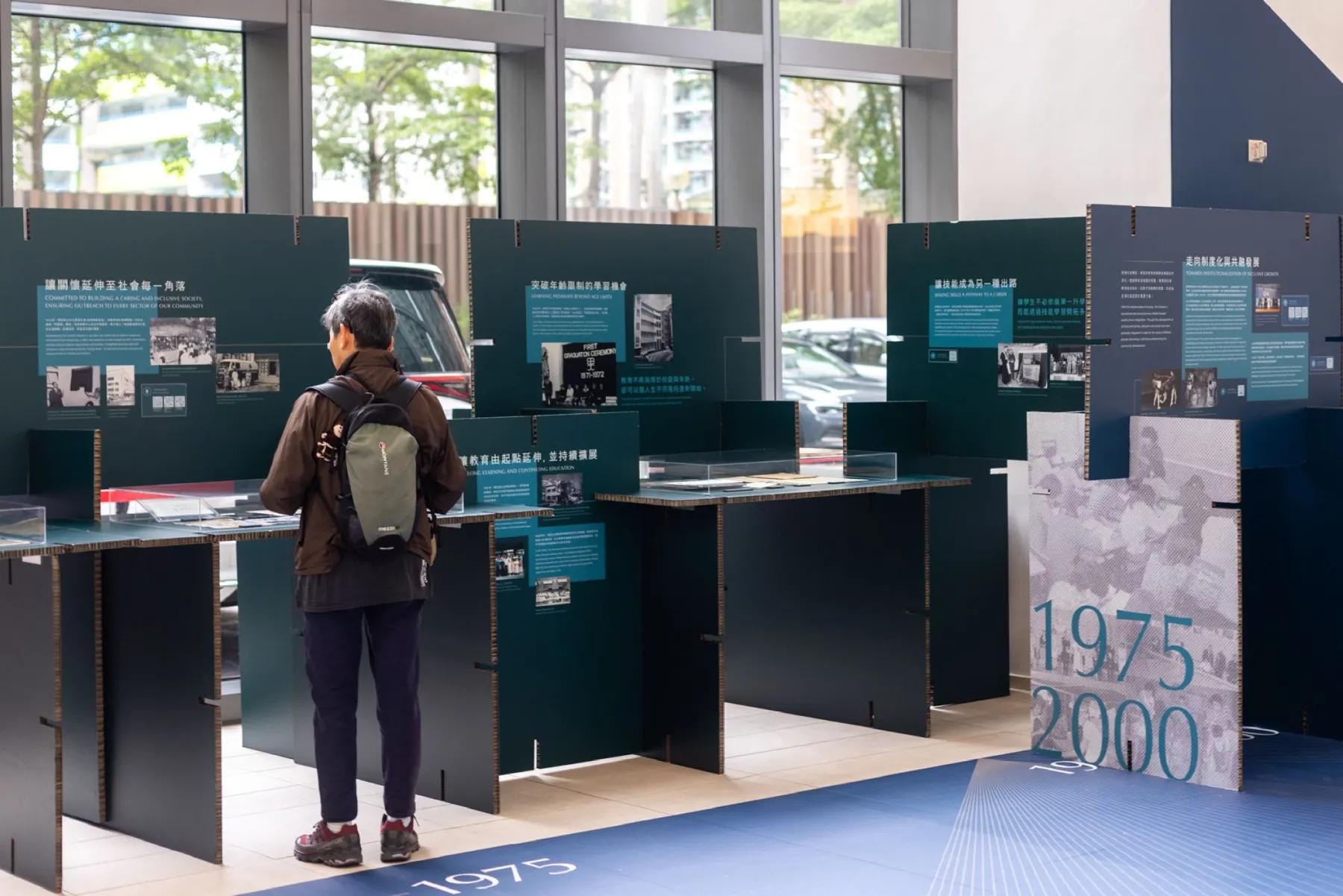
Between guided group tours, individual visitors had wall panels and captions. The guide filled the gap.
Challenge
The diocese trained 110 volunteer guides for the exhibition, and for visiting groups, school classes and parishes, their guided tours were the heart of the experience. But the exhibition was also open to anyone walking in off the street, every day of the run. Individual visitors arriving between group tours had wall panels and captions, nothing more.
The production reality was just as demanding. The exhibition would run for a few weeks only, the content matrix was still being confirmed with the diocese in the final days of April, and the show opened on 9 May. Whatever guide existed on opening day had to be built inside that window, in Cantonese, a language no Musa guide had used before.
Approach
Noiseless Design sent the raw content matrix as an Excel export, still in Traditional Chinese. Musa imported it into Studio the same day, structured into linked knowledge nodes with English versions alongside the originals.
The confirmed final matrix arrived at the end of April, nine days before opening. Musa loaded the content, floor plan and exhibit images; the Noiseless team defined the default route and the stops. The guide went live with the exhibition on 9 May, opening with 41 stops and extended to 53 during the run, with every change reaching visitors' phones straight away.
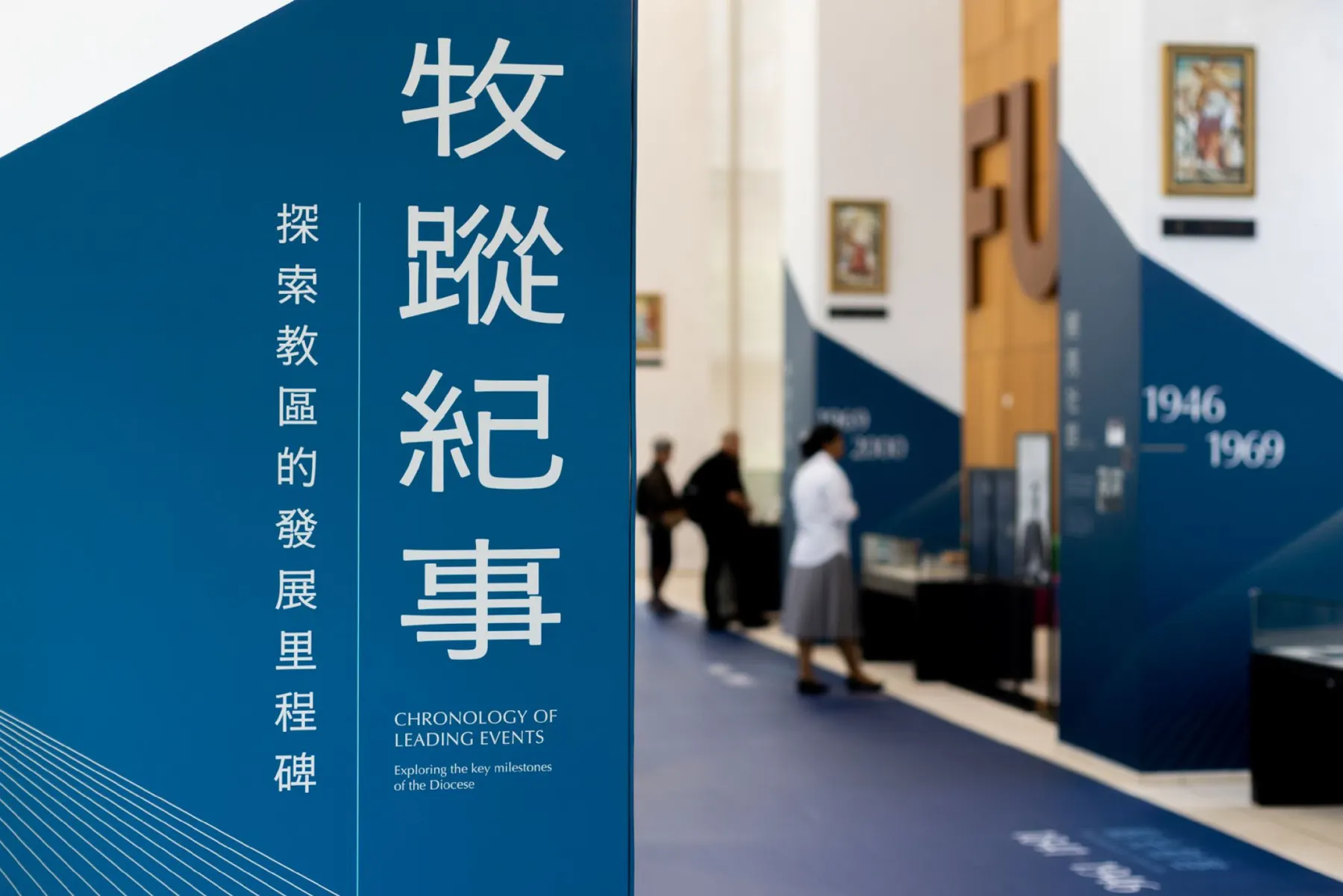
The finished tour runs 35 minutes across the exhibition's three zones. "Chronology of Leading Events" follows the Church in Hong Kong leader by leader, from the first mission in 1841 to the present day. "Traces of Pastoral Care" turns outward to schools, refugee relief and Caritas: the rooftop classrooms of the 1950s that put ten thousand refugee children in school, and Pope Paul VI's 1970 visit, the first by a reigning pope to a Chinese community. The arc lands somewhere visitors can verify by looking up: Saint Francis University, accredited in 2024, the building the exhibition stands in. The third zone, "Synodality in the Light", is a contemplative installation where the guide deliberately steps back and hands the room over.
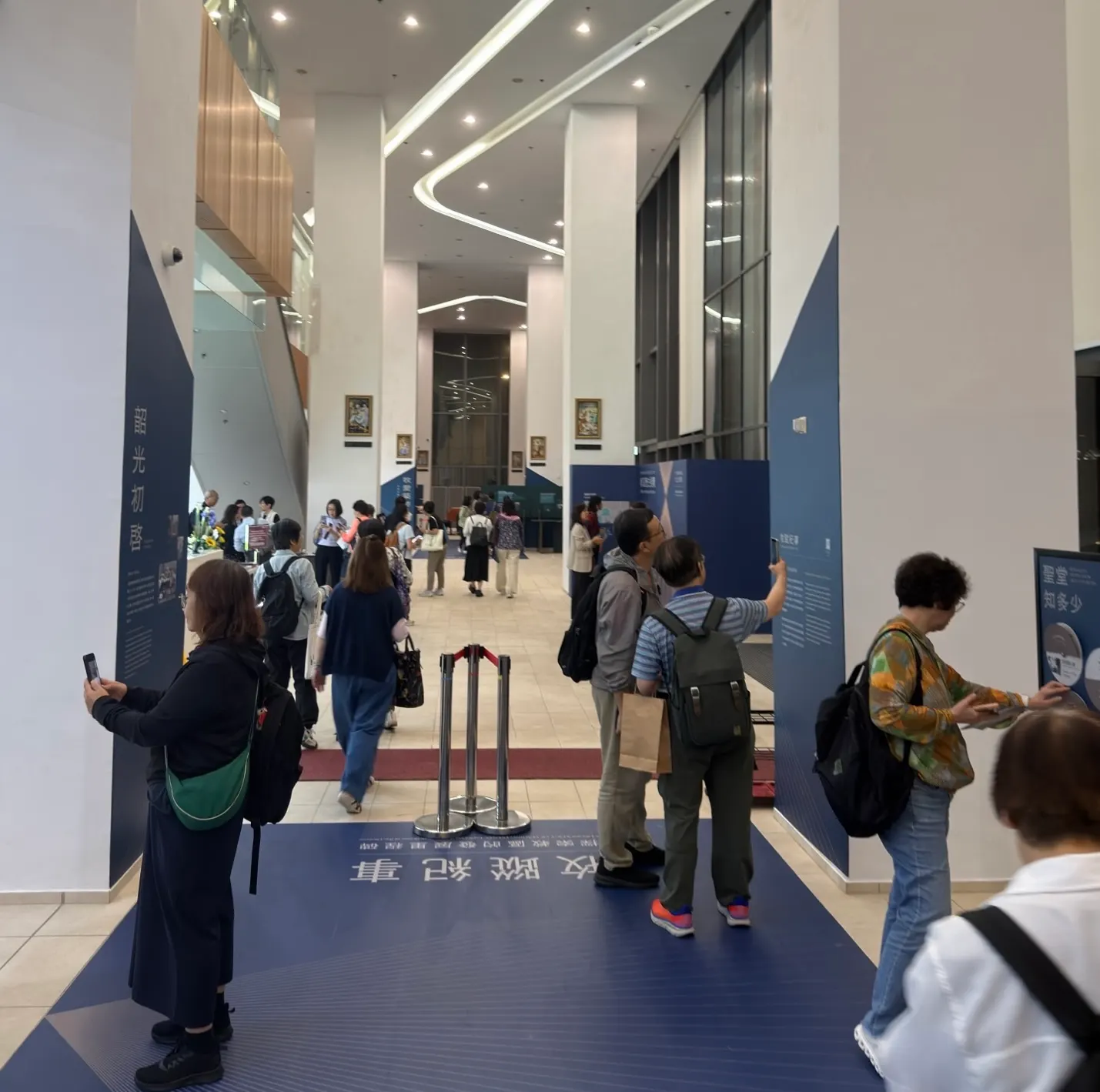
Three zones in the ground-floor hall of Saint Francis University, Tseung Kwan O.
A note on voice
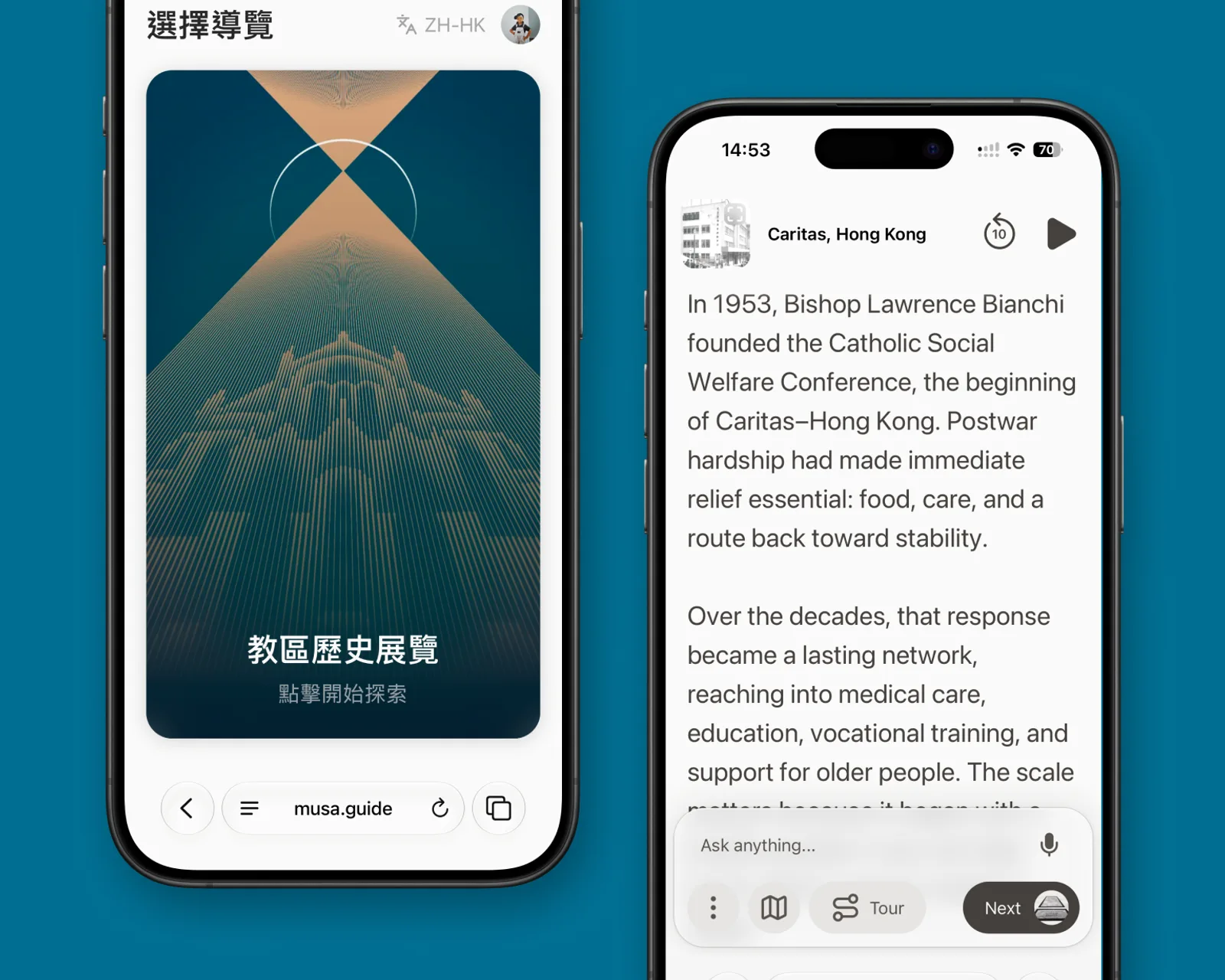
This was the first Cantonese deployment on Musa, and Cantonese carries a subtlety that a recorded guide would have had to solve twice. Written Cantonese reads as informal in a context like this, so the on-screen text stays in Standard Written Chinese while the voice speaks natural Cantonese, the way a Hong Kong narrator would actually read it. The Noiseless team auditioned candidate voices themselves and picked the narrator, tuned for Hong Kong pronunciation of proper nouns, place names and clerical titles. English runs as a parallel track in the same guide, and visitors choose their language when they scan in.
Traditional Chinese on screen, spoken Cantonese in the ear, English as a parallel track.
Commercial model
The guide is billed per visitor who activates it, and it was free for visitors to use. No devices were bought, no app was published, and when the exhibition closed there was nothing to return, maintain or decommission. A single QR code at the zone entrance carried the entire deployment.
Outcomes
Across the first five weeks:
The guide was used every single day, from opening weekend onwards
67% of sessions ran in Cantonese, 33% in English
24% of sessions lasted over 30 minutes, on a tour with an intended duration of 35 minutes
Opening day, 9 May 2026. The guide was used every day from the first weekend.
Coverage and the extension
The exhibition's AI guide was covered by Kung Kao Po, the diocese's Chinese-language weekly, by the Sunday Examiner, and by Fides, the Vatican's news agency. Kung Kao Po described the exhibition as presenting its history "through artifacts, photographs, oral history, docent services and brand-new artificial intelligence technology"; the Sunday Examiner noted its "AI-narrated guides".
The exhibition was scheduled to close on 31 May. Demand was strong enough that the diocese extended the run twice, ultimately to 30 June, stretching a three-week exhibition to almost eight. Throughout, the official jubilee website directed visitors to one way of being guided through the exhibition: the AI guide.