 i
Tokyo Station GalleryMarunouchi
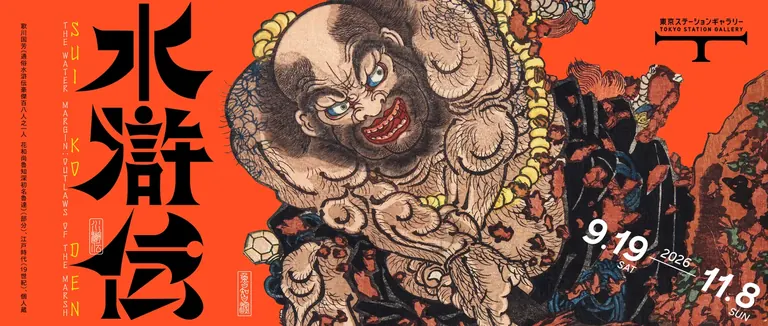
Suikoden: The Water Margin, Outlaws of the Marsh
Traces the classic Chinese novel Suikoden from Song-dynasty origins through its Edo-period popularity in Japan, with Ming and Qing works, Kuniyoshi's ukiyo-e, manga, and drama costumes.
More in Tokyo
The first room is all muscle and ink: Utagawa Kuniyoshi's breakthrough series of Water Margin heroes, shown complete with all 74 known prints. You don't need the 108 names. Read each hero by weapon, tattoo or animal, like Shi Jin with nine dragons across his back. Picking a favourite among 74 tattooed outlaws is oshi-katsu with an Edo-period head start.
Then the show steps back to the Northern Song world the novel is set in: a 1577 copy of Riverside Scenes at the Qingming Festival, calligraphy by Su Shi, Mi Fu and Huang Tingjian, a Ru-ware celadon basin. After that come Hokusai's illustrations for Bakin, a Kazuo Shiraga action painting, Takao Saito manga drawings and costumes from the 2026 TV drama.
One reviewer called it essential for Water Margin and Song-dynasty fans but found the modern section thin. Chapter One is kept dim. Tickets are 1,600 yen, free for middle school and under, with Fridays until 20:00 and an audio guide by Kazuya Kamenashi for 700 yen.
Look for
Shi Jin, the Nine-Dragon
In Kuniyoshi's print paired with Chen Da, look for the nine dragons tattooed across Shi Jin's back, the easiest hero in the room to spot.
Riverside Scenes at the Qingming Festival
Zhao Zhe's 1577 handscroll of the crowded Northern Song capital, Kaifeng; the section unrolled changes during the run.
The Ru-ware narcissus basin
A soft-blue celadon dish made for the Song court around 1100, from a kiln with very few surviving pieces anywhere.
Yoshitoshi's drunk Lu Zhishen
An 1887 print of the monk Lu Zhishen, blind drunk, smashing a temple guardian statue on Mount Wutai.
The drama costumes
At the end, costumes worn in the 2026 series Kenzo Kitakata Suikoden, and you may photograph them.
Good for
- Evening Visits
- Nerding Out
- Teenagers
Skip if
You came mainly for the manga and TV side: one reviewer found the modern section thin.
With kids
Free for middle school age and under; high school students pay 1,100 yen. Lighting in the first room is kept low to protect the prints.
Also at Tokyo Station Gallery
On now nearby
Nearby
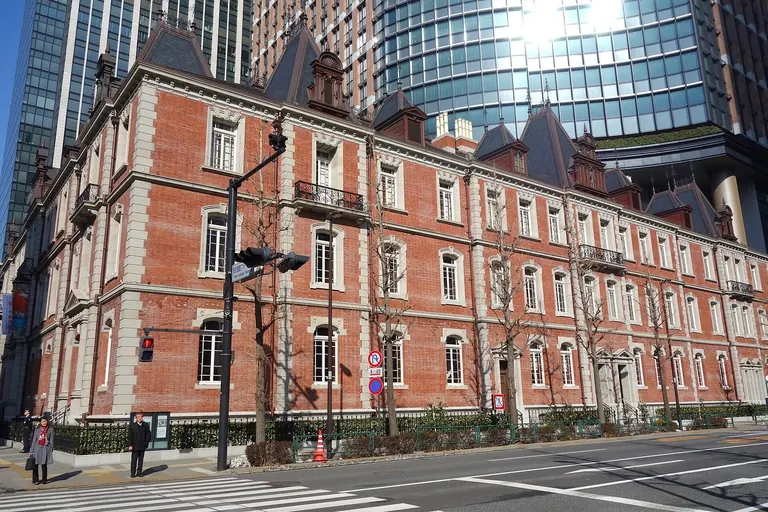
Image credits
7
- Suikoden: The Water Margin, Outlaws of the MarshCourtesy of Tokyo Station Gallery
- Jam Session: The Ishibashi Foundation Collection x Fujii Hikaru "WHOSE LIGHT?"Courtesy of Artizon Museum
- The Strangers' Gaze: Japanese Artists in EuropeCourtesy of Artizon Museum
- Tokyo Station GalleryDaderot / Wikimedia Commons, CC0
- Mitsubishi Ichigokan Museum, TokyoDaderot, CC0
- Artizon Museumpcs34560 from jawp / Wikimedia Commons, Public domain
- National Museum of Modern Art, TokyoKakidai, CC BY-SA 4.0