 i
National Museum of Modern Art, TokyoKitanomaru Park, Chiyoda
Takehisa Yumeji—An Artist Who Defined His Era
Special exhibition of 500 works and materials by Takehisa Yumeji (1884-1934), covering his "Yumeji style" images of women, paintings, prints and graphic design.
More in Tokyo
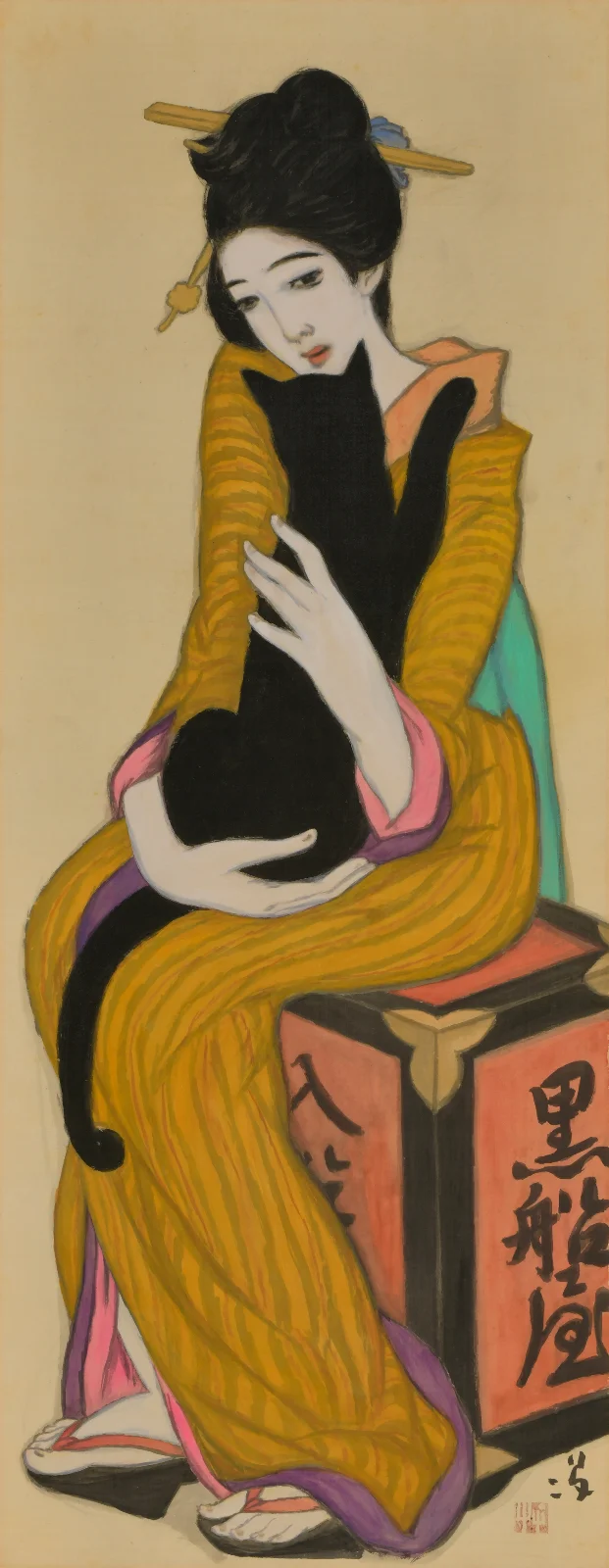
Kurofuneya hangs against black walls behind a lattice door, where a cat's shadow seems to leap at the woman in it. She sits on a wooden box in a yellow striped kimono, holding a black cat. In an exhibition for the first time in about 40 years, the 1919 painting leads 500 works and materials by Takehisa Yumeji (1884-1934), whose images of women gave the "Yumeji style" its name.
Five chapters run from the start of that style through his designs, a mix of nostalgic and modern values, and his search for beauty in daily life. The last chapter is "Modern Girls in Kimonos and Western-Style Clothes". If your Saturday in Harajuku means a vintage haori over sneakers, those women are your ancestors.
One chapter is all design: chiyogami paper, yukata, sheet music. The ¥2,100 adult ticket for the first-floor gallery also covers the collection galleries. Some works leave after 23 November. Open until 20:00 Fridays and Saturdays; closed Mondays except 23 November and 11 January.
Editor's pick
Around 500 works and materials by Takehisa Yumeji (1884-1934): the "Yumeji style" images of women that made his name, plus paintings, prints and graphic design.
Look for
Kurofuneya (1919)
Look for the yellow and black: a woman in a yellow striped kimono with an orange collar and green obi, cradling a black cat on a box labelled Kurofuneya.
Women of the Four Seasons (1929)
A six-panel silk screen in the last chapter, where one of the four women is skiing in Western clothes.
Harunasanfu and Tatsutahime (1931)
Two late paintings shown side by side for the first time in 14 years, in the chapter on his search for beauty in daily life.
Sketches of the Great Kantō Earthquake
Yumeji's 1923 drawings of the ruined city, made for his newspaper serial Tokyo Disaster Picture Letters, shown with his scrapbooks of earthquake photographs.
A 1905 anti-war cartoon
In the first chapter, a drawing from the socialist paper Chokugen shows a skeleton wearing a kimono marked with the Red Cross.
Good for
- Evening Visits
- Nerding Out
- Out-Of-Town Guests
Skip if
You only want paintings: whole sections are magazines, postcards, sheet music and textile designs.
With kids
Free for ages 15 and under; high-school students pay ¥700. By the entrance panel, a replica of the Kurofuneya box and a black cat plush are set up for photos.
Also at National Museum of Modern Art, Tokyo
On now nearby
Nearby
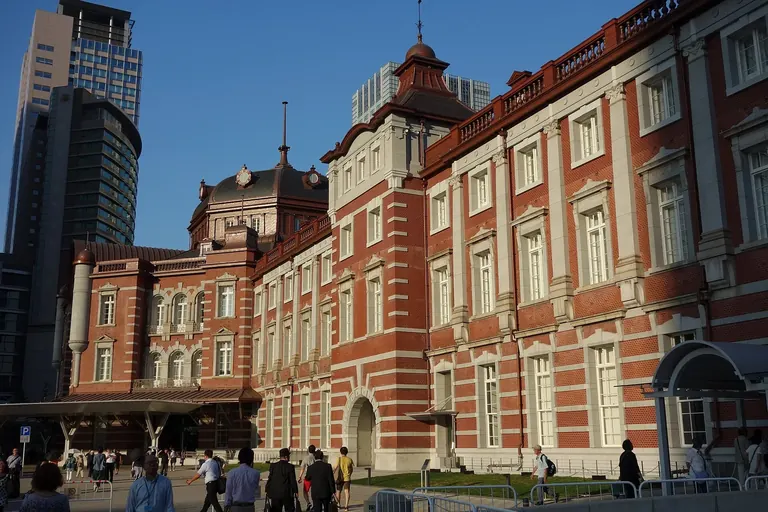
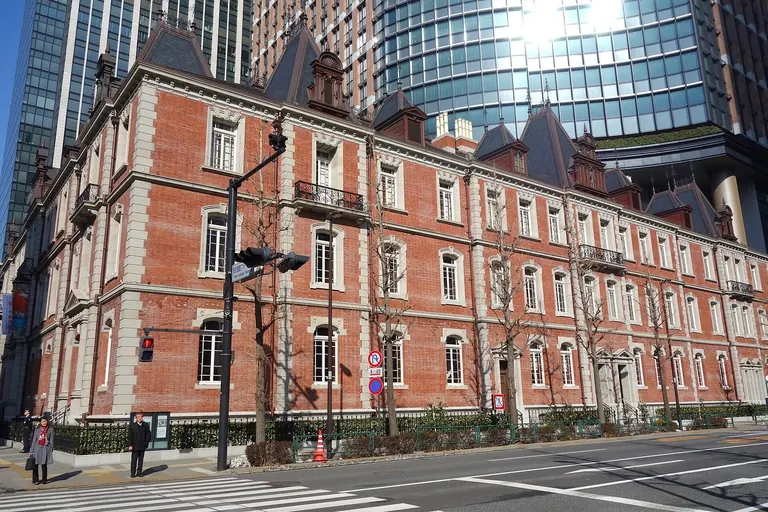
Image credits
6
- Takehisa Yumeji—An Artist Who Defined His EraCourtesy of National Museum of Modern Art, Tokyo
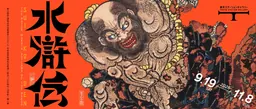
- Suikoden: The Water Margin, Outlaws of the MarshCourtesy of Tokyo Station Gallery
- The Beauty of Coolness: Edo-Tokyo Museum Glass Craft CollectionCourtesy of Edo-Tokyo Museum
- National Museum of Modern Art, TokyoKakidai, CC BY-SA 4.0
- Tokyo Station GalleryDaderot / Wikimedia Commons, CC0
- Mitsubishi Ichigokan Museum, TokyoDaderot, CC0