National Museum of KoreaYongsan-gu
Kim Jeonghui and His Companions
A thematic show on 19th-century Joseon scholar-calligrapher Kim Jeonghui, exploring his intellectual circle through letters, calligraphy and paintings. Calligraphy and Painting Gallery, 2F.
More in Seoul
Carved into the side of a broken Silla stele is Kim Jeonghui's own note: he found it in 1817 in the weeds of a Gyeongju valley, and was sorry his late friend in Beijing wasn't there to share it.
The show tells Kim's life through the people around him, in 38 letters, calligraphies, paintings and rubbings: family, fellow epigraphers, Qing scholars, pupils and Buddhist monks. Six are shown for the first time. You start with the letters, where Joseon's greatest calligrapher complains that his wife doesn't write often enough. Two centuries before KakaoTalk's unread "1", the feeling was already there. The museum says his script kept changing from his 30s to his 70s: an 1819 letter still looks like his father's hand.
The headline orchid painting, Buliseonrando, came down on 13 September, replaced by a couplet Kim wrote for the Qing painter Zhu Henian. It's on the second floor of the free permanent galleries until 22 November, open until 9pm on Wednesdays and Saturdays.
Editor's pick
Letters, calligraphy and paintings from the circle around Kim Jeonghui, the 19th-century Joseon scholar-calligrapher, in the Calligraphy and Painting Gallery on the second floor.
Look for
The Mujangsa stele fragment
Look for a broken Silla stone recording a queen's prayer for her dead king, with Kim's account of finding it carved on its side.
The 1819 letter to a Hwanghae officer
Shown for the first time: written the year Kim passed the state exam and his father became Minister of Rites, in handwriting that still looks like his father's.
The stone arrowhead poems
An album of poems Kim wrote in exile at Bukcheong about stone arrowheads he dug up there and identified, from old texts, as relics of the ancient Sushen people.
Su Dongpo in Rain Hat and Clogs
Zhu Henian's painting of the Song poet, with appreciations written on it by Weng Fanggang and Ruan Yuan, Kim's teachers in Beijing; bought in 2023 and shown here for the first time.
The Coral Song and Kingfisher Screen couplet
A pair of scrolls Kim wrote in 1856, aged 71, for a pupil from his exile, where thick and thin strokes mix in his late style.
Good for
- Cheap Culture
- Evening Visits
- Going Solo
- Nerding Out
Skip if
You're coming for the orchid painting Buliseonrando: it was taken down on 13 September.
Also at National Museum of Korea
- Hearts That Share Beauty: Newly Donated Artifacts 227 July 2026 – 15 November 2026
- Breaking the Seal of a Thousand Years: Buddhist Manuscripts from Dunhuang in the National Museum of Korea23 October 2026 – 24 January 2027
- Evergreen Bamboo Through the Four Seasons Embodied in Ceramics23 June 2026 – 31 January 2027
On now nearby

Nearby
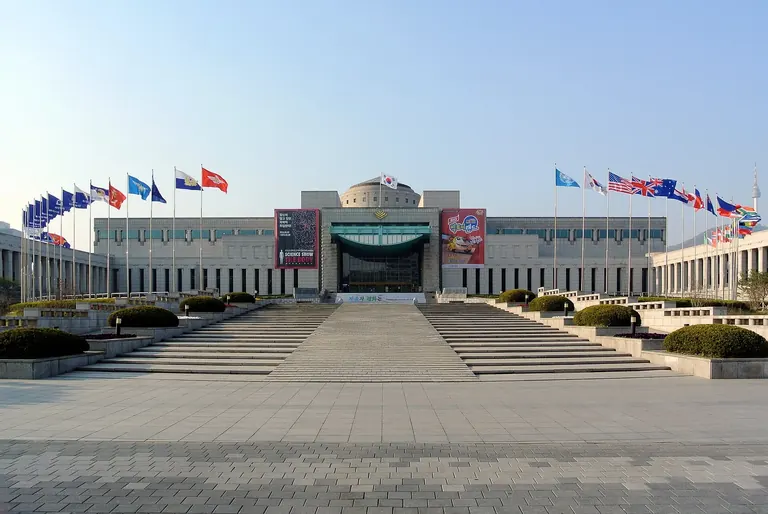
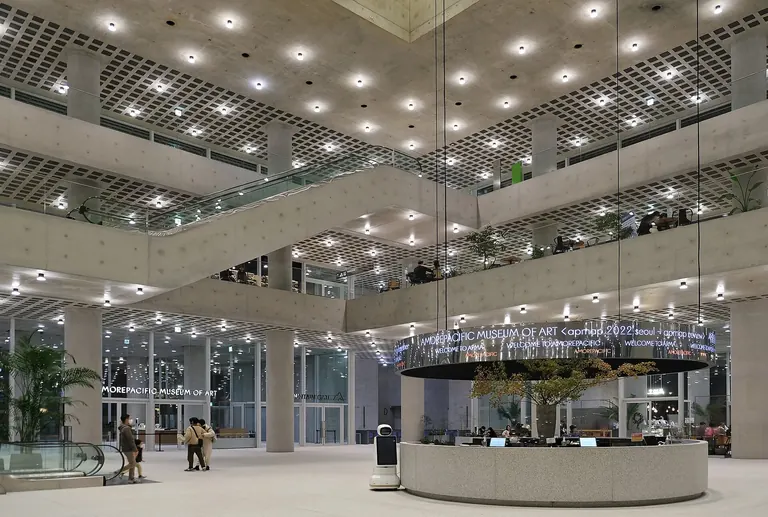
Image credits
5
- FROM 1926 TO INFINITYCourtesy of National Hangeul Museum
- Sol LeWitt: Open StructureCourtesy of Amorepacific Museum of Art (APMA)
- National Museum of KoreaJinah78 / Wikimedia Commons, CC BY-SA 3.0
- War Memorial of KoreaAdbar / Wikimedia Commons, CC BY-SA 3.0
- Amorepacific Museum of Art (APMA)kallerna / Wikimedia Commons, CC BY-SA 4.0