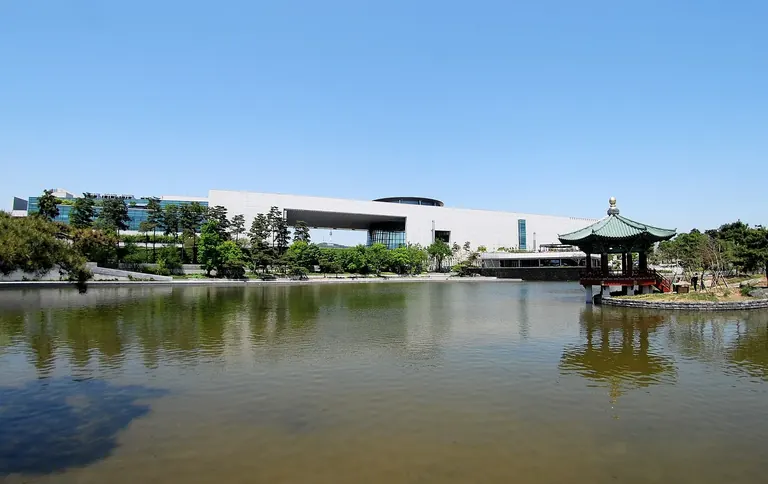
 i
National Museum of Korea
The National Museum of Korea is the country's flagship museum of Korean history and art, tracing the peninsula's culture from prehistory through the modern era. Its six permanent galleries hold treasures such as the Silla gold crown, the twin Pensive Bodhisattva statues, and the Goryeo-era Ten-Story Pagoda from Gyeongcheonsa Temple. Relocated to its current purpose-built Yongsan campus in 2005, the museum also hosts a rotating programme of major international special exhibitions.
More in Seoul
What's On
Evergreen Bamboo Through the Four Seasons Embodied in Ceramics
A thematic display of ceramics decorated with bamboo motifs across the seasons, in the Buncheong Ware and White Porcelain Gallery, permanent exhibition hall 3F.
Hearts That Share Beauty: Newly Donated Artifacts 2
Second display of newly donated artifacts, on calligraphy shared between calligrapher and donor: works by Hwang Gi-ro, Kim Gu and Yi Gi-u, and a poem album. Donation Room 4.
Kim Jeonghui and His Companions
A thematic show on 19th-century Joseon scholar-calligrapher Kim Jeonghui, exploring his intellectual circle through letters, calligraphy and paintings. Calligraphy and Painting Gallery, 2F.
Breaking the Seal of a Thousand Years: Buddhist Manuscripts from Dunhuang in the National Museum of Korea
Four Buddhist manuscripts from Dunhuang's Library Cave, bought by the Yi Royal Family Museum, shown with the results of the museum's 2025 research report. Central Asia Gallery.
Modern Art in Times of Change: Masterpieces from Kunsthaus Zürich
85 paintings and sculptures from Kunsthaus Zürich tracing European modern art from the 18th to the 20th century, with works by Monet, Picasso, Hodler, Klee and Giacometti.
Marie Antoinette Style
A collaboration with London's V&A tracing how Marie Antoinette shaped 18th-century fashion, interiors and taste, and how her image has been reinterpreted since. Special Exhibition Gallery 2.
Permanent Collections
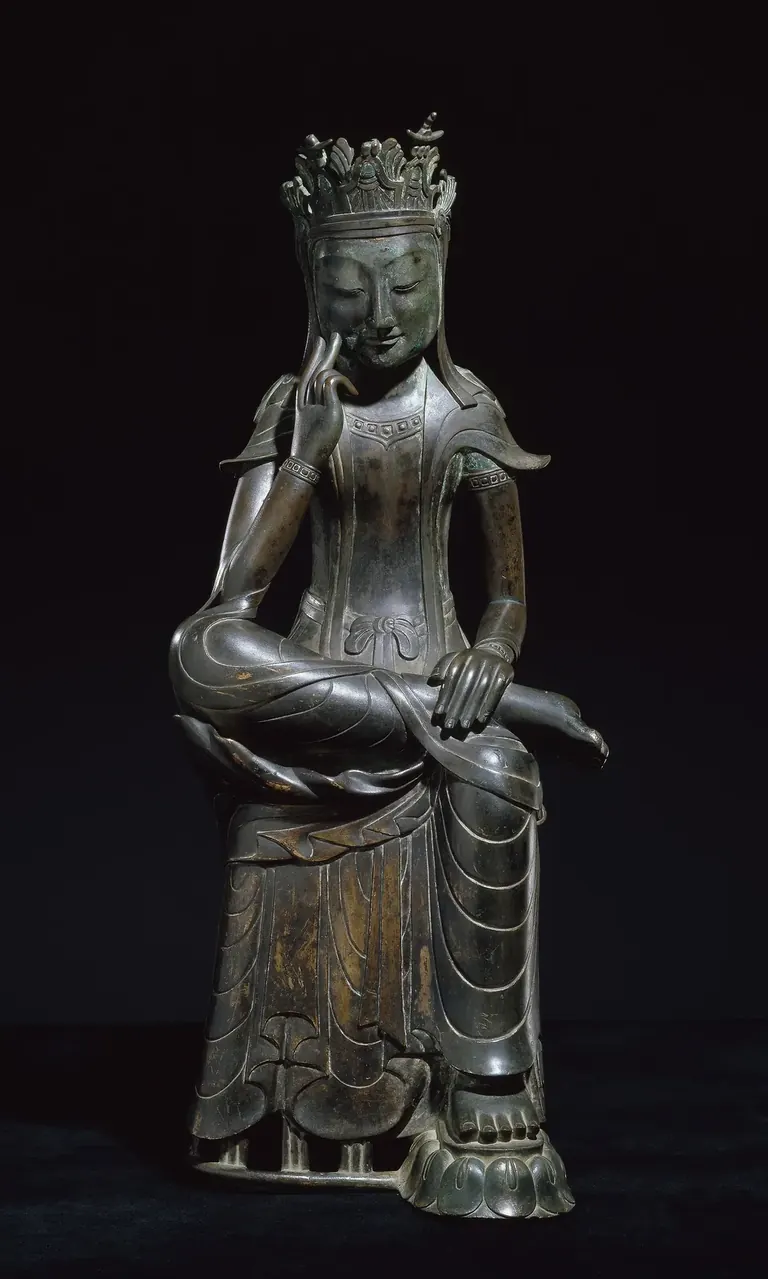
Room of Quiet Contemplation: The Pensive Bodhisattvas
A dedicated dark, quiet gallery holding two gilt-bronze Pensive Bodhisattva statues (National Treasures), masterpieces of Three Kingdoms-period Buddhist sculpture from the late 6th-early 7th century.
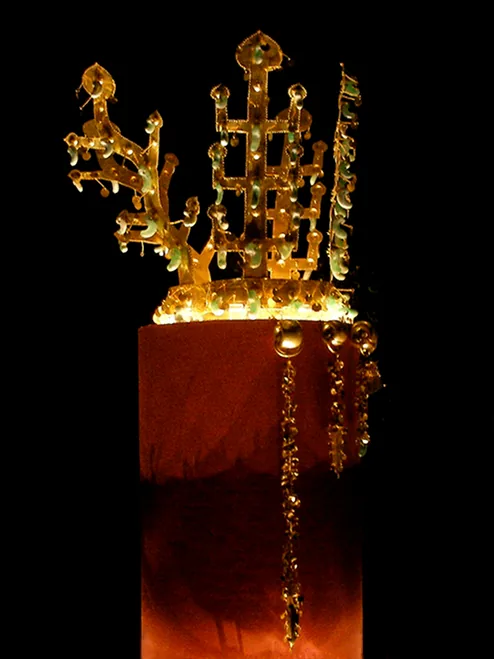
Gold Crown from Hwangnamdaechong Tomb
A Silla-kingdom gold and jade crown (National Treasure No. 191) excavated from the north mound of Hwangnamdaechong Tomb in Gyeongju, among the finest of Korea's royal gold crowns.
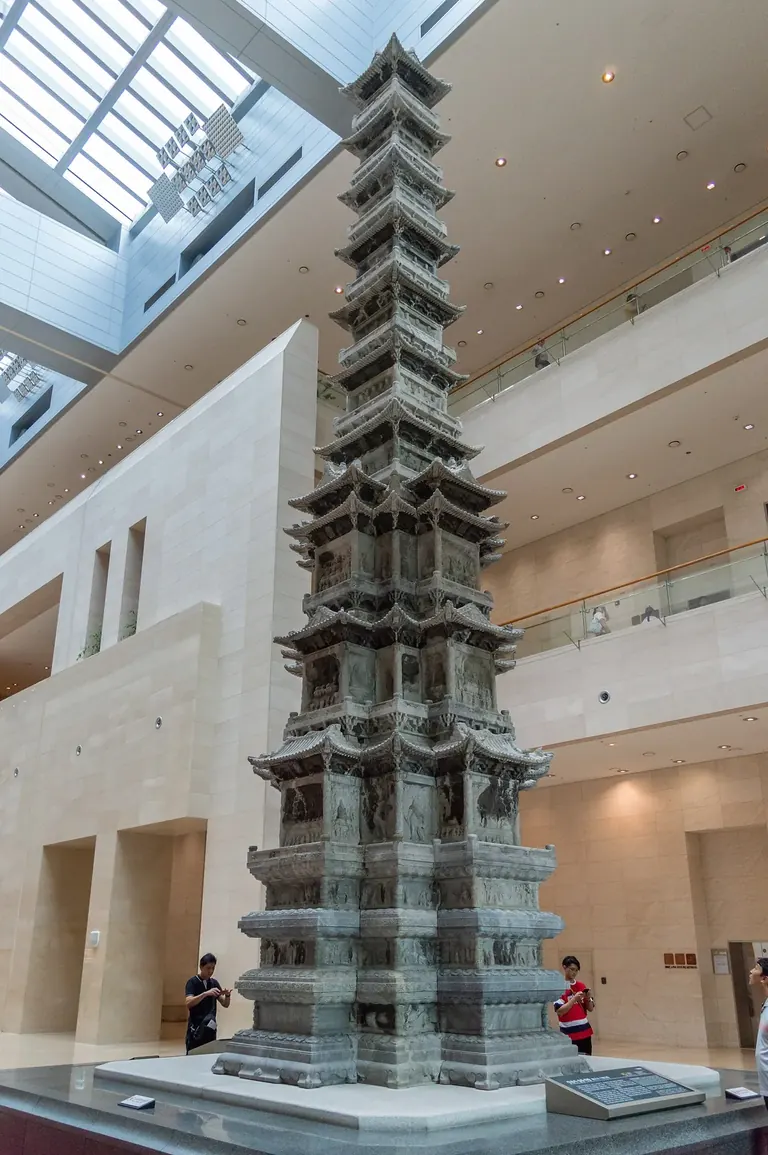
Ten-Story Pagoda from Gyeongcheonsa Temple Site
A monumental 1348 marble pagoda, the first of its kind, displayed on the museum's "Path to History." Looted to Japan in 1907, recovered, and fully restored by 2005.
Plan Your Visit
Getting there
137 Seobinggo-ro, Yongsan-gu, Seoul, South Korea
Nearest station: Ichon Station (Line 4 / Gyeongui–Jungang Line)
Show on mapHours
Closed 7 December
Closed - first Monday of December
| Mon | 09:30–17:30 |
| Tue | 09:30–17:30 |
| Wed | 09:30–21:00 |
| ThuToday | 09:30–17:30 |
| Fri | 09:30–17:30 |
| Sat | 09:30–21:00 |
| Sun | 09:30–17:30 |
Admission
Free
Permanent galleries and Children's Museum are free; some special exhibitions charge separate admission (roughly 5,000-15,000 KRW).
Last verified
Nearby
Visitor Information
- Is National Museum of Korea free to visit?
- Yes, general admission to National Museum of Korea is free. Permanent galleries and Children's Museum are free; some special exhibitions charge separate admission (roughly 5,000-15,000 KRW).. Some special exhibitions may charge a separate ticket, so check the museum's website before visiting.
- What are the opening hours of National Museum of Korea?
- National Museum of Korea is open Open daily, 9:30am-5:30pm (last admission 5:00pm), with late opening to 9pm on Wednesdays and Saturdays (last admission 8:30pm). Closed 1 January, Lunar New Year's Day, Chuseok, and the first Monday of March, June, September and December (permanent and special galleries only).. Holiday hours can vary, so check the museum's website before you go.
- Where is National Museum of Korea?
- National Museum of Korea is located at 137 Seobinggo-ro, Yongsan-gu, Seoul, South Korea, in the Yongsan-gu area of Seoul. The nearest station is Ichon Station (Line 4 / Gyeongui–Jungang Line).
- What can I see at National Museum of Korea?
- Korea's flagship museum of history and art: 310,000+ artifacts spanning prehistory to modern times, free permanent galleries. Current highlights include Modern Art in Times of Change: Masterpieces from Kunsthaus Zürich, Breaking the Seal of a Thousand Years: Buddhist Manuscripts from Dunhuang in the National Museum of Korea and Room of Quiet Contemplation: The Pensive Bodhisattvas.
- Do I need to book National Museum of Korea in advance?
- National Museum of Korea is free to enter and most days you can walk in. Permanent galleries and Children's Museum are free; some special exhibitions charge separate admission (roughly 5,000-15,000 KRW).. For special exhibitions, weekends, and school holidays, booking a timed slot can help you skip queues. Check the museum's website for current requirements.
- When is the best time to visit National Museum of Korea?
- Weekday mornings shortly after opening are typically the quietest, especially mid-week. Late afternoons can also be calmer. Weekends, school holidays, and the lunch rush are the busiest periods.
Image credits
6
- National Museum of KoreaJinah78 / Wikimedia Commons, CC BY-SA 3.0
- Room of Quiet Contemplation: The Pensive BodhisattvasNational Museum of Korea / Wikimedia Commons
- Gold Crown from Hwangnamdaechong TombSeon Kwang Haengja / Caspian blue, Wikimedia Commons, CC BY 3.0
- Ten-Story Pagoda from Gyeongcheonsa Temple SiteTristan Surtel / Wikimedia Commons, CC BY-SA 4.0
- War Memorial of KoreaAdbar / Wikimedia Commons, CC BY-SA 3.0
- Amorepacific Museum of Art (APMA)kallerna / Wikimedia Commons, CC BY-SA 4.0