Castel Sant'Angelo - Museo Nazionale · Borgo
Ercolano. L'arte di vivere
Over 70 finds from Herculaneum's storerooms, in seven sections, show everyday life in the city buried by Vesuvius in AD 79, including a carbonised loaf of bread.
More in Rome
Loaves baked in Herculaneum two thousand years ago sit in a case, charred black by Vesuvius in AD 79 but still whole. They match the bread in Pompeii's fresco of a bread handout.
More than 70 finds from Herculaneum's storerooms, many never shown before, fill the Clement VII rooms, the Sala della Giustizia and the Clement VIII rooms. You walk into a Wunderkammer of 42 pieces (statues, busts, frescoes, jewellery), then a projection room on the eruption, then the street, the kitchen, wine and a banquet hall. That last room has a marble sundial whose job is to mark breakfast, lunch and dinner, a priority Rome has never dropped.
The show grew out of a food exhibition at Villa Campolieto in Ercolano, and food still runs through most of the route. Entry comes with the €18 castle ticket (Musei Italiani app, CoopCulture or the desk). Extended to 1 November, it is in its last week, open Tuesday to Sunday, 9:00 to 19:30.
Look for
The carbonised loaves
Look for the loaves from the eruption, blackened but intact, the same shape as the bread in Pompeii's fresco of a bread handout.
Sextus Patulcius Felix's baking tins
Baking trays from one Herculaneum baker's oven, part of a set of 25 moulds found in the town.
The larva convivialis
In the banquet hall, a small silver skeleton figurine that sat on the dinner table to remind guests that life is short and the meal should be enjoyed.
The mealtime sundial
A marble sundial marking the three Roman meals of the day: ientaculum, prandium and cena.
Offerings to Bacchus
A fresco panel from Herculaneum's Casa dei Cervi, lent by Naples' archaeological museum, showing offerings to the god of wine in the section on Campania's wine trade.
Good for
- Nerding Out
- Out-Of-Town Guests
Also at Castel Sant'Angelo - Museo Nazionale
On now nearby
Nearby
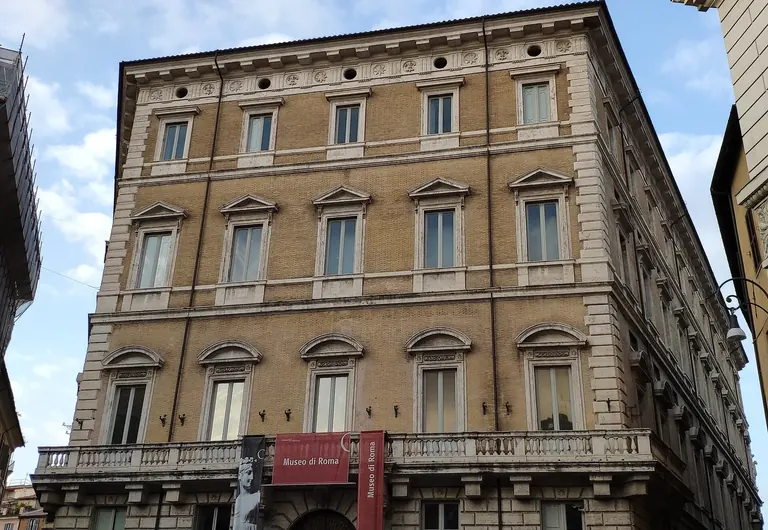
Image credits
6
- L'Ara si rivelaCourtesy of Museo dell'Ara Pacis
- L'archivio racconta. Memorie di famiglia nei documenti della persecuzione antiebraicaCourtesy of Museo di Roma (Palazzo Braschi)
- Castel Sant'Angelo - Museo NazionaleJean-Pol GRANDMONT / Wikimedia Commons, CC BY-SA 3.0
- Chiostro del BramanteSailko, via Wikimedia Commons, CC BY-SA 3.0
- Museo dell'Ara PacisCouncil, via Wikimedia Commons, Public domain
- Museo di Roma (Palazzo Braschi)Kaga tau / Wikimedia Commons, CC BY-SA 4.0