 i
Capitoline MuseumsCampidoglio
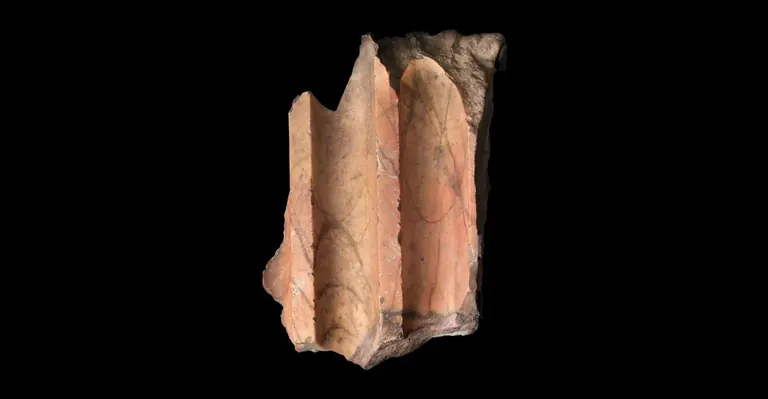
I Colori dell'Antico: Marmi Santarelli ai Musei Capitolini
A long-running display in Palazzo Clementino of over 660 polychrome marbles from the Imperial age, from the Santarelli collection, illustrating Rome's history through coloured stone.
More in Rome
Walk the Palatine after rain, the scholar Raniero Gnoli wrote in 1971, and you'll see small flakes of coloured marble in the mud. None of it is from Rome. The city is built on tuff, travertine and peperino, and every green, purple and red stone was shipped in from the provinces.
The first room hangs 82 Santarelli Foundation fragments on metal grids. You stand in Rome, and each wall is a compass point: the south and east walls are far fuller than the north and west, because most coloured marble came from today's Greece, Egypt and Turkey. The second room is for teaching, with two early-1800s sample cabinets of 422 specimens, the Capitoline's own 288 tiles, a marble-worker's tools and a documentary on a loop.
It's two rooms in Palazzo Clementino, beside the coin collection, and it comes with Capitoline admission (€16.50 until 1 November, free for Rome residents with ID and MIC card holders). It is officially a temporary show. It closes in April 2032.
Look for
The Nike with the head of Dionysus
A 2nd-century torso of a Nike in Egyptian red porphyry with a white marble head of Dionysus, given arms in the 1500s or 1600s and set on giallo antico, alabaster and africano bases with bronze animal feet.
The four compass walls
Fragments of columns, basins and floors sit on metal grids like a geologist's specimen drawers, each wall facing the direction its stones came from.
The Santarelli sample cabinets
Two late-18th-century lacquered and gilded vitrines holding 422 marble samples gathered in Rome in the early 1800s.
The Capitoline sampler
Enrico Guj's set of 288 same-size tiles, 160 of them on view in two cases, begun in the second half of the 1800s.
The marble-workers' tools
Picks, mallets, chisels and a bow drill from the Fiorentini workshop, the kit that rang through Rome's marble yards until the 20th century.
Good for
- Locals Who've Seen It All
- Nerding Out
- Rainy Days
Skip if
You want statues: the only sculpture is one composite bust, and the rest is stone fragments and samples.
Also at Capitoline Museums
On now nearby



Nearby
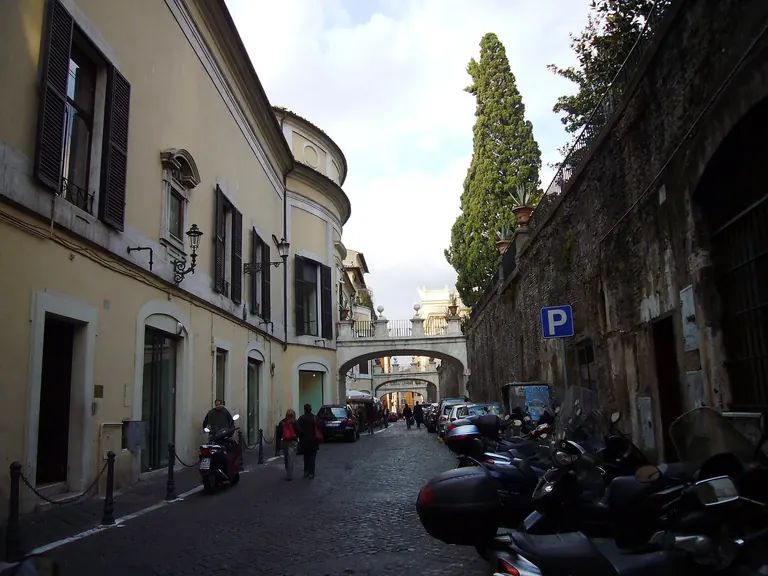
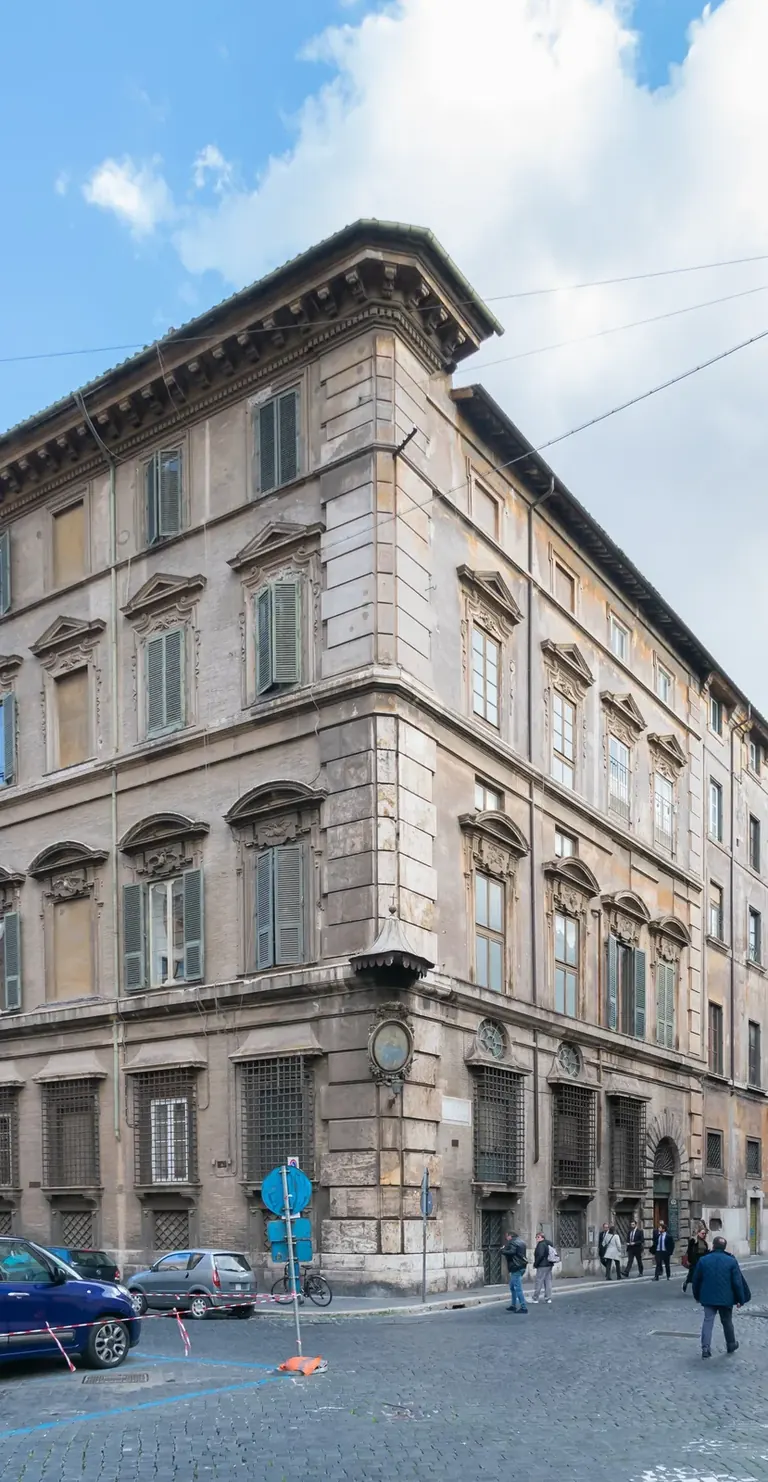
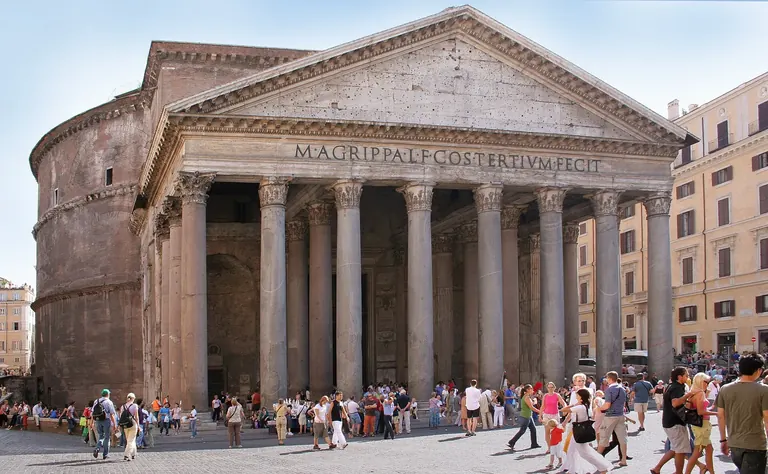
Image credits
8
- I Colori dell'Antico: Marmi Santarelli ai Musei CapitoliniCourtesy of Capitoline Museums
- Marina Bindella. CosmografieCourtesy of Museo Carlo Bilotti
- AEGYPTUS. Dal Nilo al Mediterraneo. Oasi e deserto in epoca romanaCourtesy of National Roman Museum - Palazzo Massimo
- Le Litanie della Vergine di Mario Deluigi. Dialogue between the Sacred and AbstractionCourtesy of Vatican Museums
- Capitoline MuseumsTournasol7 / Wikimedia Commons, CC BY-SA 4.0
- Galleria ColonnaLalupa, CC BY-SA 3.0
- Galleria Doria PamphiljKrzysztof Golik, Wikimedia Commons, CC BY-SA 4.0
- PantheonRoberta Dragan, CC BY-SA 2.5