 i
Musée national Picasso-Paris · Le Marais
Kurt Schwitters. Le chaos-monde, 1918-1948
First Kurt Schwitters retrospective in France in over thirty years: 300+ works and documents, from Merz collages to the Ursonate, set beside his affinities with Picasso's assemblage.
More in Paris
In the winter of 1918-19, Kurt Schwitters cut up an advert for the Kommerz- und Privatbank and glued one fragment, "Merz", into a collage. That leftover syllable named nearly everything he made: collages, poems, a magazine, an advertising agency and his house.
More than 300 works and documents fill the ground floor and basement of the Hôtel Salé, running from academic portraits in Hanover to Norway and exile in England. You move past collages built from tickets, packaging, string and wire, then reach a reconstruction of the Merzbau, the room-sized white sculpture he built inside that house. Picasso is why it's here: both men turned everyday scraps into art. Paris has retired its cardboard metro tickets, which would have cost Schwitters a raw material.
Plan for reading as well as looking: much of the show is notebooks, books, photographs and archives. Entry is €16, €12 reduced, free on the first Sunday of the month, and the museum stays open until 22:00 on the first Wednesday.
Editor's pick
Merz collages built from bus tickets, wrappers and other street scraps, and the Ursonate, his sound poem of nonsense syllables. Over 300 works and documents, set beside Picasso's assemblages, in France's first Schwitters retrospective in more than thirty years.
Look for
The Merzbau reconstruction
Look for white volumes with planes slotted into one another, angles and hollows: Peter Bissegger's 1980s rebuild of the main room, made from three 1933 photographs after bombs destroyed the original.
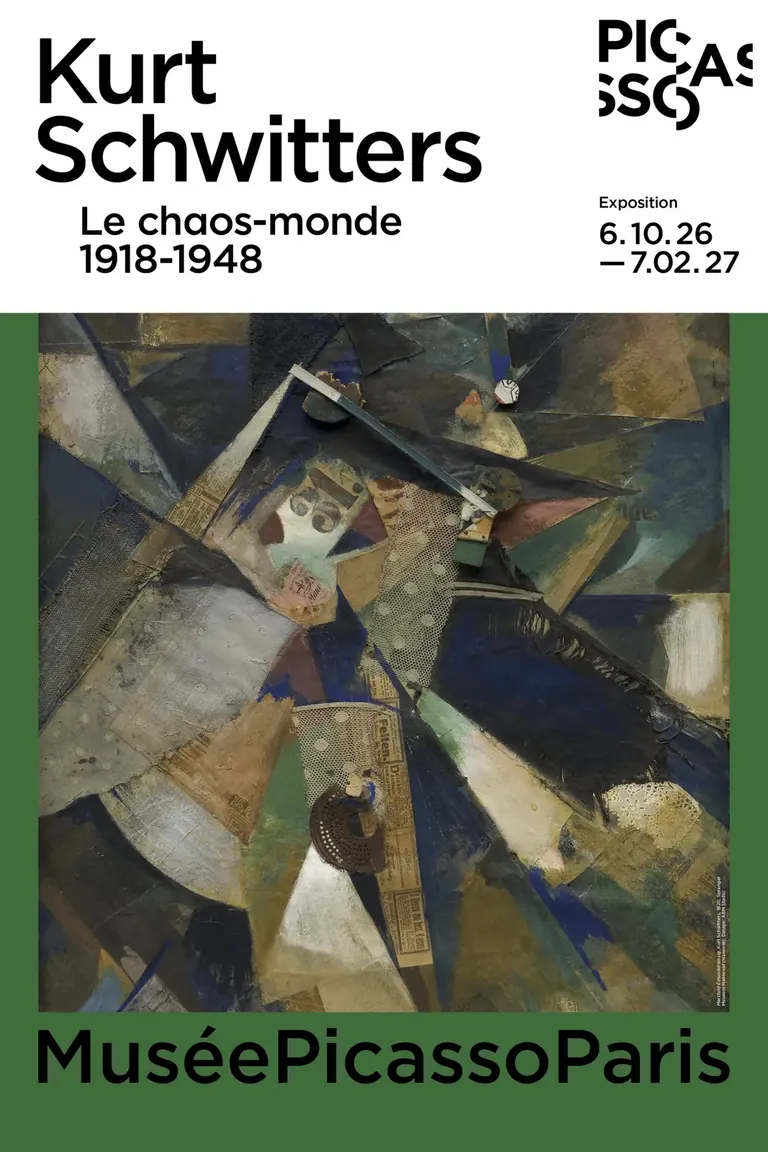
Merzbild Einunddreissig (1920)
The poster image up close: oil paint, paper, wood, metal, fabric and cotton wadding packed onto cardboard.
Kleines Seemannsheim (1926)
Look for pieces of a wheel, metal and nails fixed with wood and oil paint onto cardboard, from his geometric, De Stijl-influenced years.
Bild auf acht Seiten (1930-1936)
A wooden relief over oil paint on an eight-sided panel, lent by the Thyssen-Bornemisza in Madrid, whose title suggests it reads from all eight sides.
A postcard to Hannah Höch
Sent in September 1921, it carries a reproduction of his self-portrait and an "Anna Blume" stamp named after his poem's heroine.
Good for
- Going Solo
- Nerding Out
- Out-Of-Town Guests
Skip if
You want paintings only: much of the show is notebooks, books, photographs and archives to read.
With kids
The €12 reduced ticket doubles as a family rate for one or two adults accompanying a child.
Also at Musée national Picasso-Paris
On now nearby
Nearby
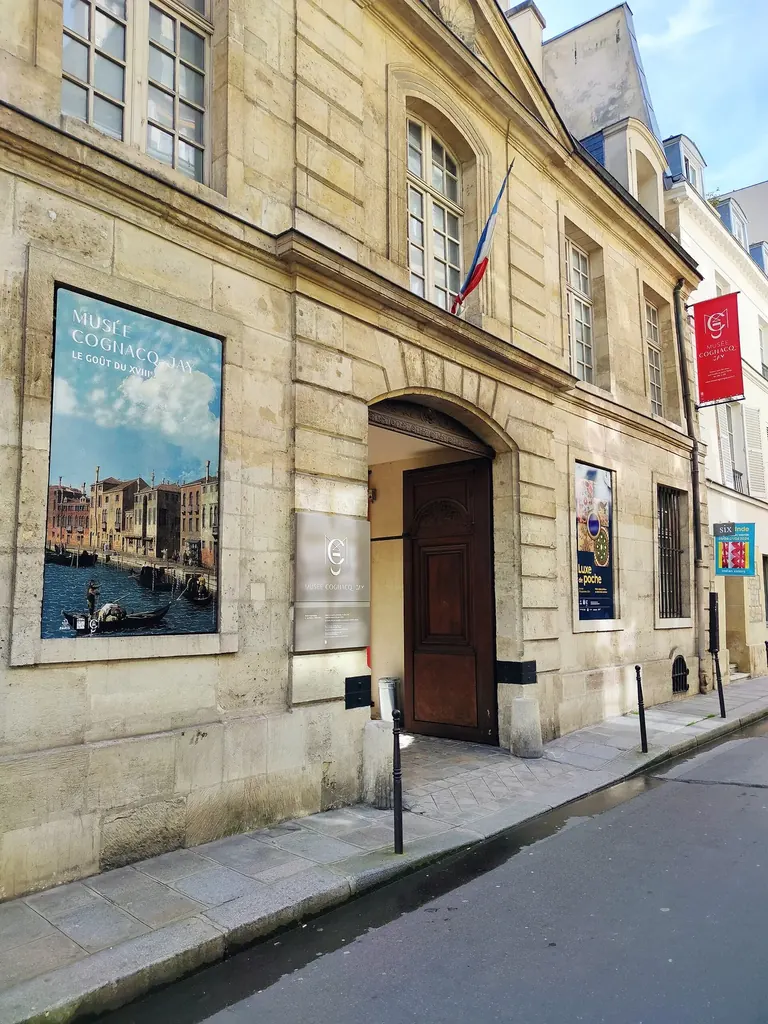
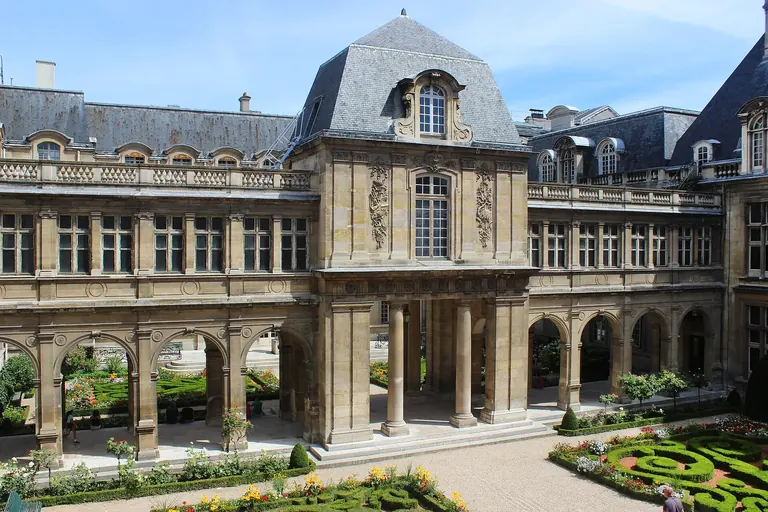
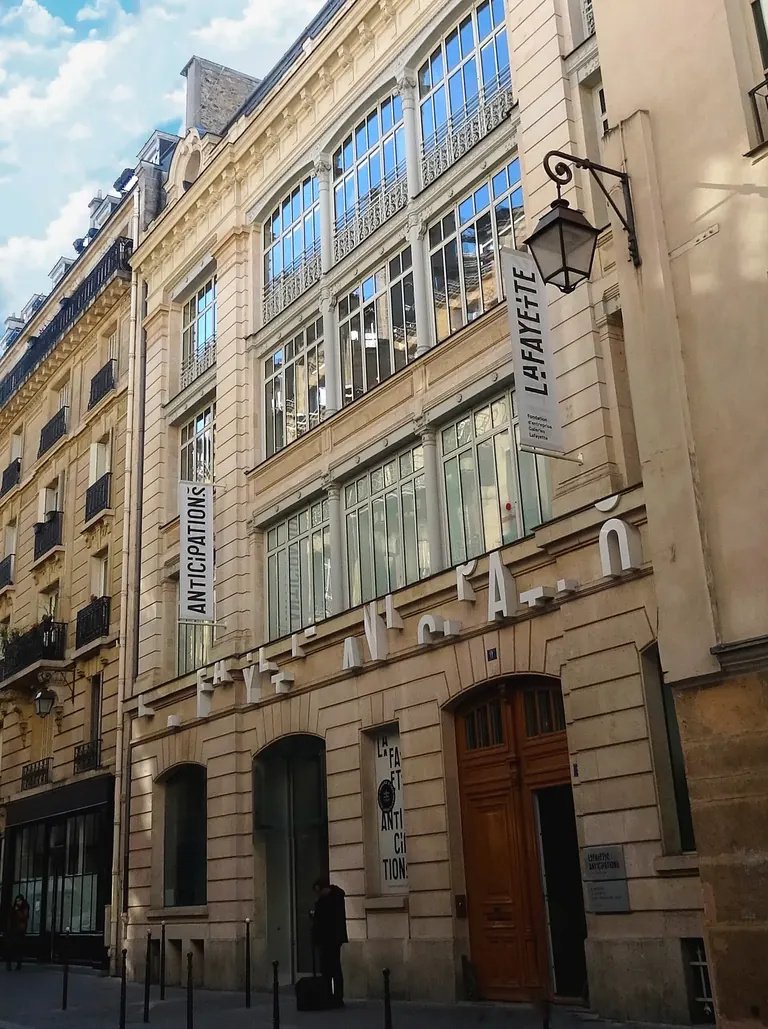
Image credits
9
- Kurt Schwitters. Le chaos-monde, 1918-1948Courtesy of Musée national Picasso-Paris
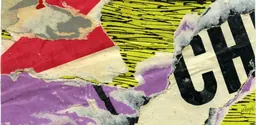
- Fragments of Paris: Jacques Villeglé and Urban Art© Fonds de dotation Villeglé, Adagp, Paris, 2026. Photo DR
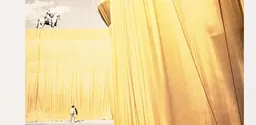
- New Paris, from 1977 to the Present TimesChristo and Jeanne-Claude Foundation / Photo: André Grossmann
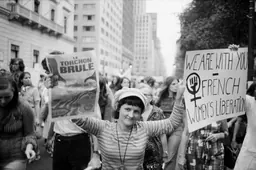
- Martine Franck: Images, Press and Feminist StrugglesCourtesy of Fondation Henri Cartier-Bresson
- Musée national Picasso-ParisFrançois de Dijon, via Wikimedia Commons, CC BY-SA 4.0
- Musée Cognacq-JayCVB / Wikimedia Commons
- Musée Carnavalet – Histoire de ParisMiguel Hermoso Cuesta, Wikimedia Commons, CC BY-SA 4.0
- Fondation Henri Cartier-BressonVVVCFFrance, Wikimedia Commons, CC BY-SA 4.0
- Lafayette Anticipations - Fondation Galeries LafayettePhilouSunshine, Wikimedia Commons, CC BY 4.0