Musée du quai Branly - Jacques Chirac7e arrondissement
See Tahiti. Early Photographs, 1859-1870
A rare photographic collection from French Polynesia's earliest decade of photography, featuring works by naval officers Gustave Viaud and Paul Emile Miot.
More in Paris
On 22 August 1860, Gustave Viaud, a navy surgeon who had arrived in Tahiti at 23, photographed the Papeete seafront between Fare Ute and the military bakery. Pierre Loti's older brother worked with the calotype, a paper negative whose long exposures made portraits hard, so he shot mostly landscapes and wrote home that they "ont vraiment du chic".
The museum bought his negatives and Paul-Émile Miot's in 2023. About 20 Viaud images sit beside nearly 60 by Miot, who came ten years later with collodion glass plates and photographed the royal family. You see more negatives than prints: the curators backlit them so the paper grain, the glass and the marks of their making show. Papeete's barracks, port and governor's residence record the colonial administration going up after the 1842 protectorate.
It fills the Atelier Martine Aublet, a 170 m² mezzanine over the permanent collection, and Sortiraparis called it "a compact slice of French and Tahitian history". The €14 museum ticket (€11 reduced) covers it, and Thursdays run until 22:00.
Look for
The Papeete seafront, 22 August 1860
Viaud's paper negative of the waterfront between Fare Ute and the military bakery, the image the museum put on the cover of its visit booklet.
Teriimaevarua II, Queen of Bora Bora
Look for Viaud's 1859 portrait of the queen, a rare sitter for a photographer whose paper process made portraits hard.
The barracks and government buildings
Viaud's view of Papeete's barracks and the administrative buildings beside it, the colonial town going up a few years after the protectorate.
La Sybille in Papeete harbour
A ship at anchor in the port, taken by Miot on a collodion glass plate in 1869 or 1870.
The royal family
Miot's portraits include Queen Pomaré in three-quarter view and her daughter-in-law, the princesse de Joinville.
Good for
- An Hour Or Less
- Evening Visits
- Nerding Out
Skip if
You want finished prints on the wall: most of the show is backlit 1860s negatives.
Also at Musée du quai Branly - Jacques Chirac
On now nearby
Nearby
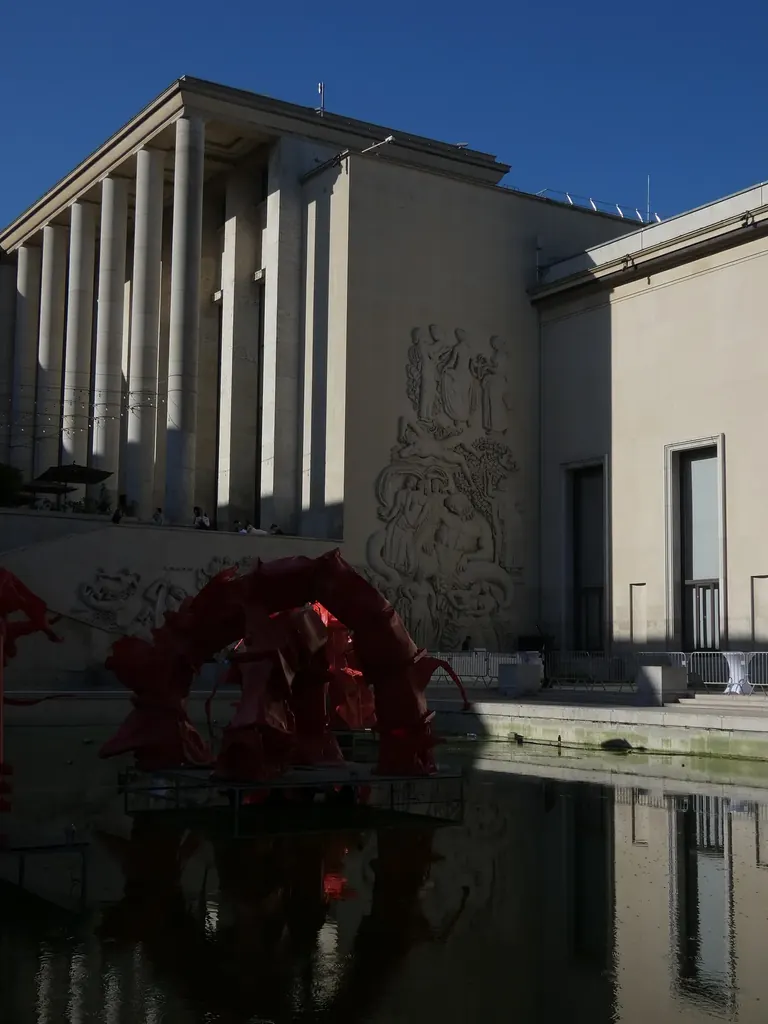
Image credits
8
- Florian Krewer: woven thinCourtesy of Musée d'Art Moderne de Paris (MAM)
- Kerry James Marshall: The HistoriesCourtesy of Musée d'Art Moderne de Paris (MAM)
- Simone Fattal: Des villes au fond d'un lacPhoto : François Doury © Adagp, Paris, 2026
- Musée du quai Branly - Jacques ChiracJean-Pierre Dalbera, CC BY 2.0
- Musée d'Art Moderne de Paris (MAM)Lustucrucaca / Wikimedia Commons, CC BY-SA 4.0
- Palais de TokyoGuilhem Vellut via Wikimedia Commons, CC BY 2.0
- Palais Galliera - Musée de la Mode de ParisJoe deSousa / Wikimedia Commons, CC0
- Musée national des arts asiatiques - GuimetLionel Allorge / Wikimedia Commons, CC BY-SA 3.0