 i
Museum of Modern Art (MoMA) · Midtown Manhattan
Jakob Kudsk Steensen: Wetland
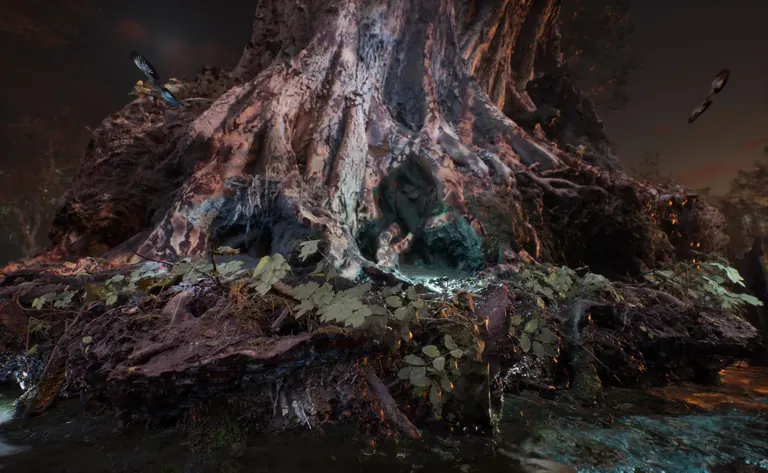
Digital installation Berl-Berl reimagines Berlin's lost wetlands as a singing, digital swamp, blending ecological research, Slavic folklore and game-engine technology to explore human and more-than-human worlds.
More in New York
At MoMA, Triglav, the three-headed god of Slavic folklore, turns up as a giant tree in a digital swamp. He lives in Berl-Berl, Jakob Kudsk Steensen's simulation of the wetlands Berlin was built on. The city's name comes from the Slavic word for swamp.
It is the show's only work, and it runs live: image and sound are computed in real time, so no pass repeats. Steensen spent months in Berlin's remaining wetlands with the Museum für Naturkunde, scanning soils, plants and currents with macro photogrammetry. You stand among wall-spanning screens while altered field recordings of amphibians mix with Arca's voice and Sorbian and Slavic songs. Berl-Berl opened in 2021 at Halle am Berghain and has changed with each stop since.
Time Out placed it between art installation and "extremely sophisticated nature documentary." It fills the Agnes Gund Garden Lobby on Floor 1 until March 7, 2027, and admission is free. Berlin named itself after its swamp; New York's still turns up on subway platforms after a hard rain.
Look for
Triglav as a giant tree
The three-headed god of Slavic folklore appears in the MoMA version of the swamp as a huge tree.
Swamp soil at giant scale
Macro photogrammetry blows up the microscopic textures of Berlin wetland soils, plants and currents across wall-spanning screens.
Arca and the amphibians
Digitally altered field recordings of amphibians and river rhythms are mixed with Arca's vocals and songs from Sorbian and Slavic traditions.
The insect's-eye view
The viewpoint shifts from a view of the whole marsh to a fragmented, insect-like perspective, and the real-time simulation never plays the same pass twice.
Good for
- An Hour Or Less
- Cheap Culture
- Rainy Days
- Teenagers
Also at Museum of Modern Art (MoMA)
On now nearby
Nearby
Image credits
7
- Jakob Kudsk Steensen: WetlandCourtesy of Museum of Modern Art (MoMA)
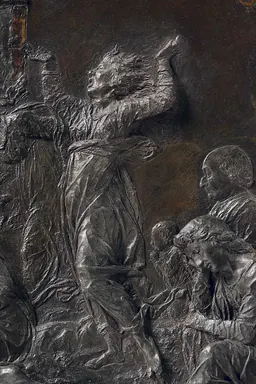
- Siena: The Art of Bronze, 1450-1500The Frick Collection
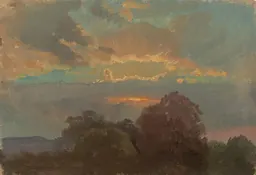
- Luminous ColorCourtesy of The Morgan Library & Museum
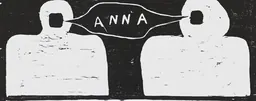
- Anna Maria Maiolino. ANNA—And the Infinite LineCourtesy of Hauser & Wirth
- Museum of Modern Art (MoMA)hibino via Wikimedia Commons, CC BY 2.0
- The Frick CollectionJim.henderson / Wikimedia Commons, Public domain
- The Morgan Library & MuseumMike Peel, CC BY-SA 4.0