Fundación María Cristina Masaveu PetersonChamberí
Obras invitadas: Millares, Rivera y Solano
In Sala 9, works by Millares, Rivera and Solano on how Spanish artists used fabric and unconventional materials.
More in Madrid
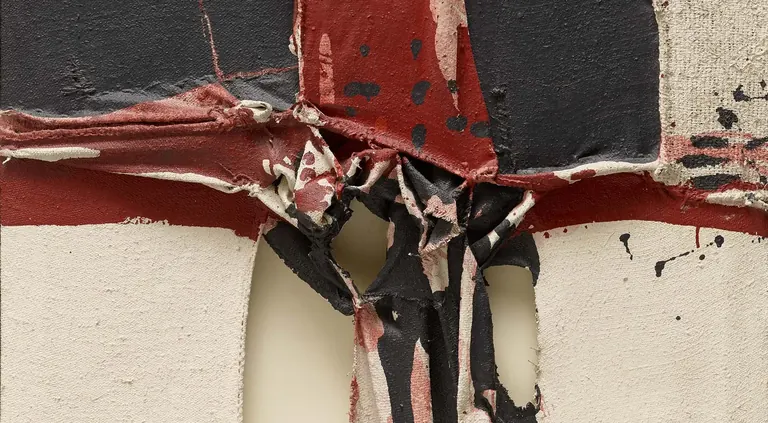
You walk into Sala 9 and the first thing that looks like a painting is a burlap sack, cut, sewn and crumpled. Manolo Millares started working with sacking in 1954, dropping the Canary pictograms he had painted before, and Cuadro 185 (1962) comes from the Masaveu collection.
Beside him hang two other ways out of the canvas. Manuel Rivera gave it up around 1956 for metal mesh, some bought and some made by hand, stretched into geometric structures that throw shadows. Susana Solano folded a sheet of lead and painted stripes on it, so Doblec n.º 10 reads as sculpture and as a kitchen cloth at once: the one tea towel in Madrid you can't wring out. Millares and Rivera both showed at MoMA in the 1960s.
It is one room, a short add-on to the foundation's textile show next door. Entry is free with a timed pass, Tuesday to Sunday.
Look for
Cuadro 185 by Manolo Millares
Look for burlap cut, sewn and crumpled into shapeless forms, the 1962 work from the Masaveu collection that stands for his switch to sacking.
Doblec n.º 10 by Susana Solano
A folded sheet of lead with painted stripes, worked so it can pass for a kitchen cloth as much as an abstract sculpture.
Good for
- An Hour Or Less
- Cheap Culture
- Nerding Out
Also at Fundación María Cristina Masaveu Peterson
On now nearby
Nearby
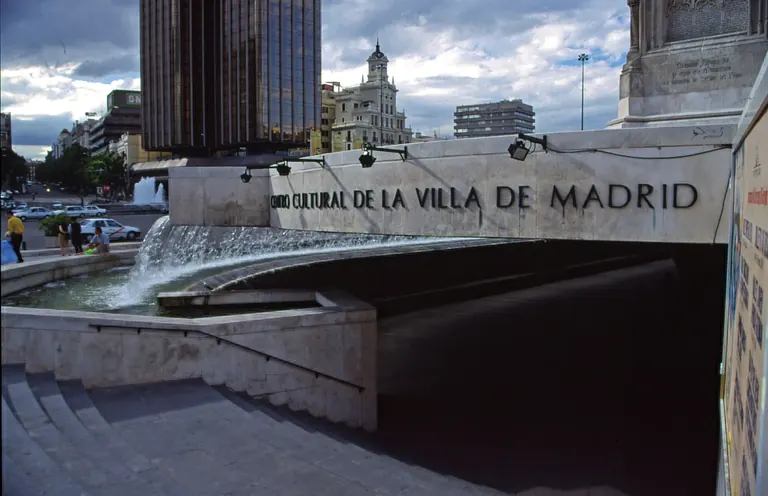
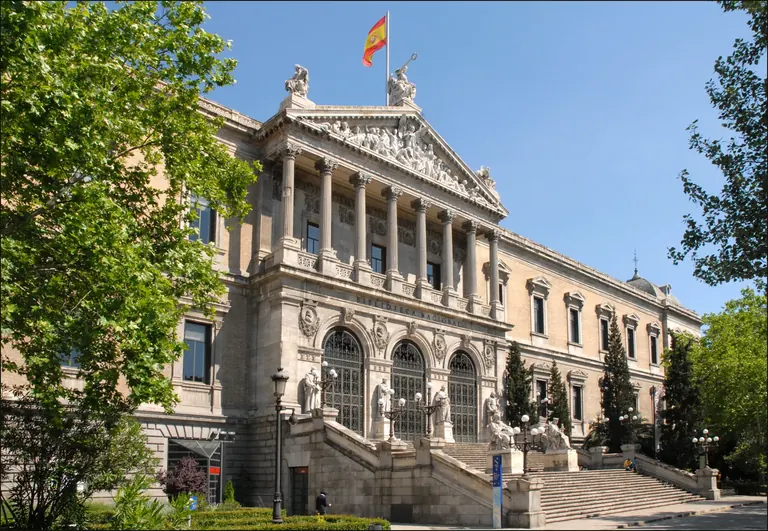
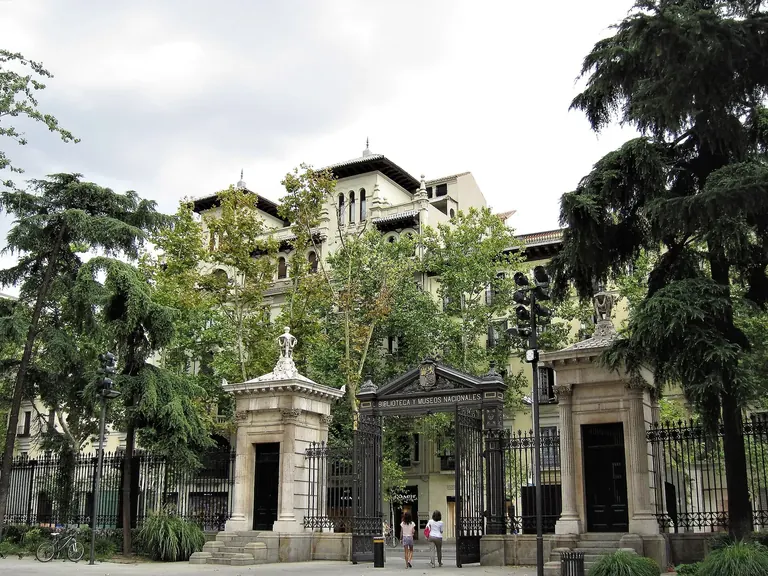
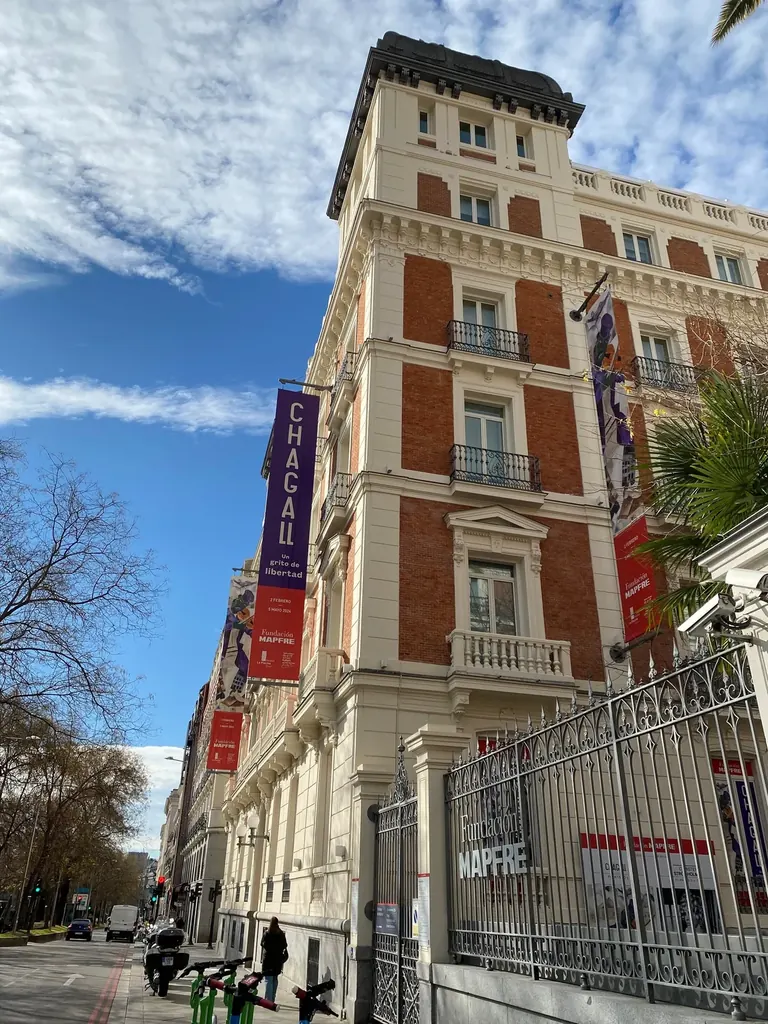
Image credits
6
- Obras invitadas: Millares, Rivera y Solano©Manolo Millares, VEGAP, Madrid, 2026 © de la reproducción: Fundación María Cristina Masaveu Peterson. Foto: Marcos Morilla
- Teatro de grandeza. Arte, arquitectura y ciudad en el Madrid barrocoAnónimo, Torneo y festejo en el Prado de San Jerónimo (detalle), circa 1615, Museo del Castillo de Hochosterwitz
- Fernán Gómez. Centro Cultural de la VillaUntipografico from Madrid (Spain) / Wikimedia Commons, CC BY 2.0
- Biblioteca Nacional de EspañaJean-Pierre Dalbéra / Wikimedia Commons, CC BY 2.0
- Museo Arqueológico NacionalCoralma*, via Wikimedia Commons, CC0
- Fundación MAPFRE – Sala RecoletosBeautyriver1010, Wikimedia Commons, CC BY-SA 4.0