Fundación María Cristina Masaveu PetersonChamberí
Colecciones Masaveu. Arte textil
About eighty textile works from the 15th century to today, from historical tapestries and carpets to contemporary textile art.
More in Madrid
Four French tapestries of satyrs and maenads from the mid-17th century hang not far from fragments of a 15th-century Hispano-Moorish carpet. French weaving like this is rare in Spanish collections. The Masaveus, in the textile trade since 1840, started buying tapestries in the early 1930s.
From that historic half you walk into Textiles, Front and Back, nine sections of contemporary work: Anni Albers, Sheila Hicks, Magdalena Abakanowicz, Paula Rego, Miró, Calder, even Le Corbusier. More than eighty pieces in all, grouped by theme rather than date, and some tapestries hung as wall hangings, the way they were once used. The route ends on Josep Grau-Garriga's Homenatge a Frederic Mompou (1978).
Entry is free with a timed ticket, bookable online up to 15 days ahead, and the desk releases up to two per person on the day. Queues form on weekdays from 11am to 1pm and on weekend mornings. Closed Mondays.
Look for
The Bacchanals tapestries
Look for the four mid-17th-century French tapestries of the Bacchanals series, among them a Concert of Satyrs and Maenads, a rare sight in a Spanish collection.
The Hispano-Moorish carpet fragments
Several surviving fragments of a 15th-century carpet, the oldest weaving in the show.
Homenatge a Frederic Mompou by Josep Grau-Garriga
The 1978 work the curators place as the bridge between the historic and contemporary halves, a nod to the family's music patronage.
Good for
- Cheap Culture
- Nerding Out
With kids
The foundation runs a family tour and workshop, Creating with Textiles, alongside the show from 24 October.
Also at Fundación María Cristina Masaveu Peterson
On now nearby
Nearby
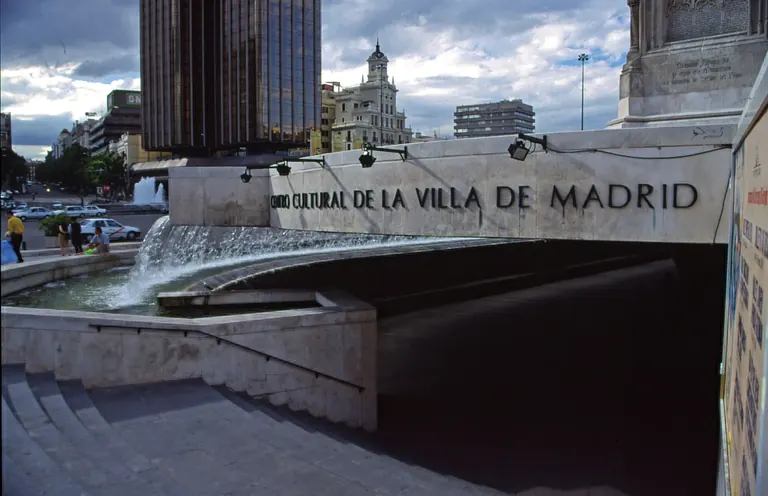
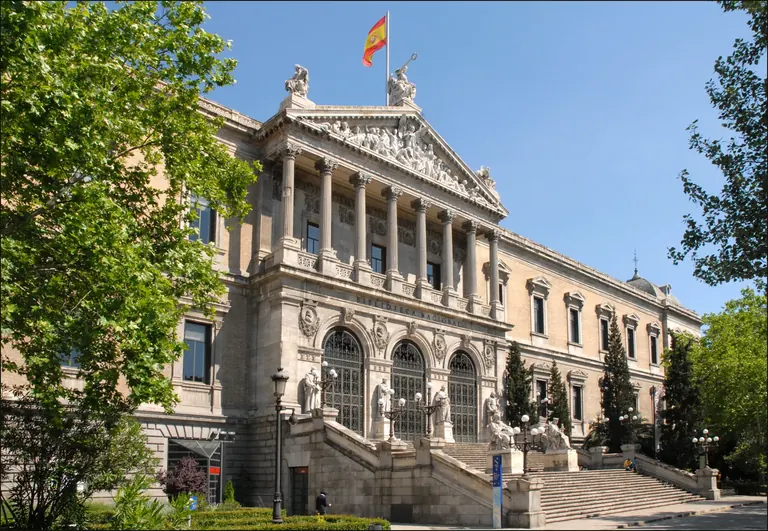
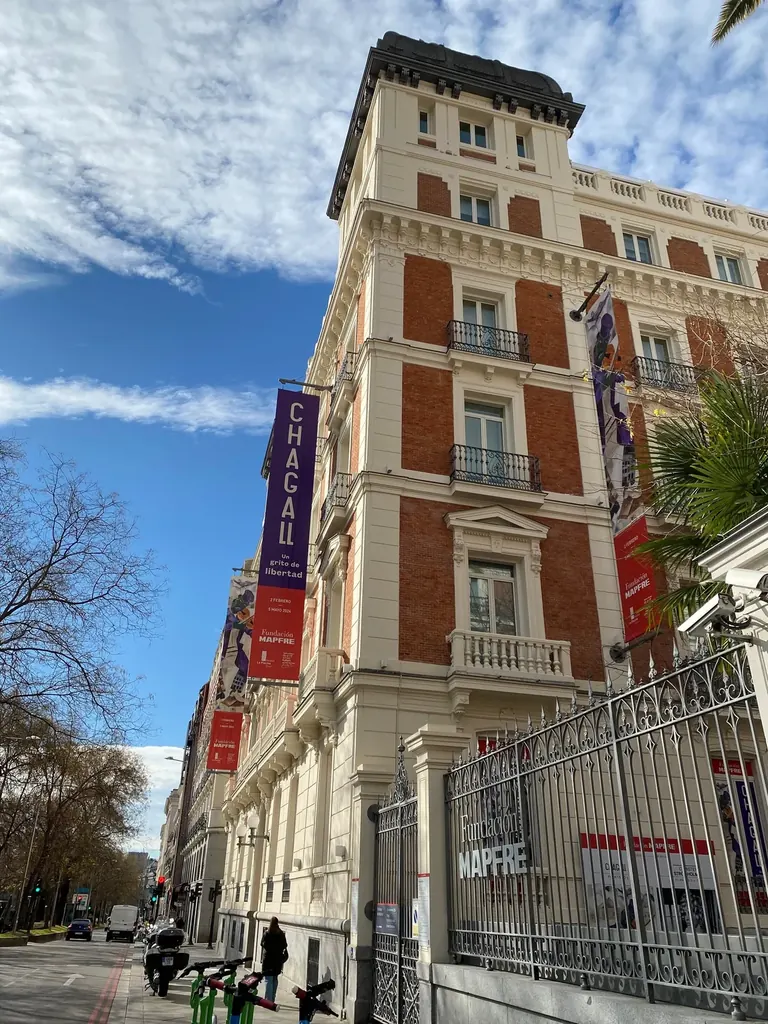
Image credits
5
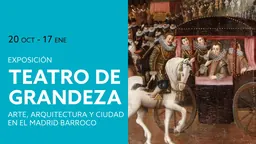
- Teatro de grandeza. Arte, arquitectura y ciudad en el Madrid barrocoAnónimo, Torneo y festejo en el Prado de San Jerónimo (detalle), circa 1615, Museo del Castillo de Hochosterwitz
- Fernán Gómez. Centro Cultural de la VillaUntipografico from Madrid (Spain) / Wikimedia Commons, CC BY 2.0
- Biblioteca Nacional de EspañaJean-Pierre Dalbéra / Wikimedia Commons, CC BY 2.0
- Museo Arqueológico NacionalCoralma*, via Wikimedia Commons, CC0
- Fundación MAPFRE – Sala RecoletosBeautyriver1010, Wikimedia Commons, CC BY-SA 4.0