 i
Los Angeles County Museum of Art (LACMA) · Miracle Mile
Textile Alchemy: The Art of Reiko Sudo & NUNO
Four decades of Reiko Sudō's innovative textiles for NUNO, merging tradition with experimentation and handicraft with technology. Resnick Pavilion.
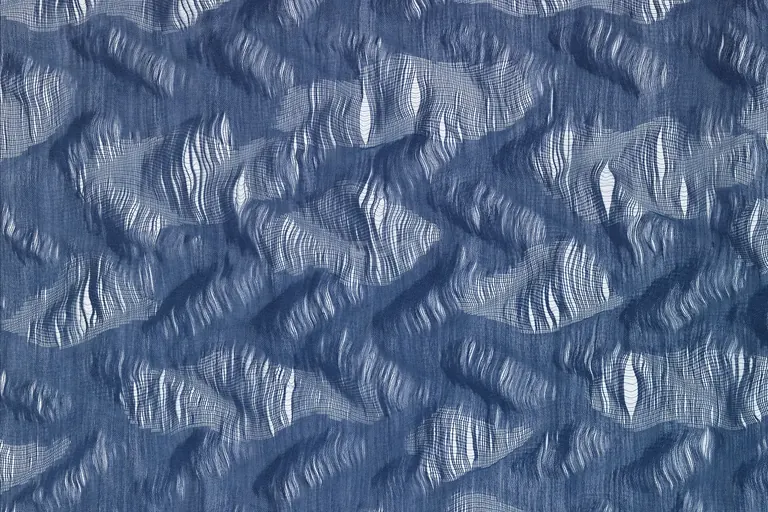
In 1990 Reiko Sudō took a trick from car factories, sputtering iron, nickel and chrome onto plastic parts, and tried it on cloth. The result, Stainless Steel Gloss, is ultralight and see-through, and one client's shirt in it set off an airport metal detector, to Sudō's delight.
This is the largest survey of her textiles yet: over 100 lengths made with NUNO, the Tokyo studio she has led since 1987, hung as suspended sheets beside sketches, tools, prototypes and short production films. Sections run from metals, heat-set origami folds and acid burnout to washi paper, a revived silk-stencil technique and kibiso, the coarse outer cocoon layer usually turned into animal feed and soap. You finish inside a re-creation of NUNO's first shop, a 1984 Roppongi basement.
The labels lean hard on process, down to which acid ate which fiber. Time Out lists it as recommended. Resnick Pavilion, included with general admission ($30), open until 8pm Fridays, closed Wednesdays, until 7 March 2027.
Look for
Stainless Steel Gloss
Look for the semitransparent polyester sputtered with iron, nickel and chrome; a chrome-only version, reworked to pass California's fire tests, now hangs as curtains in the David Geffen Galleries.
George kasuri ("George Ikat"), 1985
A reversible black-and-white cloth named for Boy George: a photo of him in an ikat led Jun'ichi Arai to scan an ikat pattern into binary code.
Hane Organza ("Feather Organza")
Loose feathers float in rows of sheer pockets; the loom was stopped every few seconds so each feather could be slipped in by hand.
The stained-glass burnout cloth
Acid burned a black cotton layer away in a lattice to release colour beneath, copied from the bamboo windows of Kyoto's Katsura Imperial Villa, the same source Josef Albers used.
The 1984 NUNO shop, re-created
The original Roppongi basement shop rebuilt, with Arai's bold black, white and indigo textiles beside cloth he collected across Africa, Asia and the Americas.
Good for
- Evening Visits
- Nerding Out
Skip if
You want paintings or sculpture: this is over 100 lengths of cloth, with sketches, tools and samples.
Free in the same building
- Chris Burden: Urban Light202 restored cast-iron street lamps from 1920s-30s Los Angeles, installed on Wilshire Blvd in 2008 and adopted as an unofficial symbol of the city.
- Michael Heizer: Levitated MassA 340-ton granite boulder perched over a 456-foot concrete slot you can walk beneath. Conceived 1969, realised 2012; outdoors on the campus.
Also at Los Angeles County Museum of Art (LACMA)
On now nearby

Nearby
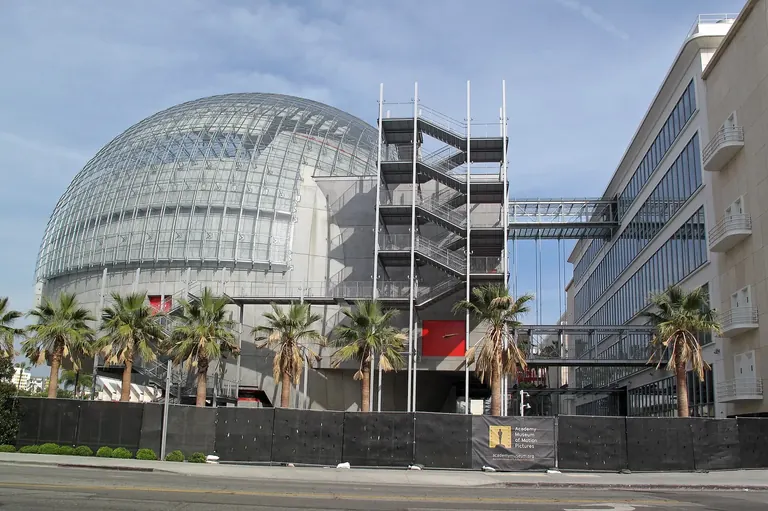
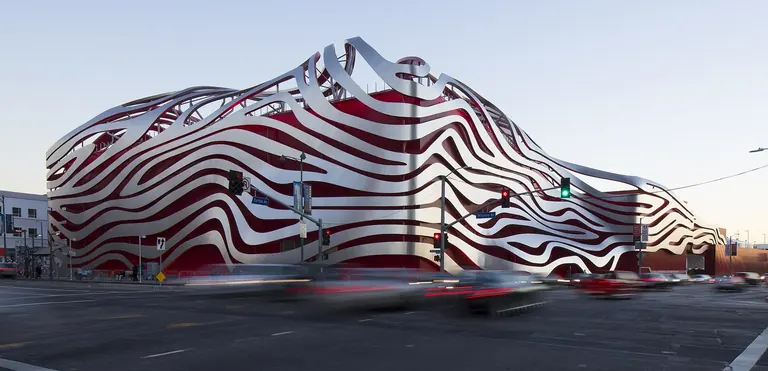
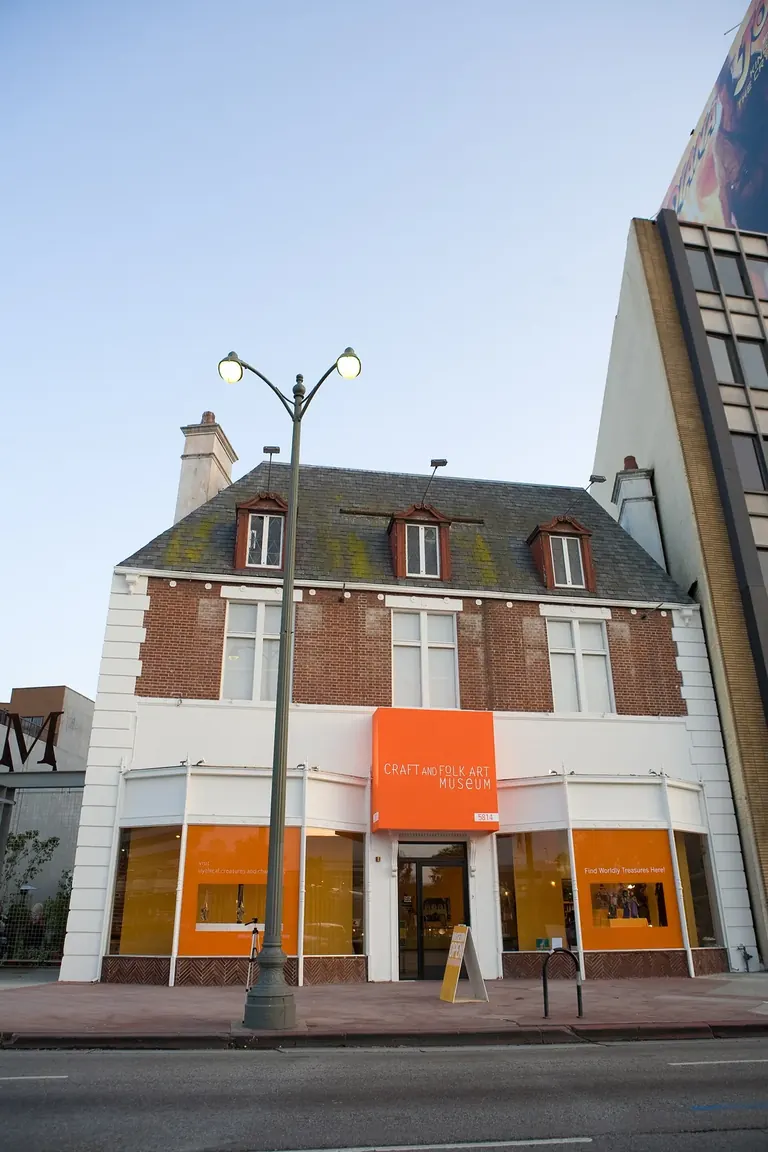
Image credits
8
- Textile Alchemy: The Art of Reiko Sudo & NUNO© NUNO Corporation, photo © Museum Associates/LACMA
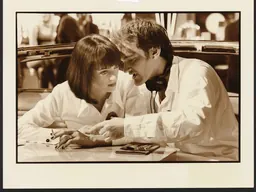
- Screenwriting: Takes on LA NoirCourtesy of Academy Museum of Motion Pictures
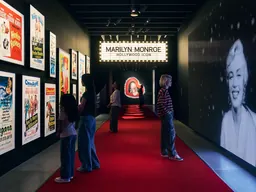
- Marilyn Monroe: Hollywood IconCourtesy of Academy Museum of Motion Pictures
- Studio Ghiblis PONYOCourtesy of Academy Museum of Motion Pictures
- Los Angeles County Museum of Art (LACMA)ArchEyes Magazine / Wikimedia Commons, CC BY 4.0
- Academy Museum of Motion PicturesDowntowngal / Wikimedia Commons, CC BY-SA 4.0
- Petersen Automotive MuseumDavid Zaitz / Wikimedia Commons, CC BY-SA 4.0
- Craft ContemporaryPaul Esposito / Wikimedia Commons, Public domain