 i
Academy Museum of Motion PicturesMiracle Mile
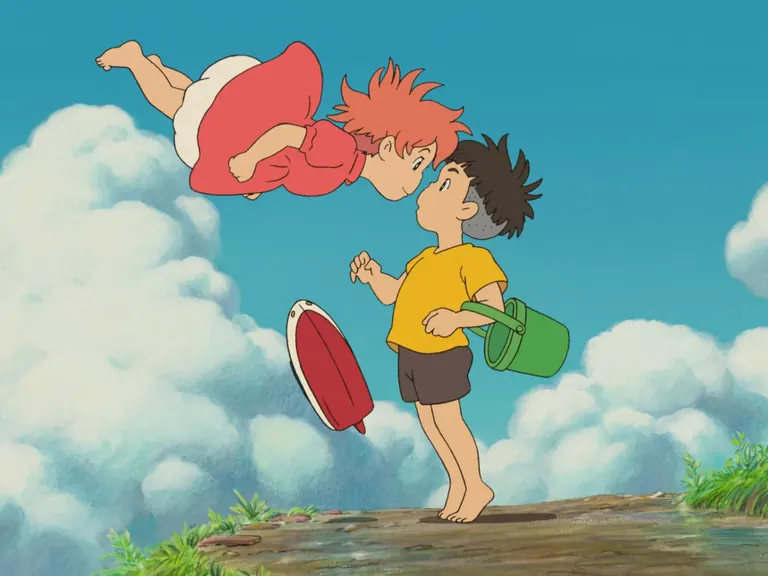
Studio Ghiblis PONYO
Celebrates Studio Ghiblis 2008 film Ponyo through over 100 rare hand-drawn animation artworks, including original art by Hayao Miyazaki, many shown in North America for the first time.
More in Los Angeles
Three walls of one room are covered in pencil drawings, dozens of them frame by frame for the single moment Sōsuke first finds Ponyo. Every frame of the film was drawn by hand, and Studio Ghibli gave the museum more than 100 objects from it, many never shown in North America.
The show follows the film in four parts: Ponyo's underwater home, with a full-wall screen and bean bags; dry land, on grass-green carpet; the animators' room, built around a wooden Ghibli desk; and the wave-running scene. Sight lines are lowered for children, and at the animation tables you arrange paper sharks, crabs and a pufferfish into your own stop-motion film. A panel quotes Miyazaki's rule, "Get rid of straight lines", and then you walk back out onto Wilshire.
Time Out gave it five stars. Gizmodo's catch is size: about a third of the museum's Jaws exhibit. It's on level 2, included in museum admission ($25 adults, free for children), and the museum is closed Tuesdays.
Look for
The frame-by-frame pencil drawings
Dozens of sequential pencil drawings cover the walls, tracing the moment Sōsuke first finds Ponyo one frame at a time.
The Ghibli animation desk
A modest wooden desk used by Ghibli animators sits on a blue-green platform at the centre of the animators' room, surrounded by drawings.
Noboru Yoshida's art boards
The art director's watercolor and pastel boards for the film hang in circular frames, a nod to Miyazaki's rule against straight lines.
Sōsuke's green bucket
A giant version of the bucket Sōsuke keeps Ponyo in, big enough for smaller visitors to crawl inside.
The stop-motion table
Move Ghibli-designed cut-outs of squid, crabs, sharks and a pufferfish frame by frame and shoot your own short film with your phone and an app.
Good for
- Out-Of-Town Guests
- Small Kids
- Teenagers
Skip if
You want a big show: Gizmodo puts it at about a third the size of the museum's Jaws exhibit.
With kids
Built for kids: sight lines are lowered, smaller visitors can crawl into the giant bucket, and children get in free.
Free in the same building
Plan a visit to Academy Museum of Motion PicturesAlso at Academy Museum of Motion Pictures
On now nearby
Nearby
Image credits
8
- Studio Ghiblis PONYOCourtesy of Academy Museum of Motion Pictures
- Made in AmericaCourtesy of Petersen Automotive Museum
- Legends of the DirtCourtesy of Petersen Automotive Museum
- Performance & Prestige: A History of Aston MartinCourtesy of Petersen Automotive Museum
- Academy Museum of Motion PicturesDowntowngal / Wikimedia Commons, CC BY-SA 4.0
- Petersen Automotive MuseumDavid Zaitz / Wikimedia Commons, CC BY-SA 4.0
- Los Angeles County Museum of Art (LACMA)ArchEyes Magazine / Wikimedia Commons, CC BY 4.0
- Craft ContemporaryPaul Esposito / Wikimedia Commons, Public domain