 i
Los Angeles County Museum of Art (LACMA) · Miracle Mile
Home of the Future, 1925–1985: Designing Domestic Utopias
Models, drawings, films and objects from sinks to TV sets trace how the American home of tomorrow was imagined and sold, and who was left out. Resnick Pavilion.
In a 1959 Look magazine spread, the RCA Whirlpool Miracle Kitchen runs itself, Roomba-like vacuum included. As the LA Times notes, men hidden behind two-way mirrors were working it. Its 1957 microwave promised a cake in three minutes. Most of us own one now and, as the label says, rarely use it for cake.
Close to 200 objects fill linked galleries at the far end of the Resnick Pavilion, in four eras from 1925 to 1985, shown with the posters, ads and films that sold them. You start with Kohler's black Integra, billed in 1933 as "the toilet of the future", and finish at Drop City's domes, built from junked car roofs.
The LA Times' Sam Lubell called that pairing of objects and sales pitches the show's most illuminating contribution, but found so many objects leave "less room for examining those campaigns". Entry is with general admission; LACMA recommends a timed slot. Closed Wednesdays, open until 8pm Fridays, until 14 March 2027.
Look for
The RCA Whirlpool Miracle Kitchen, Look, 1959
Look for the magazine spread of a kitchen whose vacuum and appliances seem to run themselves; men behind two-way mirrors were actually operating them.
Isamu Noguchi's Radio Nurse, 1937
A baby monitor before baby monitors existed: a dark Bakelite receiver shaped like an abstract face, shown with its original box.
Barbie's Dream House, c. 1962
A printed cardboard house with no kitchen at all, made when, the label points out, many American women couldn't get a mortgage without a male co-signer.
Atomville, U.S.A., 1950
Paul László's underground suburb, with sunken gardens and a pool, plus a blast door, escape hatches and an earthen roof that doubled as a helicopter pad.
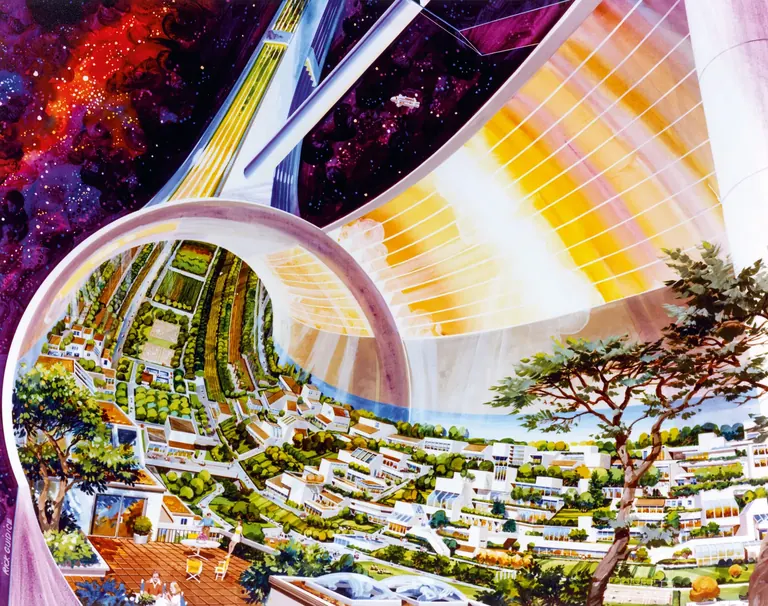
Rick Guidice's Torus Wheel Habitat, 1975
A NASA painting of a wheel-shaped space colony, cut away to show an interior that curves overhead as it spins to simulate gravity.
Good for
- Evening Visits
- Nerding Out
Skip if
You want a short visit: the LA Times called it sprawling, with close to 200 objects across four eras.
Free in the same building
- Chris Burden: Urban Light202 restored cast-iron street lamps from 1920s-30s Los Angeles, installed on Wilshire Blvd in 2008 and adopted as an unofficial symbol of the city.
- Michael Heizer: Levitated MassA 340-ton granite boulder perched over a 456-foot concrete slot you can walk beneath. Conceived 1969, realised 2012; outdoors on the campus.
Also at Los Angeles County Museum of Art (LACMA)
On now nearby

Nearby
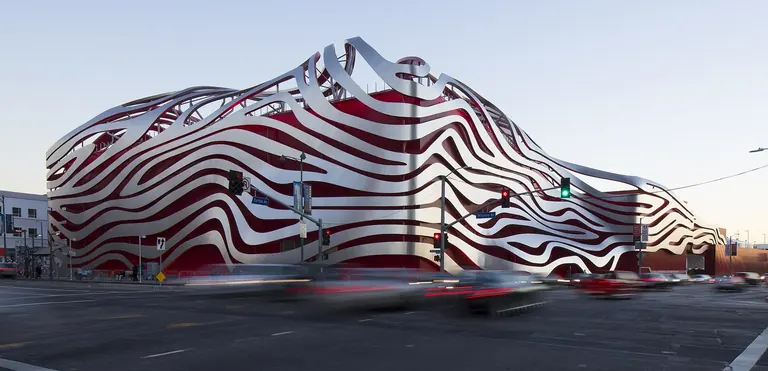
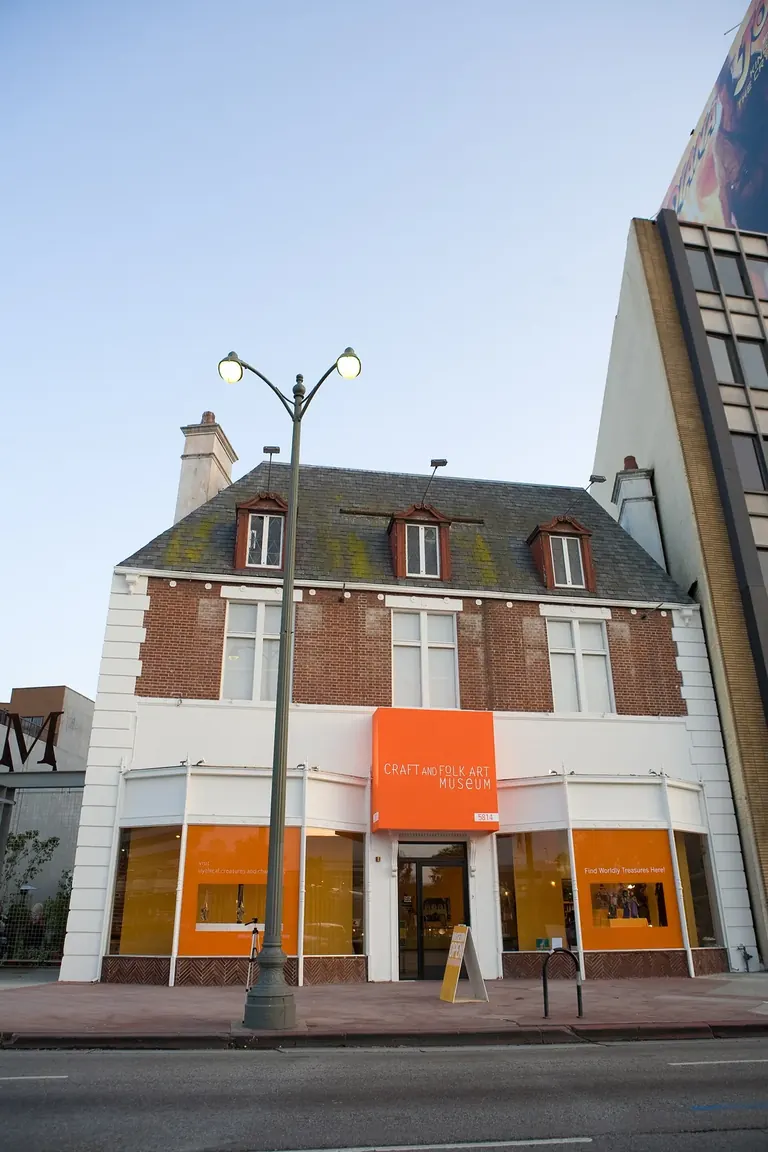
Image credits
8
- Home of the Future, 1925–1985: Designing Domestic UtopiasCourtesy of Los Angeles County Museum of Art (LACMA)
- Screenwriting: Takes on LA NoirCourtesy of Academy Museum of Motion Pictures
- Marilyn Monroe: Hollywood IconCourtesy of Academy Museum of Motion Pictures
- Studio Ghiblis PONYOCourtesy of Academy Museum of Motion Pictures
- Los Angeles County Museum of Art (LACMA)ArchEyes Magazine / Wikimedia Commons, CC BY 4.0
- Academy Museum of Motion PicturesDowntowngal / Wikimedia Commons, CC BY-SA 4.0
- Petersen Automotive MuseumDavid Zaitz / Wikimedia Commons, CC BY-SA 4.0
- Craft ContemporaryPaul Esposito / Wikimedia Commons, Public domain