 i
Los Angeles County Museum of Art (LACMA)Miracle Mile
Collecting Impressionism at LACMA
LACMA's own Impressionist holdings set among the prints, photography, decorative arts and fashion of late-19th-century France. Resnick Pavilion.
More in Los Angeles
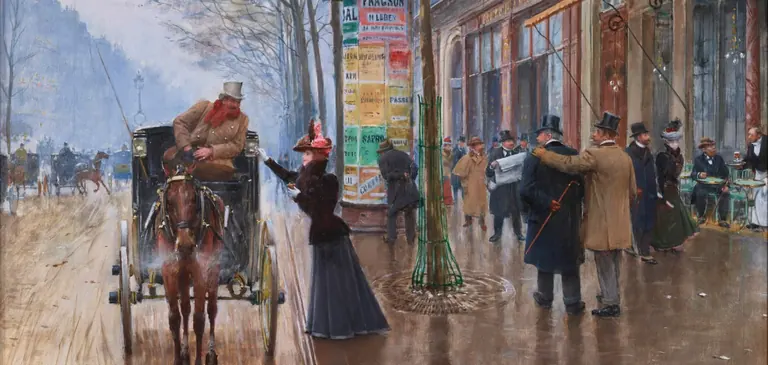
In Jean Béraud's boulevard scene, a fashionably dressed woman pays her cab driver on a damp Paris pavement while men in top hats chat behind her. The same show has Alfred Stieglitz's 1894 photograph A Wet Day on the Boulevards, Paris, which Apollo said looks remarkably like a Caillebotte.
More than 100 works are hung in the order they entered LACMA's collection, not by artist or style, so you walk through a century of the museum's taste. The 1929 gift of ten Hassams sits near the start. Hollywood follows: Pissarro's Paris square from the songwriter Buddy de Sylva, a Toulouse-Lautrec poster from Billy Wilder. The newest gifts, including the museum's first van Gogh, close it out, with prints, photographs and rotating dresses throughout.
Roborant Review called it an important exhibition. Expect labels about provenance and donors as much as brushwork. It's in the Resnick Pavilion, included with general admission ($30), and LACMA recommends a timed slot. Closed Wednesdays, open until 8pm Fridays.
Look for
Jean Béraud, A Parisian Street Scene: Boulevard des Capucines
Look for the woman in her finery paying off her cab driver, with top-hatted men socialising along the wet sidewalk behind her.
Camille Pissarro, La Place du Théâtre Français, 1898
Paris seen from above: pedestrians and horse-drawn carriages in quick, energetic brushstrokes, given in 1946 by Hollywood songwriter Buddy de Sylva.
Claude Monet, The Artist's Garden, Vétheuil, 1881
Monet's young son stands on the garden steps among multicoloured terraced plantings his father laid out himself, in sun-dappled shade.
Vincent van Gogh, Tarascon Stagecoach, 1888
LACMA's first van Gogh shows a battered Provençal coach from Daudet's comic novel Tartarin de Tarascon, painted in its run-down state.
F. Childe Hassam, Point Lobos, Carmel, 1914
Rocky cliffs and wind-bent cypresses on the northern California coast, part of the 1929 gift that started LACMA's Impressionist collection.
Good for
- Evening Visits
- First-Timers
- Nerding Out
Skip if
You want the story of Impressionism itself: it's hung by acquisition date, not by artist or style.
Free in the same building
- Chris Burden: Urban Light202 restored cast-iron street lamps from 1920s-30s Los Angeles, installed on Wilshire Blvd in 2008 and adopted as an unofficial symbol of the city.
- Michael Heizer: Levitated MassA 340-ton granite boulder perched over a 456-foot concrete slot you can walk beneath. Conceived 1969, realised 2012; outdoors on the campus.
Also at Los Angeles County Museum of Art (LACMA)
On now nearby

Nearby
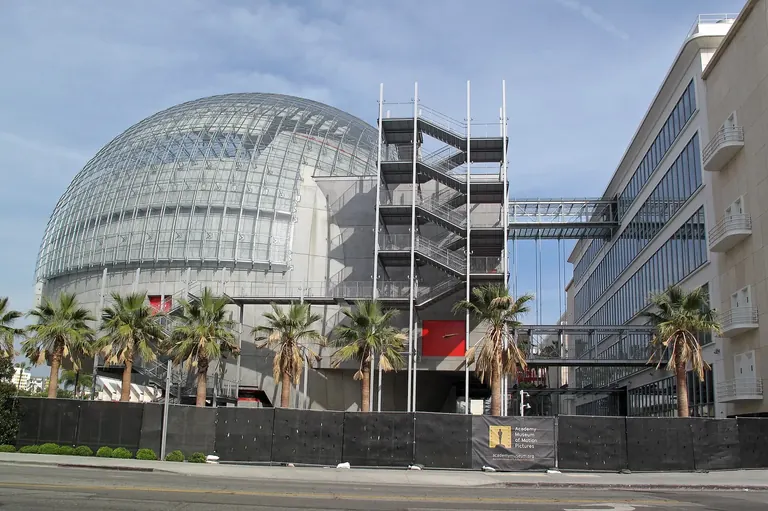
Image credits
8
- Collecting Impressionism at LACMAphoto © Museum Associates/LACMA
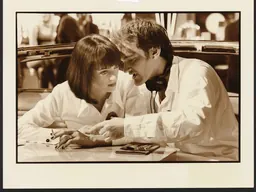
- Screenwriting: Takes on LA NoirCourtesy of Academy Museum of Motion Pictures
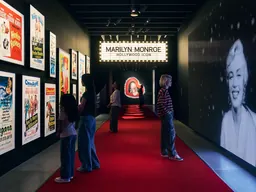
- Marilyn Monroe: Hollywood IconCourtesy of Academy Museum of Motion Pictures
- Studio Ghiblis PONYOCourtesy of Academy Museum of Motion Pictures
- Los Angeles County Museum of Art (LACMA)ArchEyes Magazine / Wikimedia Commons, CC BY 4.0
- Academy Museum of Motion PicturesDowntowngal / Wikimedia Commons, CC BY-SA 4.0
- Petersen Automotive MuseumDavid Zaitz / Wikimedia Commons, CC BY-SA 4.0
- Craft ContemporaryPaul Esposito / Wikimedia Commons, Public domain