 i
The Workers Museum (Arbejdermuseet)Indre By
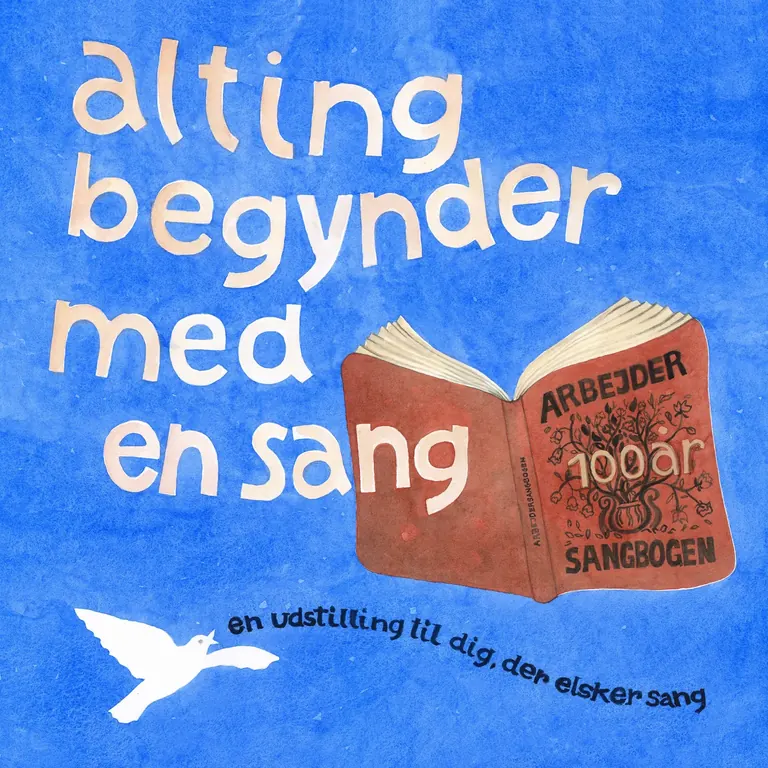
All Things Begin with a Song
Marks 100 years of the red Workers' Songbook, showing how singing mobilised Danish workers, from union meetings and parades to factory floors and song clubs.
More in Copenhagen
The first red songbook started as scissors and paste. Its 1926 manuscript is here, with editor Oluf Bertolt's lyrics cut into strips, shuffled around and annotated in looping pencil. Netavisen Pio's reviewer wrote that it almost gives you chills.
Around it, the show follows a century of singing as protest. You get about 50 of the 750 songbooks in the labour movement's archive, a tally of who got songs into the book (poet Jeppe Aakjær leads with 28), and a section of strike songs, from Esbjerg bus drivers to the women painters at the Royal Porcelain Factory. The 1946 edition dropped the verse of "Snart dages det brødre" that attacked priests, so for the full text you still need the blue folk high school songbook.
Politiken gave it four hearts. The catch, as Arbejderen noted, is the modest space. It's included in the museum ticket (DKK 135, under-18s free), and Thursdays run until 20:00.
Look for
The 1926 manuscript
Look for editor Oluf Bertolt's draft of the first songbook, lyrics snipped apart, rearranged and marked up in his curving pencil hand.
Fifty songbooks
About 50 of the 750 songbooks, large and small, held by the labour movement's library and archive, showing how much people wanted to sing.
Nina Ferlov's wall hanging
A large textile carrying the words of "Vi vil se land uden bunkers og kanoner", hung near the cover of the songbook "Revolutionære Sange".
The strike songs
Songs from the Ribus bus drivers' strike in Esbjerg, the typographers' strike at Politiken and the women porcelain workers at the Royal Porcelain Factory.
The songwriter tally
A count of who has had songs in the red book and how many, with poet Jeppe Aakjær on top at 28.
Good for
- Evening Visits
- Locals Who've Seen It All
- Nerding Out
Skip if
You want a big show: Arbejderen notes it fits into a modest space.
With kids
Under-18s get into the museum free, and this show is included in the ticket.
Also at The Workers Museum (Arbejdermuseet)
On now nearby
Nearby
Image credits
9
- All Things Begin with a SongCourtesy of The Workers Museum (Arbejdermuseet)
- Couples Therapy – Society on the couchCourtesy of SMK – National Gallery of Denmark
- The Modern Breakthrough: Masterpieces from the Museum's CollectionVilhelm Hammershøi / Wikimedia Commons, Public domain
- The Funen Painters. Art Above All!Fritz Syberg / Wikimedia Commons, Public domain
- The Workers Museum (Arbejdermuseet)Sothback / Wikimedia Commons, CC BY-SA 4.0
- Rosenborg CastleFalk2 / Wikimedia Commons, CC BY-SA 4.0
- Natural History Museum of DenmarkOrigins DK / Wikimedia Commons, CC BY-SA 4.0
- SMK – National Gallery of DenmarkJiří Komárek / Wikimedia Commons, CC BY-SA 4.0
- The Hirschsprung CollectionDaderot / Wikimedia Commons, CC0