 i
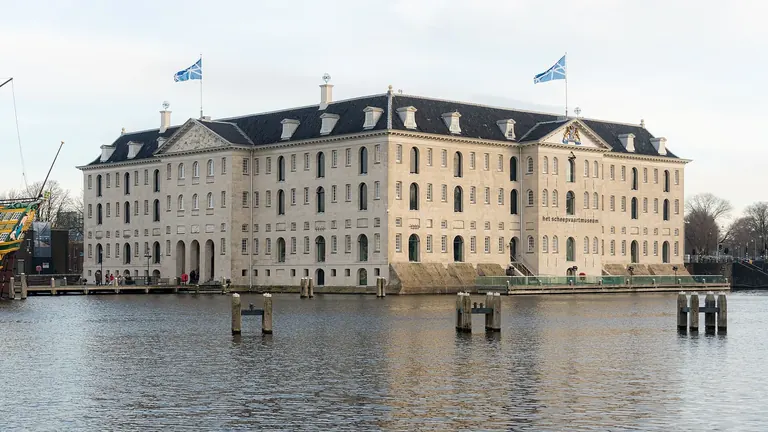
Het Scheepvaartmuseum
The National Maritime Museum occupies 's Lands Zeemagazijn, the vast 1656 naval storehouse designed by Daniel Stalpaert on Amsterdam's Eastern Islands. Its galleries hold one of the world's richest maritime collections: Golden Age sea paintings, Blaeu atlases and nautical charts, navigation instruments, the gilded Royal Barge and ornate ship decorations. Outside, a sailable replica of the 18th-century East Indiaman Amsterdam and the 1900 steamship Christiaan Brunings are moored alongside. Recent displays confront the colonial and slave-trading side of that seafaring history head-on.
More in Amsterdam
What's On
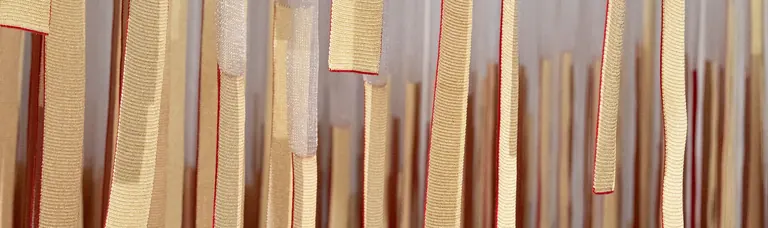
Vincent Ruijters - Crimson Gilt
An installation of more than a thousand knitted strips in gold and crimson conjures the ghost of the East Indiaman Amsterdam: gold for trade and prosperity, red for colonialism and exploitation.
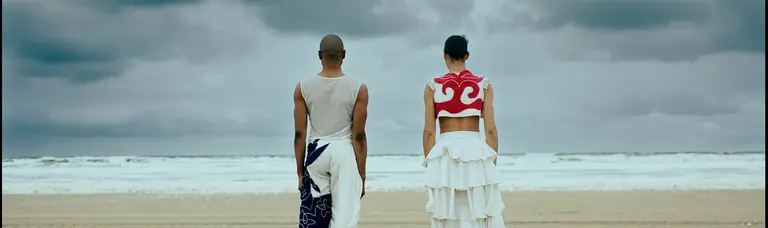
Atlantic Window IV: Sedrig Verwoert
Choreographer Sedrig Verwoert traces dance in the diaspora, pairing a travelogue of his research into Winti, Kawina and Tambu in Suriname and Curacao with the dance film Strange Fruit 2.0.
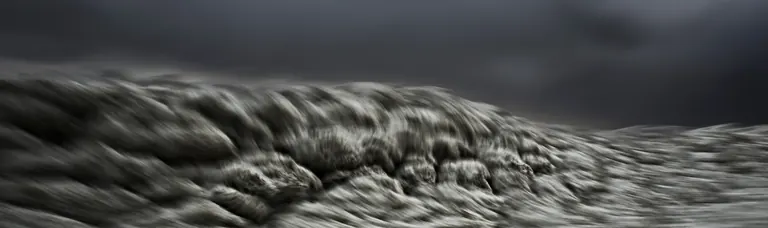
Stephan Vanfleteren - Transcripts of a Sea
Five years of photographing the coastline from northern France to the southern Netherlands: Vanfleteren's sea shifts room by room from glassy calm through misty drift to storm.
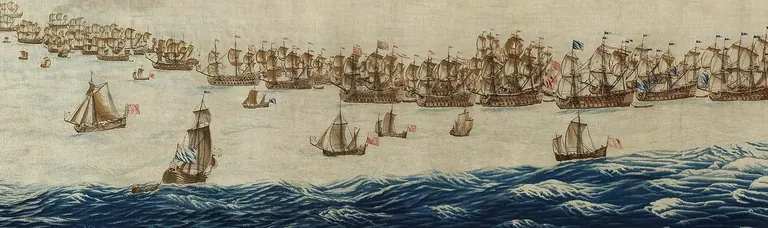
The Solebay Tapestries
Two monumental royally commissioned tapestries designed by Willem van de Velde the Elder, woven at Mortlake and showing the 1672 Battle of Solebay. The largest acquisition in the museum's history.
Permanent Collections
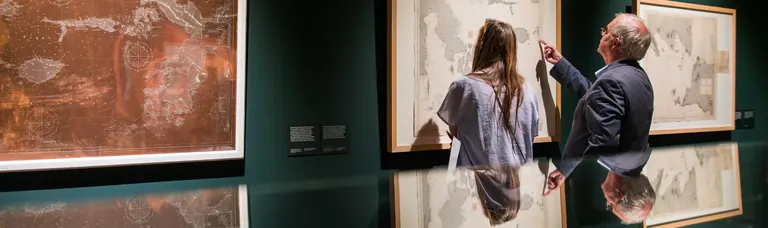
Charting the Sea
Why map the sea, and how? A cartography gallery tracing the Dutch nautical chart alongside maritime atlases and survey instruments from the museum's collection.
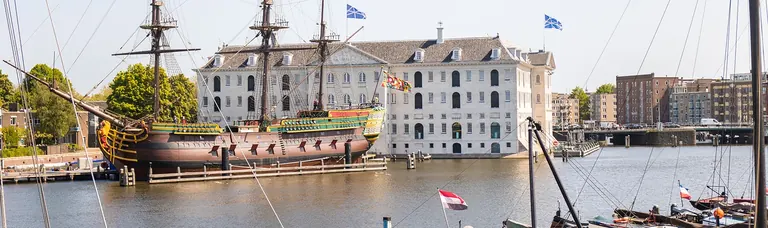
East Indiaman Amsterdam
A full-size replica of the 18th-century Dutch East India Company ship Amsterdam, moored beside the museum. Climb the decks, lie in the hammocks and visit the captain's cabin.
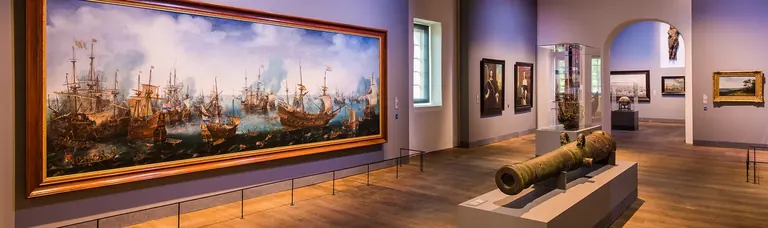
Republic at Sea
The museum's main gallery: over fifty masterpieces telling how the Dutch Republic became a maritime power through trade and war in the 17th and 18th centuries.
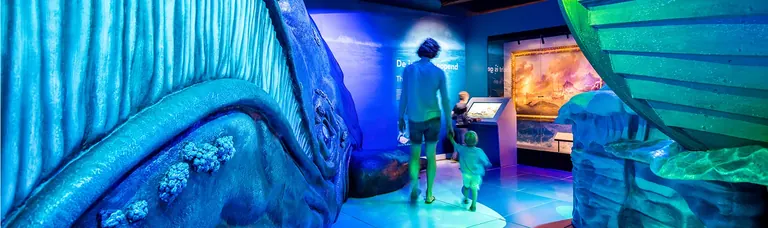
The Tale of the Whale
An interactive exhibition for children 6+ on whales and whaling, from hunted beast to endangered species. You enter through a bowhead whale's open mouth.
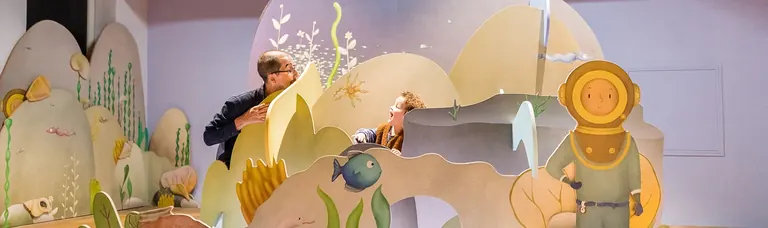
Doris the Diver
A narrative, hands-on exhibition for children aged 2 and up: help Doris the Diver find the lost lighthouse lamp on a quest from sea to land.
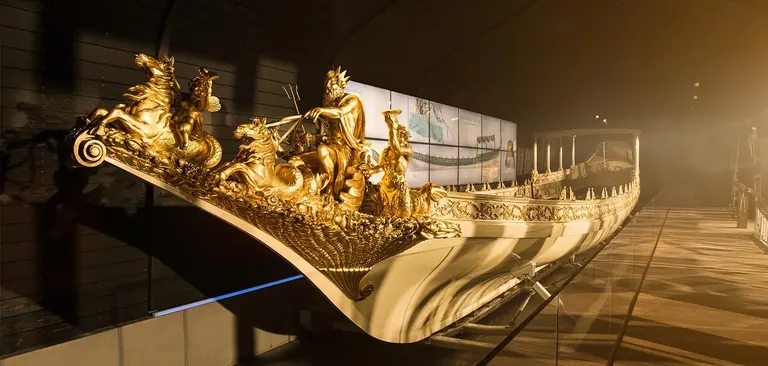
The Royal Barge
The gilded rowing barge King William I commissioned 200 years ago, shown with a presentation on the barge and its boathouse. Closed for maintenance until 10 November.
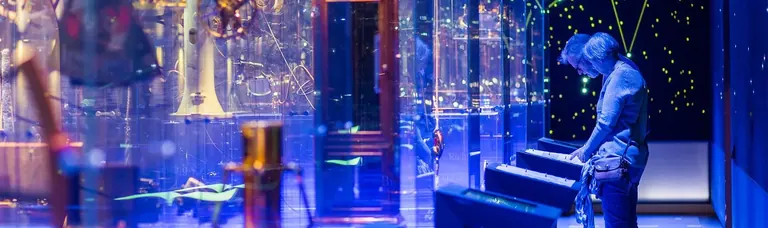
The Navigational Instruments
Astrolabes, cross-staffs, octants and sextants under a starry sky in the east wing: how sailors found their way by sun, moon and stars until the 20th century.
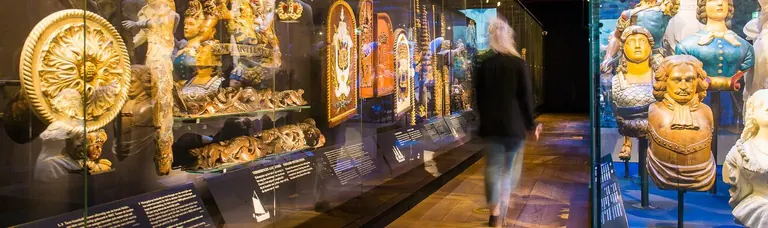
The Ship Decorations
Carved figureheads, rudderheads, mast shields and painted ornaments in the east wing, showing the symbolism and craftsmanship of decorated ships.
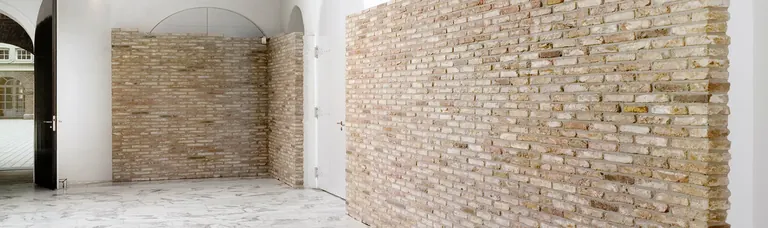
Bringing Back the Ballast, by Nathan Coley
Nathan Coley's wall of 6,000 ballast bricks, gathered in 2011 from former VOC and WIC ports, gives shape to the weight of Dutch colonial history.

Shadows on the Atlantic
Colonial history seen from both sea and shore: 17th- and 18th-century paintings and ship models set against contemporary art, video and personal stories about slavery's legacy.
Plan Your Visit
Getting there
Kattenburgerplein 1, 1018 KK Amsterdam, Netherlands
Nearest station: Kadijksplein (tram 14, bus 22/48), Amsterdam Centraal station and Muiderpoort / IJtunnel bus stops
Show on mapHours
| Mon | 10:00–17:00 |
| Tue | 10:00–17:00 |
| Wed | 10:00–17:00 |
| Thu | 10:00–17:00 |
| Fri | 10:00–17:00 |
| SatToday | 10:00–17:00 |
| Sun | 10:00–17:00 |
Admission
From €20
Children 5-17 and students EUR 8.50; under 5 free; free with Museumkaart, ICOM, I amsterdam City Card and Rembrandt Society.
Last verified
Nearby
Visitor Information
- How much does Het Scheepvaartmuseum cost?
- Standard adult admission to Het Scheepvaartmuseum is €20. Children 5-17 and students EUR 8.50; under 5 free; free with Museumkaart, ICOM, I amsterdam City Card and Rembrandt Society.. Prices for special exhibitions and timed-entry slots may differ.
- What are the opening hours of Het Scheepvaartmuseum?
- Het Scheepvaartmuseum is open Open daily 10:00-17:00. Closed 25 December, 1 January and King's Day (27 April). Library open Monday to Friday 10:00-17:00.. Holiday hours can vary, so check the museum's website before you go.
- Where is Het Scheepvaartmuseum?
- Het Scheepvaartmuseum is located at Kattenburgerplein 1, 1018 KK Amsterdam, Netherlands, in the Oostelijke Eilanden area of Amsterdam. The nearest stations are Kadijksplein (tram 14, bus 22/48), Amsterdam Centraal station and Muiderpoort / IJtunnel bus stops.
- What can I see at Het Scheepvaartmuseum?
- Holland's seafaring saga in a 1656 naval storehouse, with a full-size VOC ship moored at the quay. Current highlights include Charting the Sea, East Indiaman Amsterdam and Vincent Ruijters - Crimson Gilt.
- Do I need to book Het Scheepvaartmuseum in advance?
- Booking ahead is recommended, especially for weekends, school holidays, and special exhibitions. Tickets are normally on the museum's website, and a pre-booked timed slot helps you avoid queues at the entrance.
- When is the best time to visit Het Scheepvaartmuseum?
- Weekday mornings shortly after opening are typically the quietest, especially mid-week. Late afternoons can also be calmer. Weekends, school holidays, and the lunch rush are the busiest periods.
Image credits
19
- Het ScheepvaartmuseumFernando via Wikimedia Commons, CC BY-SA 4.0
- Charting the SeaCourtesy of Het Scheepvaartmuseum
- East Indiaman AmsterdamCourtesy of Het Scheepvaartmuseum
- Vincent Ruijters - Crimson GiltTwycer
- Republic at SeaCourtesy of Het Scheepvaartmuseum
- The Tale of the WhaleCourtesy of Het Scheepvaartmuseum
- Doris the DiverCourtesy of Het Scheepvaartmuseum
- The Royal BargeCourtesy of Het Scheepvaartmuseum
- The Navigational InstrumentsCourtesy of Het Scheepvaartmuseum
- The Ship DecorationsCourtesy of Het Scheepvaartmuseum
- Bringing Back the Ballast, by Nathan ColeyCourtesy of Het Scheepvaartmuseum
- The Solebay TapestriesCourtesy of Het Scheepvaartmuseum
- Atlantic Window IV: Sedrig VerwoertPhoto: Sedrig Verwoert
- Stephan Vanfleteren - Transcripts of a SeaCourtesy of Het Scheepvaartmuseum
- Shadows on the AtlanticCourtesy of Het Scheepvaartmuseum
- NEMO Science MuseumElekes Andor, via Wikimedia Commons, CC BY-SA 4.0
- Verzetsmuseum Amsterdam (Dutch Resistance Museum)A. Bakker / Wikimedia Commons, CC BY 3.0
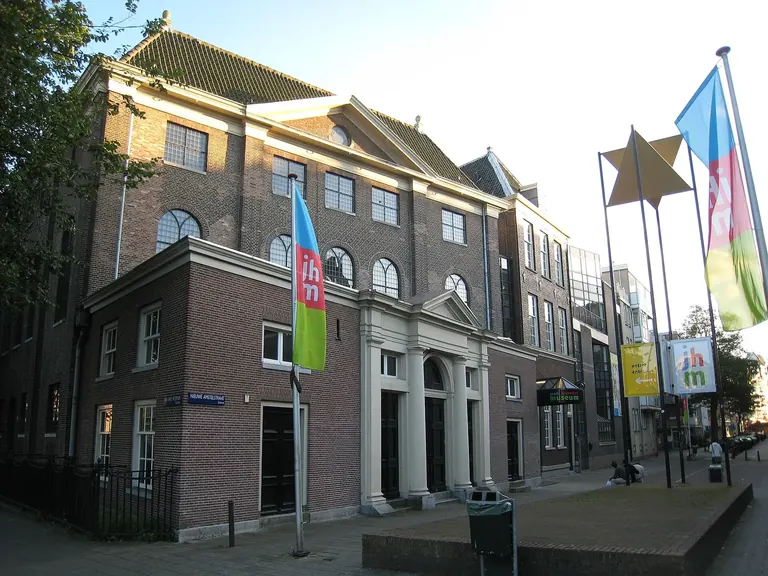
- Joods Museum (Jewish Museum, Jewish Cultural Quarter)S Sepp / Wikimedia Commons, CC BY-SA 3.0
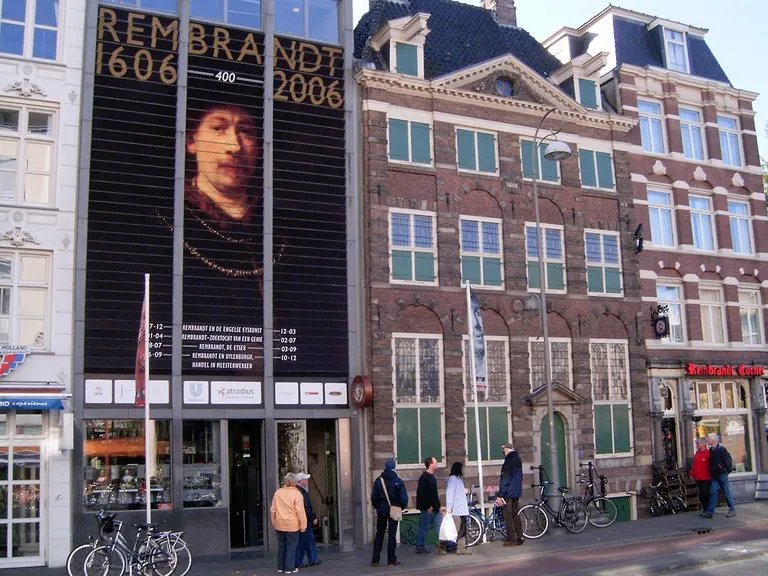
- Rembrandt House Museum14:43, 17 October 2006 / Wikimedia Commons, CC BY-SA 3.0