 i
H'ART MuseumAmstel / Plantage
The Land of Chocolate Sprinkles. Building a new world together
Congolese collective CATPC shows 30 sculptures cast in cacao, palm oil and sugar, plus embroideries on cacao sacks, funding the buy-back of exhausted plantation land.
More in Amsterdam
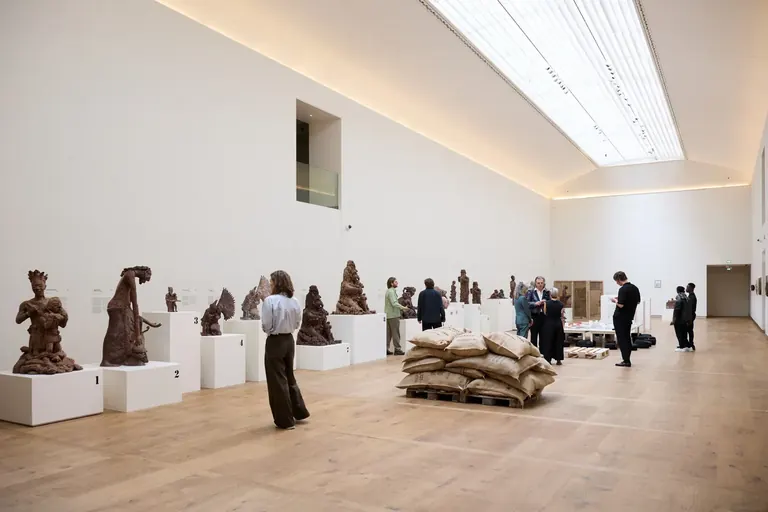
A tall missionary and a small plantation worker hold an open Bible between them, their middle fingers almost touching. Ced'art Tamasala made it about his grandfather, and like the other 29 sculptures here it is cast in cacao, palm oil and sugar.
CATPC is a collective of plantation workers from Lusanga, a former Unilever plantation town in Congo. Each piece starts as clay from exhausted plantation soil, then is 3D-scanned and cast. You walk the numbered sculptures by 23 artists through the main hall, past a long wall of faces stitched onto cacao sacks, with films in side rooms. At the centre is a kinzonzi, a Congolese meeting table where workshop visitors model clay figures. Sales have bought back 395 hectares of plantation land.
Art's Talk called it "a wondrous step towards a future worth fighting for". Three sculptures about sexual violence stand behind a screen, so you can choose whether to look. Under-18s go free, it's open daily 10:00 to 17:00, and it closes 8 November.
Editor's pick
Thirty sculptures by the Congolese collective CATPC, cast in cacao, palm oil and sugar, plus embroideries on cacao sacks. The project funds the buy-back of exhausted plantation land.
Look for
How My Grandfather Survived, by Ced'art Tamasala
A tall missionary and a small plantation worker hold an open Bible together, their middle fingers almost touching.
Couple of Equality, by Mbuku Kimpala (2021)
Look for the winged figure with two heads, a pair of equal partners, which also stood in the Venice Biennale.
A Person is What the Head Is, by Matthieu Kasiama (2015)
The artist's self-portrait as thinker and maker, by a former plantation worker whose art sales paid for his wife's operation.
The embroidery wall
Hand-stitched faces of resistance fighters and plantation workers from Haiti, Suriname, Indonesia, Ghana and Congo run along a wall of burlap cacao sacks.
The kinzonzi
A Congolese meeting table at the centre, under a mural mapping the global economy, with empty plinths waiting for visitors' clay sculptures.
Good for
- Locals Who've Seen It All
- Nerding Out
Skip if
You want a light outing: several works deal with colonial violence, including sexual violence.
With kids
Under-18s enter free. Three sculptures about sexual violence stand behind a screen, so you can steer younger children past them.
Also at H'ART Museum
On now nearby
Nearby
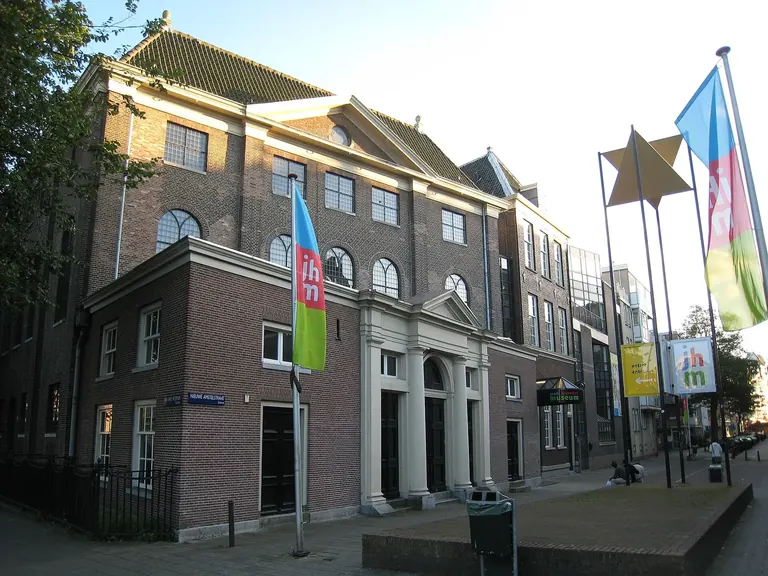
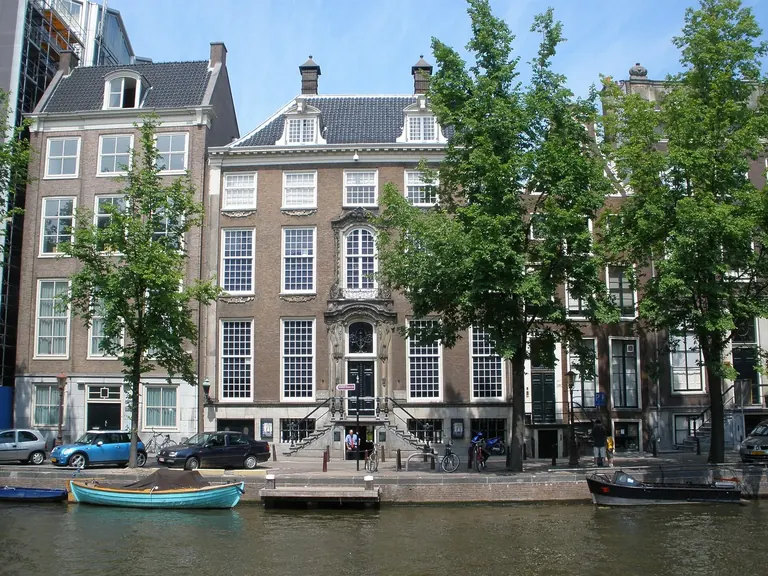
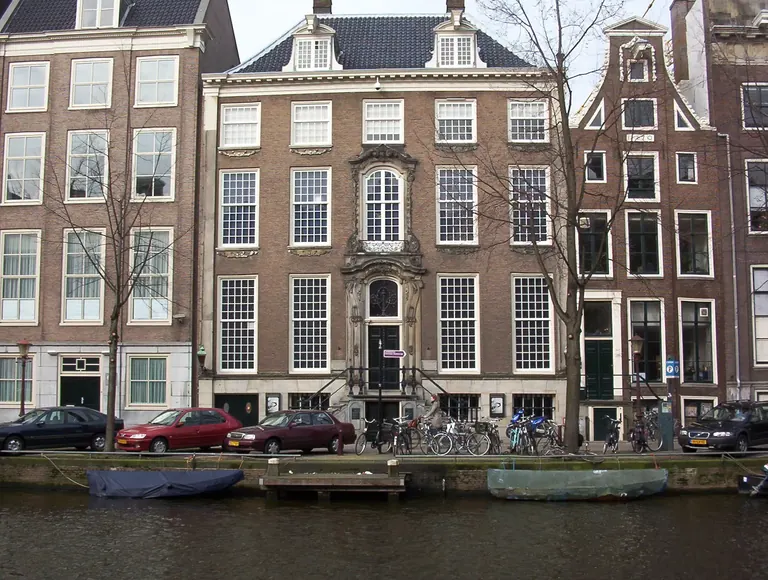
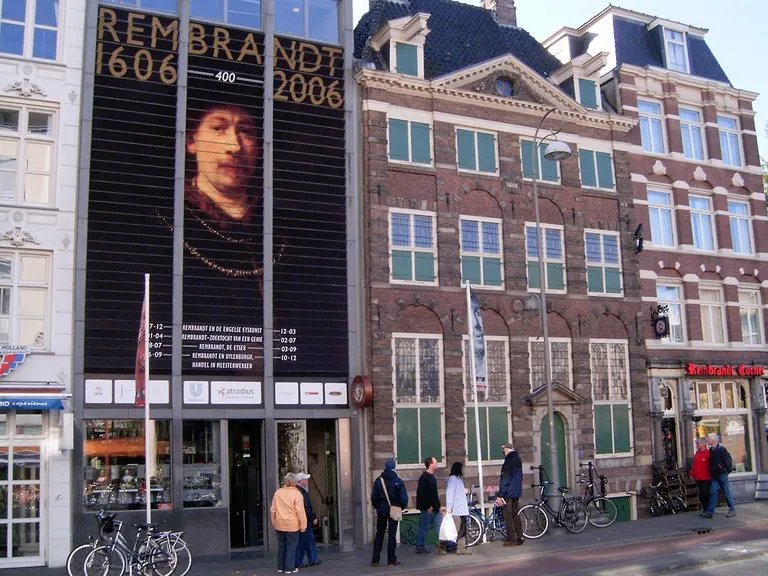
Image credits
9
- The Land of Chocolate Sprinkles. Building a new world togetherCourtesy of H'ART Museum
- Abracadabra: Mysteries from Houdini to Hans KlokJeroen Bont
- Recent Additions to the Collection in the Art GalleryCourtesy of Joods Museum (Jewish Museum, Jewish Cultural Quarter)
- Plantation along the CanalCourtesy of Amsterdam Museum
- H'ART MuseumFentener van Vlissingen, via Wikimedia Commons, CC BY-SA 3.0
- Joods Museum (Jewish Museum, Jewish Cultural Quarter)S Sepp / Wikimedia Commons, CC BY-SA 3.0
- Amsterdam MuseumJvhertum, Public domain
- Museum Willet-HolthuysenJane023 / Wikimedia Commons, Public domain
- Rembrandt House Museum14:43, 17 October 2006 / Wikimedia Commons, CC BY-SA 3.0