 i
National Museum of Natural HistoryNational Mall
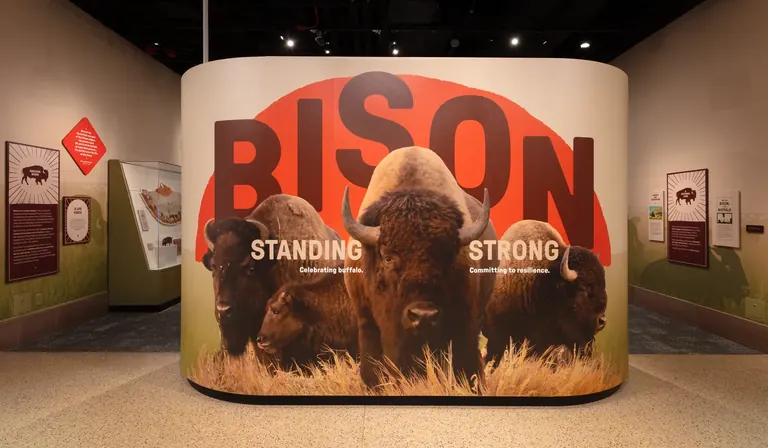
Bison: Standing Strong
America's national mammal, from 100,000 years of shaping the prairie to near-extinction and recovery. A six-foot bull bison, an ancient bison skull and a North American prairie soundscape.
More in Washington, DC
Junior's horns span more than six feet. He was a Bison latifrons, an extinct relative that lived alongside mammoths, and his skull is on loan from the Idaho Natural History Museum. Before him, you walk in to a full-size mounted bull bison, standing on ground marked with the range his species once covered.
The first room runs from ice-age ancestors to Indigenous life with the animal: a 12,000-year-old vertebra pierced by a projectile point, a tipi model decorated with buffalo, hide tools, and videos of Native community members. The second covers the collapse to fewer than a thousand animals and the comeback. Curator Siobhan Starrs notes the bison is on Howard's and Gallaudet's logos, so if you studied at either, you've worn this show on a hoodie for years.
It's free with no ticket, on the second floor, open daily 10am to 5:30pm until May 2029. You can touch replica bones and a model buffalo chip, the dung that feeds the prairie.
Look for
Junior, the Bison latifrons skull
Look for the skull of an extinct ice-age bison whose horns stretch more than six feet from tip to tip, lent by the Idaho Natural History Museum.
The mounted bull bison
A full-size taxidermied bull greets you at the entrance, standing on ground that maps where bison once ranged.
The pierced vertebra
A 12,000-year-old bison vertebra with a projectile point driven into it, from one of the earliest encounters between people and bison.
The wall of skulls
A towering photograph of buffalo skulls piled high in Michigan in the late 1800s shows the scale of the slaughter.
The buffalo chip
A lifelike model of bison dung that you are allowed to touch, there to show how herds fertilise the prairie.
Good for
- Cheap Culture
- Nerding Out
- Rainy Days
With kids
Kids can touch replica bison bones and a lifelike model of a buffalo chip (bison dung). Entry is free and needs no ticket.
Also at National Museum of Natural History
On now nearby

Nearby
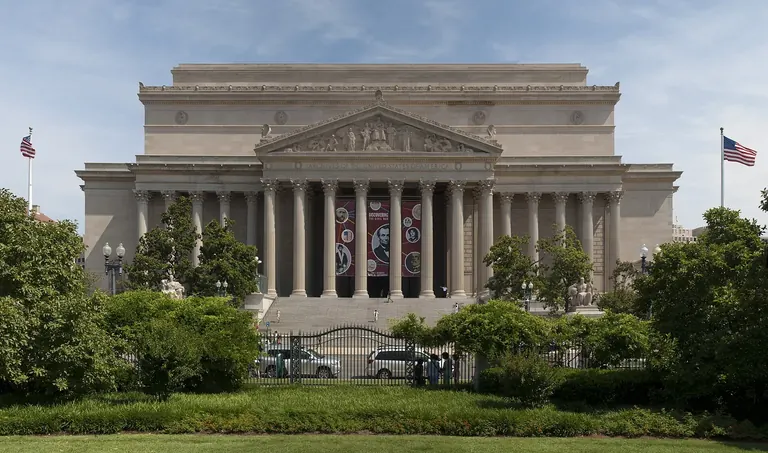
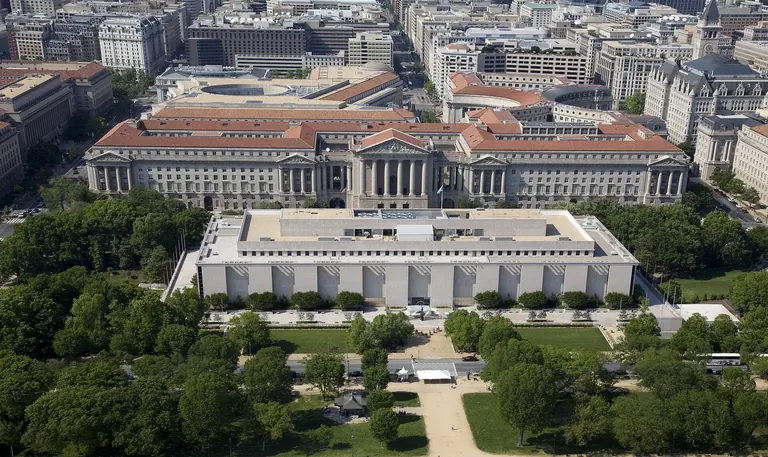
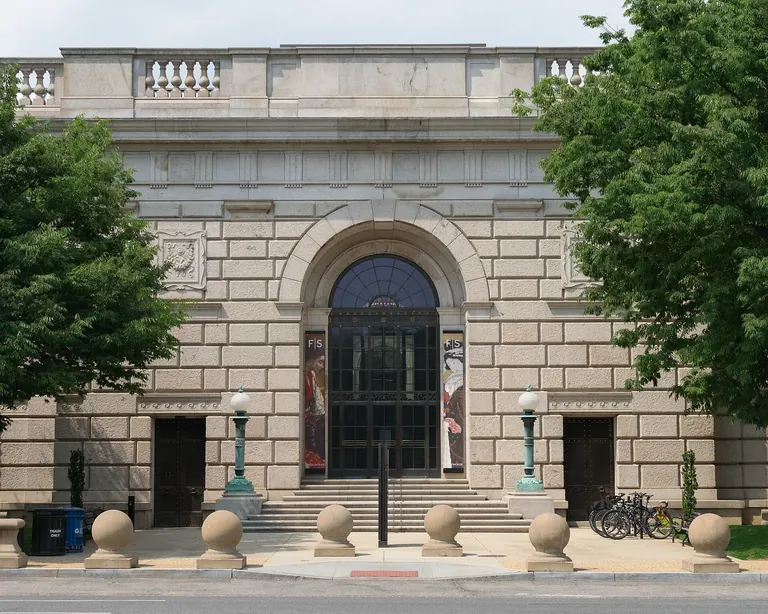
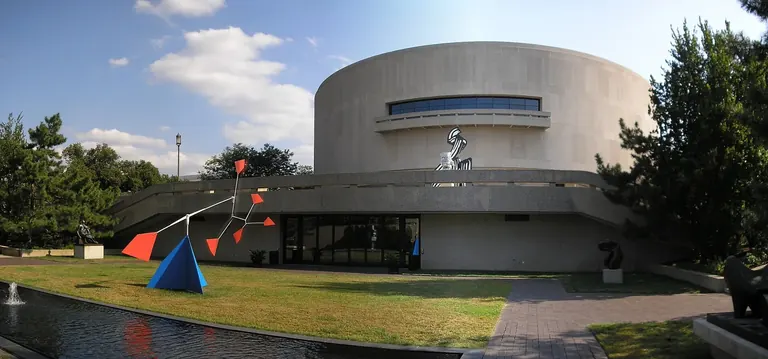
Image credits
9
- Bison: Standing StrongCourtesy of National Museum of Natural History
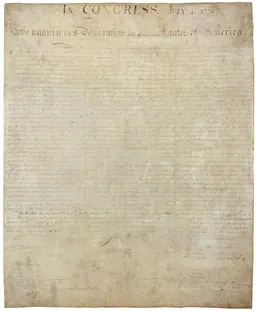
- Free and Independent: A Celebration of the DeclarationCourtesy of National Archives Museum
- In Pursuit of Life, Liberty, and HappinessCourtesy of National Museum of American History
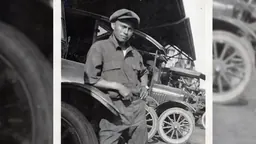
- How Can You Forget Me: Filipino American StoriesCourtesy of National Museum of American History
- National Museum of Natural Historyajay_suresh via Wikimedia Commons, CC BY 4.0
- National Archives MuseumDavid Samuel (Hellodavey1902) via Wikimedia Commons, CC BY-SA 3.0
- National Museum of American HistoryCarol M. Highsmith / Wikimedia Commons, Public domain
- National Museum of Asian ArtDifference engine, via Wikimedia Commons, CC BY-SA 4.0
- Hirshhorn Museum and Sculpture GardenGryffindor, via Wikimedia Commons, Public domain