 i
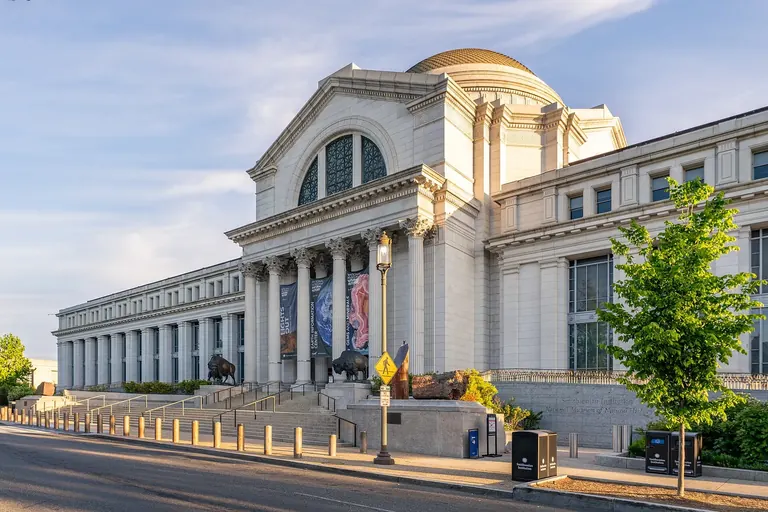
National Museum of Natural History
Opened in 1910 as the first Smithsonian building raised purely for the national collections, this Beaux-Arts landmark on the National Mall holds more than 148 million specimens and artifacts across seven research departments. Visitors pass Henry the African bush elephant in the domed rotunda on their way to the Hope Diamond, a Tyrannosaurus locked in combat with a Triceratops, a 45-foot right whale and 274 mounted mammals. Behind the galleries, several hundred scientists study everything from meteorites to human origins. Admission is free and no ticket is required.
More in Washington, DC
What's On
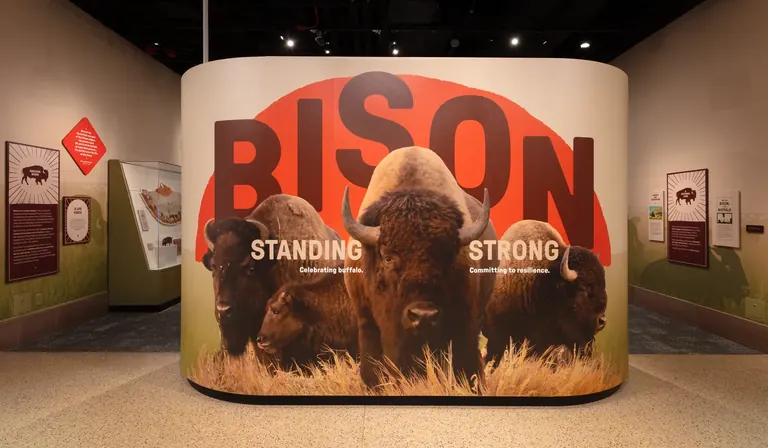
Bison: Standing Strong
America's national mammal, from 100,000 years of shaping the prairie to near-extinction and recovery. A six-foot bull bison, an ancient bison skull and a North American prairie soundscape.
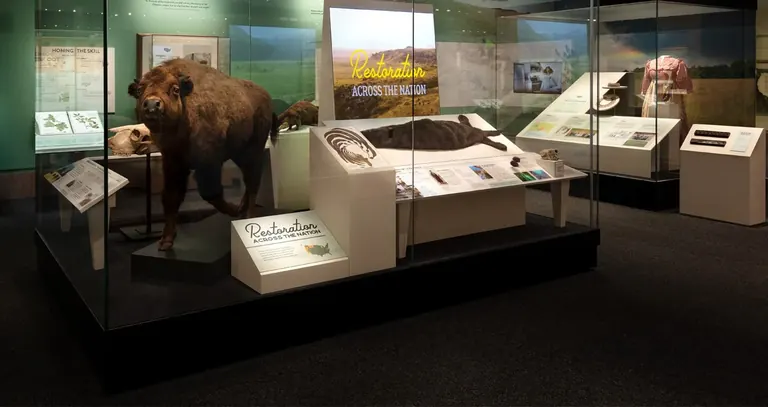
From These Lands: Sharing Our Natural and Cultural Heritage
More than 600 specimens and cultural belongings from all 50 states, DC and five US territories — fossils, minerals and treasures chosen to represent every corner of the country.
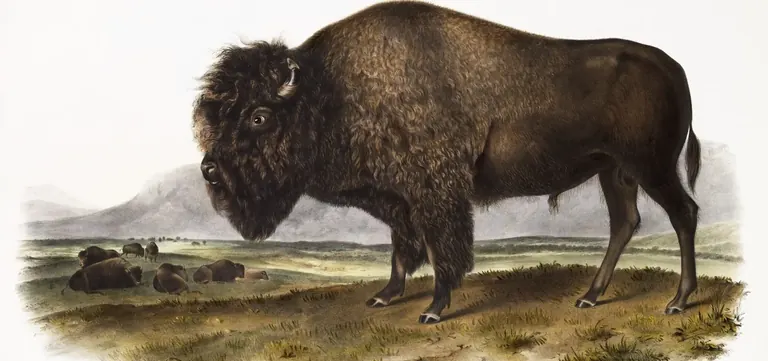
Imagining Bison
Paintings, photographs and sculpture showing how bison came to embody wildness, resilience and the American West. On the Ground Floor, on view until summer 2027.
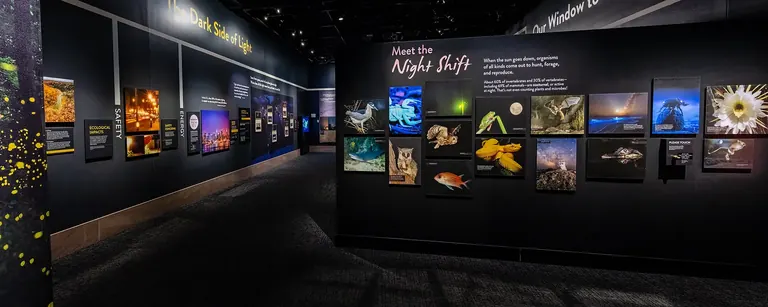
Lights Out: Recovering Our Night Sky
The vanishing dark: the moon, a field of stars and the Milky Way, how light pollution disrupts nocturnal animals, and what communities are doing to win the night back. Closes December 2026.

Cellphone: Unseen Connections
What is actually inside your phone. A 3-D periodic table of its elements, the people and infrastructure behind the network, and a graphic-novel mural on how teens live through their screens.
Permanent Collections
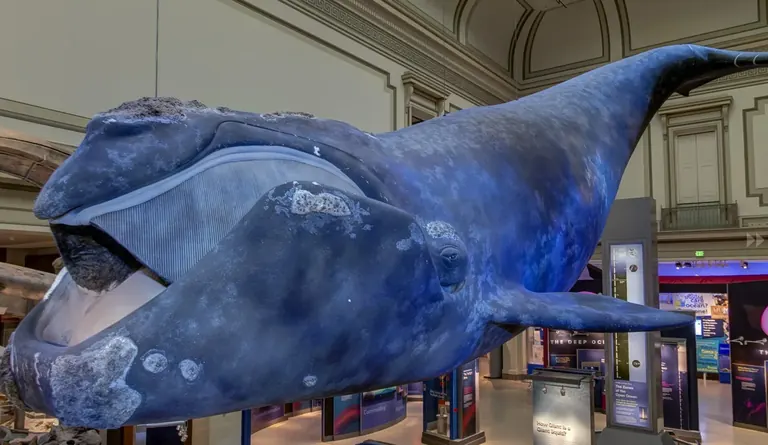
Sant Ocean Hall
The ocean from sunlit shallows to the dark sea floor: 600-plus specimens, a life-sized model of the right whale Phoenix, walking whale ancestors and the fossil jaws of C. megalodon.
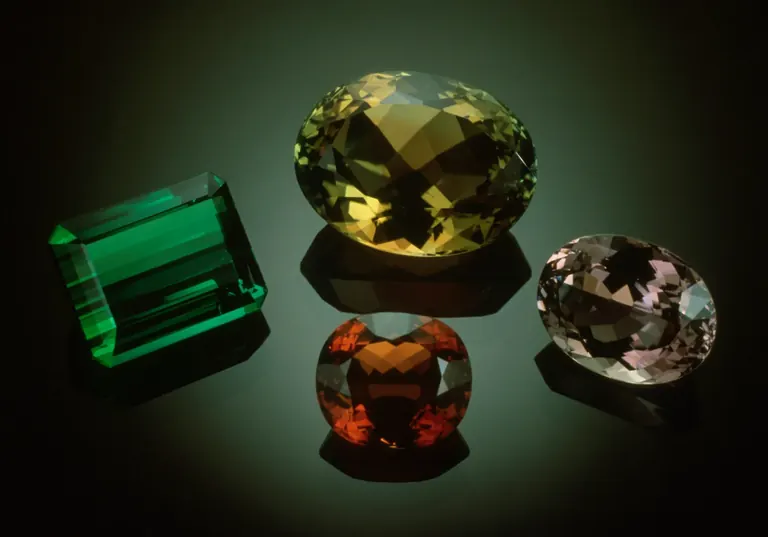
Janet Annenberg Hooker Hall of Geology, Gems, and Minerals
Home of the Hope Diamond — 45.5 carats of deep blue on a rotating pedestal — alongside some 2,500 gems, crystals and minerals drawn from one of the world's largest collections.
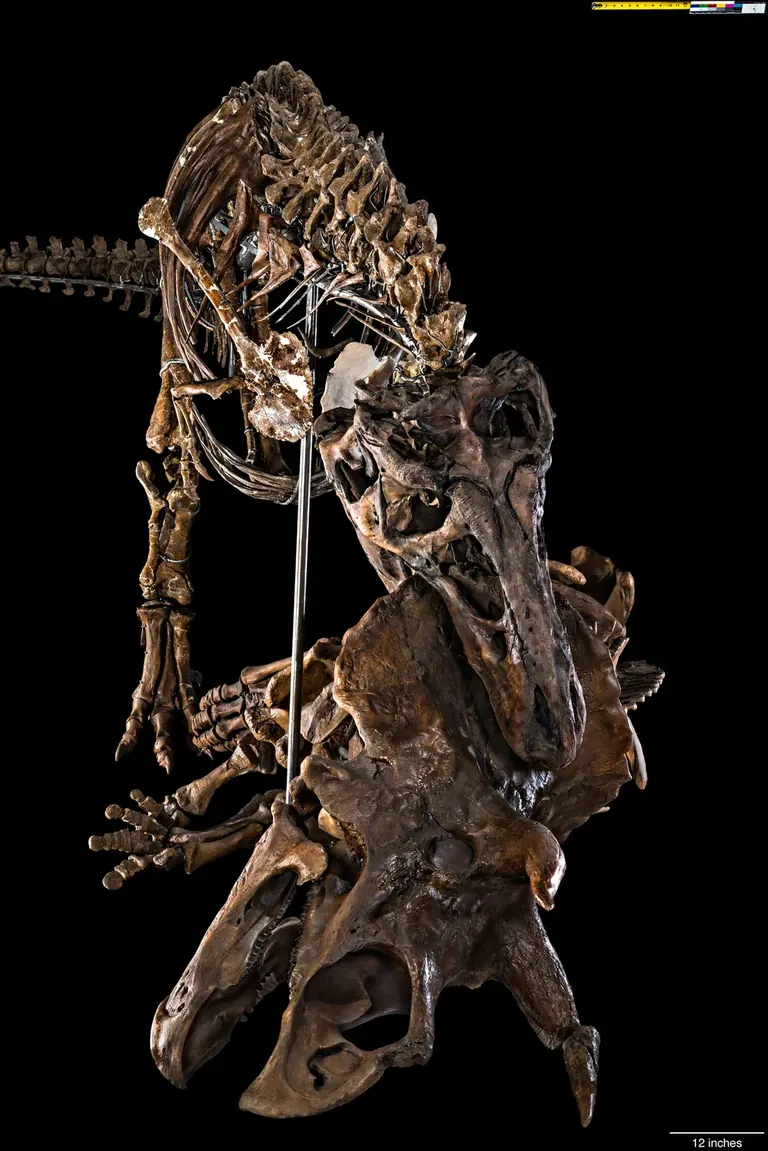
David H. Koch Hall of Fossils — Deep Time
31,000 square feet and 3.7 billion years, from the first life to the woolly mammoth. Some 700 fossils, including a Tyrannosaurus locked in a fight to the death with a Triceratops.
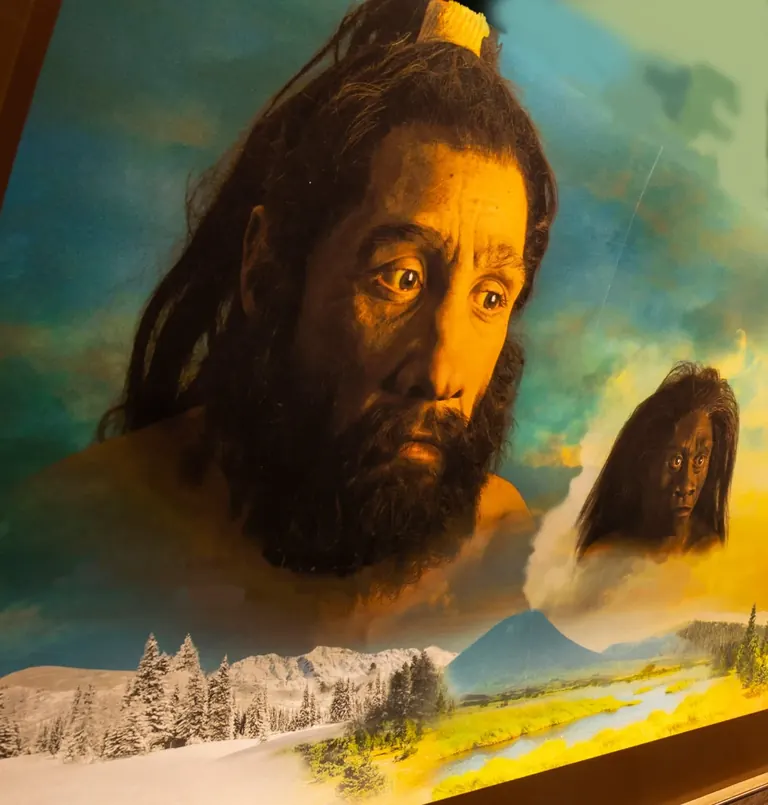
David H. Koch Hall of Human Origins
Six million years of human evolution, told through more than 75 exact replicas of the most complete early human skulls ever found, plus reconstructed faces of your closest extinct relatives.
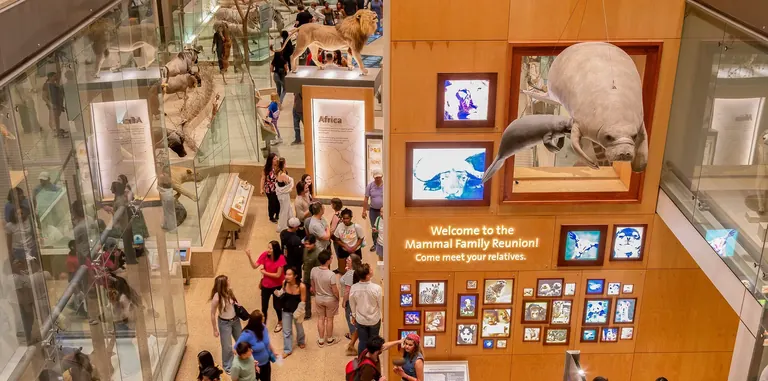
Kenneth E. Behring Family Hall of Mammals
274 mounted mammals and dozens of fossils staged in habitats from every continent — a leaping tiger, a pink fairy armadillo, a South American kinkajou.
Plan Your Visit
Getting there
10th St. & Constitution Ave. NW, Washington, DC 20560, United States
Nearest station: Federal Triangle (Metro Blue/Orange/Silver), Archives–Navy Memorial–Penn Quarter (Metro Green/Yellow) and Smithsonian (Metro Blue/Orange/Silver)
Show on mapHours
| Mon | 10:00–17:30 |
| Tue | 10:00–17:30 |
| Wed | 10:00–17:30 |
| Thu | 10:00–17:30 |
| Fri | 10:00–17:30 |
| SatToday | 10:00–17:30 |
| Sun | 10:00–17:30 |
Admission
Free
Admission is free and no passes or tickets are required.
Last verified
Nearby
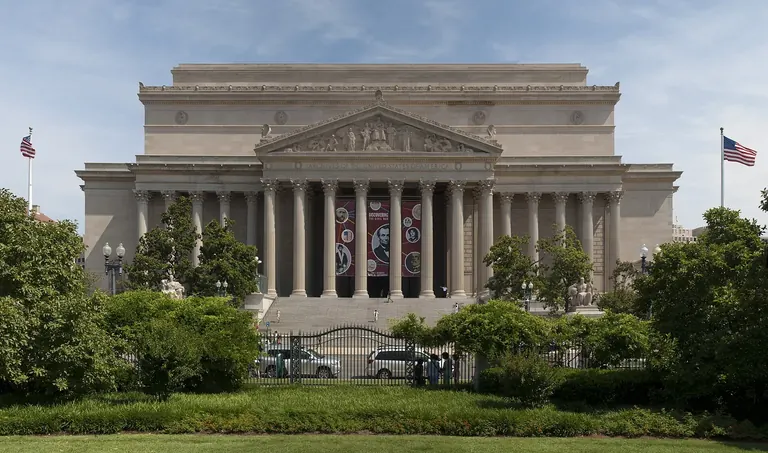
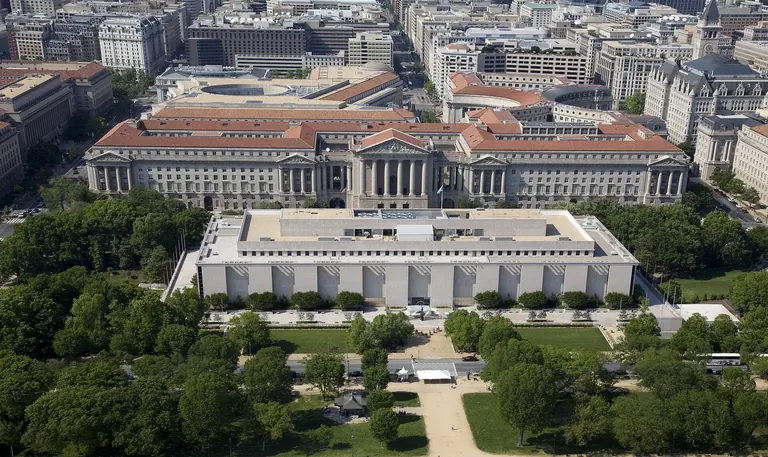
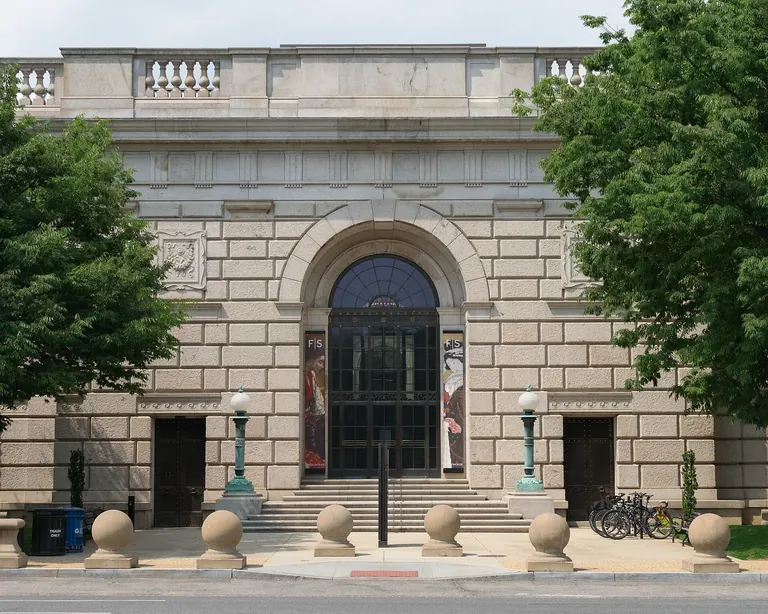
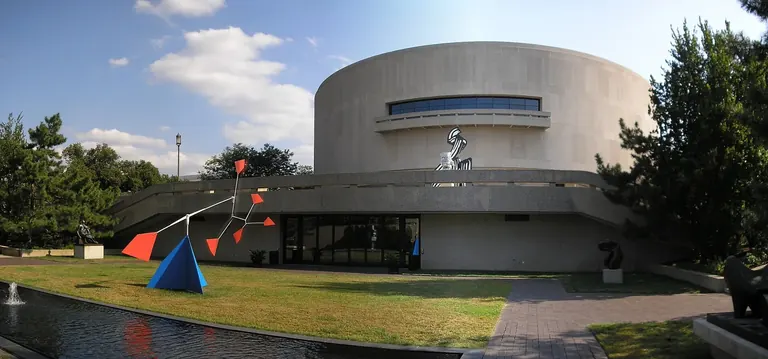
Visitor Information
- Is National Museum of Natural History free to visit?
- Yes, general admission to National Museum of Natural History is free. Admission is free and no passes or tickets are required.. Some special exhibitions may charge a separate ticket, so check the museum's website before visiting.
- What are the opening hours of National Museum of Natural History?
- National Museum of Natural History is open Open daily 10:00–17:30, including public holidays. Closed 25 December. Doors close at 17:30 and all visitors must exit.. Holiday hours can vary, so check the museum's website before you go.
- Where is National Museum of Natural History?
- National Museum of Natural History is located at 10th St. & Constitution Ave. NW, Washington, DC 20560, United States, in the National Mall area of Washington, DC. The nearest stations are Federal Triangle (Metro Blue/Orange/Silver), Archives–Navy Memorial–Penn Quarter (Metro Green/Yellow) and Smithsonian (Metro Blue/Orange/Silver).
- What can I see at National Museum of Natural History?
- The Hope Diamond, a T. rex mid-kill and 148 million specimens under one great green dome — free, every day, on the Mall. Current highlights include Sant Ocean Hall, Imagining Bison and Janet Annenberg Hooker Hall of Geology, Gems, and Minerals.
- Do I need to book National Museum of Natural History in advance?
- National Museum of Natural History is free to enter and most days you can walk in. Admission is free and no passes or tickets are required.. For special exhibitions, weekends, and school holidays, booking a timed slot can help you skip queues. Check the museum's website for current requirements.
- When is the best time to visit National Museum of Natural History?
- Weekday mornings shortly after opening are typically the quietest, especially mid-week. Late afternoons can also be calmer. Weekends, school holidays, and the lunch rush are the busiest periods.
Image credits
15
- National Museum of Natural Historyajay_suresh via Wikimedia Commons, CC BY 4.0
- Sant Ocean HallCourtesy of National Museum of Natural History
- Imagining BisonCourtesy of National Museum of Natural History
- Janet Annenberg Hooker Hall of Geology, Gems, and MineralsCourtesy of National Museum of Natural History
- David H. Koch Hall of Fossils — Deep TimeCourtesy of National Museum of Natural History
- Lights Out: Recovering Our Night SkyCourtesy of National Museum of Natural History
- David H. Koch Hall of Human OriginsCourtesy of National Museum of Natural History
- Cellphone: Unseen ConnectionsCourtesy of National Museum of Natural History
- From These Lands: Sharing Our Natural and Cultural HeritageCourtesy of National Museum of Natural History
- Kenneth E. Behring Family Hall of MammalsCourtesy of National Museum of Natural History
- Bison: Standing StrongCourtesy of National Museum of Natural History
- National Archives MuseumDavid Samuel (Hellodavey1902) via Wikimedia Commons, CC BY-SA 3.0
- National Museum of American HistoryCarol M. Highsmith / Wikimedia Commons, Public domain
- National Museum of Asian ArtDifference engine, via Wikimedia Commons, CC BY-SA 4.0
- Hirshhorn Museum and Sculpture GardenGryffindor, via Wikimedia Commons, Public domain